Cessna 150 and 152 Serial Number Decoder and Aircraft Identifier
Use this Cessna 150 and 152 Serial Number Decoder to identify a recorded aircraft model and model-year context from its complete factory serial. It covers the supported U.S. standard and Aerobat lines, Reims F/FA/FRA identities and Argentine mappings. Owners, buyers, students, renters and other researchers can use it without an account. Enter a serial below, or try an example to see how a result leads into model research.
Research an aircraft you own, rent, fly or are considering. The result connects a recorded identity with the relevant model references.
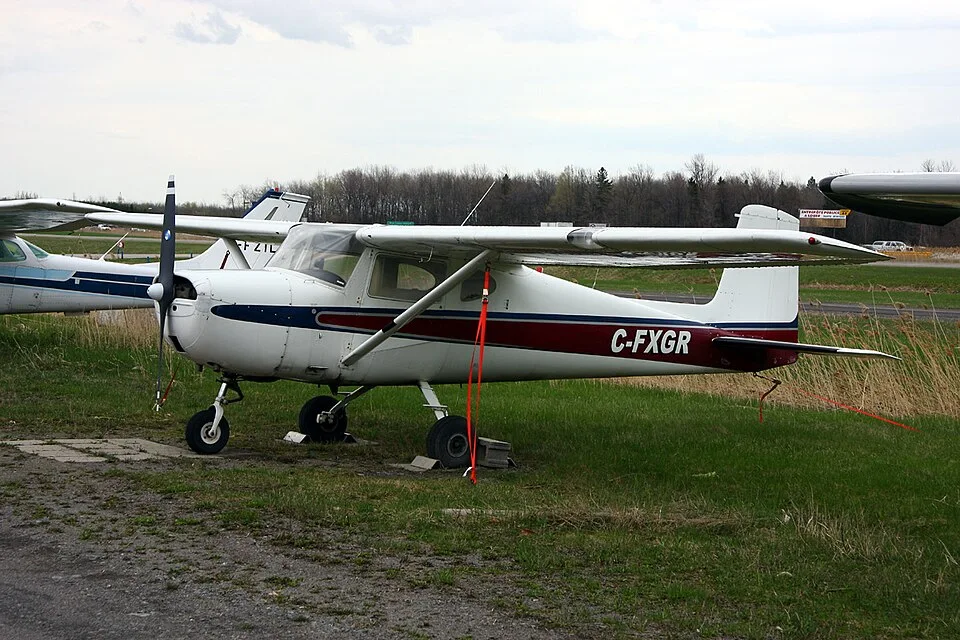

What is an aircraft serial number?
A factory serial identifies an aircraft within its manufacturer's identification system. Its full form matters: letters, significant hyphens and leading zeros distinguish identities that can otherwise look similar. The decoder trims spaces at the ends and accepts lower-case letters, but it does not remove internal characters or invent missing digits to force a match. F150-0001 and F1500001 therefore remain different inputs.
A registration or tail number is a different identifier. It belongs to the aircraft's registration history and is not a substitute for the factory serial when matching technical applicability. This tool does not search a registration registry or identify an owner. The aircraft-identity guide explains how to compare identification in aircraft records without treating a familiar model name as sufficient evidence.
What a match can establish
An ordinary match connects the entered serial with a recorded model-year interval. An explicit special assignment takes precedence over an enclosing ordinary range. Where supported, the result shows the model, family, production branch, category, model-year context and the relevant serial group. It then links to the model explanation and the appropriate research references.
That result is deliberately narrower than a complete description of a surviving aircraft. A production model associated with a particular engine does not prove that the original engine remains installed. Current propeller, equipment, modifications, STCs, empty weight, center of gravity and loading documents require aircraft-specific records. The model-specification-versus-configuration article explains how two aircraft sharing a designation can develop different histories.
Model years are not manufacture dates
A model year places an aircraft within a documented model-year group; it is not automatically a calendar date of manufacture, first flight, delivery or registration. Some models span several years, and some special identities have no ordinary year assignment. Leaving a year unresolved is more precise than supplying a plausible year from a neighboring serial.
The Cessna 150 serial guide and Cessna 152 serial guide retain ordinary ranges, boundaries and disagreements. A result that includes a qualification should be read with it. The model-year answer and the complete identity answer can have different levels of precision without one replacing the other.


Why special assignments override a range
Serials are useful identifiers, but their apparent numerical sequence is not the whole record. Explicit assignments can place a serial outside the identity suggested by a broad interval. The known 15064970 assignment identifies A150M rather than the 150G suggested by its numerical surroundings. A1500433 identifies A152 rather than A150L. The decoder applies those exceptions before considering ordinary ranges.
The recorded A152 forms 681 and A15200681 are also preserved as explicit notation relationships. Their existence is not a rule for expanding every short serial into a longer one. The reason for an individual exception must come from its documentation; this tool does not invent a prototype, conversion or production story merely because a number is unusual.
Reims identities can depend on configuration
French-built F150 and F152 aircraft belong to their own manufacturing and approval context. FA and FRA relationships require additional care. For eligible FA serial groups, the prescribed kit conditions participate in the possible FRA identity. The decoder shows the base identity and possible configured identity separately; it does not choose the installed configuration from the prefix alone.
Use Reims serial identification to follow these relationships, then compare the actual modification and operating documents. A U.S. aircraft with a similar suffix does not supply missing French installation evidence. The Reims model guide also explains standard, Aerobat and higher-power branches so a conditional result can lead into the right aircraft story.
Argentine cross-references keep their stated precision
Argentine local identities and Cessna-assigned identifiers can be connected by explicit records. Some are exact pairs; others describe only block endpoints. An endpoint relationship is not permission to calculate every intermediate pairing. The decoder retains the difference and displays the cross-reference alongside the primary model result rather than silently replacing it.
Punctuation is especially important here. The local standard A-150L identity and U.S. Aerobat A150L are not interchangeable names. A local identifier also does not establish every detail of the aircraft's assembly or later installation history. The production account places these distinctions within the international family, while the serial guide preserves the individual mapping context.
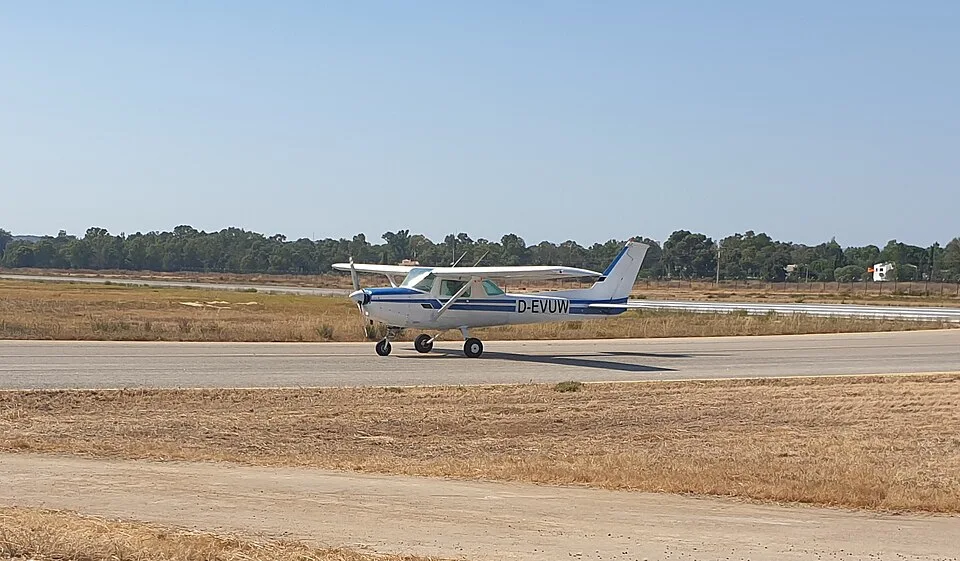

What to do when there is no single answer
An invalid entry needs its format checked: enter a complete serial using the recorded letters, digits and hyphens. A valid-format entry with no match calls for another step. Check the original identification and transcription, then consult the family serial guides. Failure to match the current reference does not prove that the aircraft itself has an invalid identity.
An ambiguous result lists the candidates without selecting one model or year. A conditional result identifies the additional configuration question. Those states should remain visible until the aircraft's records resolve them. Trying neighboring numbers, removing a prefix or choosing the most attractive model would change the enquiry rather than settle it.
Continue from identity to the right research
Exact model identity helps locate the applicable manual family, specification group and system generation. Engine and propeller research then follows the actual installation, while AD applicability may depend on affected products, serials, equipment or modifications. A model match is useful context for that work, not proof that a directive applies or has been complied with.
The result's model links explain the generation and what changed. Its research links lead to the relevant technical and ownership references, keeping French and Argentine qualifications visible. The model directory provides the broader family, and the prebuy guide connects records research with examination of the individual aircraft.
Share a research starting point
After identifying a serial, use Copy result link to share or bookmark the result. The new link stores the serial in its fragment and re-runs the current matching logic when opened. Browser Back and Forward move between lookup states; Reset clears the entry. A shared result is a repeatable identification enquiry, not a saved aircraft record.
Matching happens locally in the browser. The tool asks for no owner information and sends entered serials to no third-party service. It is an independent research aid, not an official manufacturer or authority registry, proof of registration or ownership, or a statement of airworthiness. The tools hub explains how identification fits alongside exploration and planning for people with or without an aircraft.