Cessna Aerobat Models: A150, A152, Reims FA and FRA
Aerobat describes several related Cessna and Reims aircraft, not one interchangeable specification. The U.S. A150K/L/M and A152 are separate Acrobatic identities; French FA150/FA152 and higher-power FRA150L/M have their own certification and document context. Argentine A-A150L adds another local identity. Their shared role does not make engine, loading, speed or handbook data universal across the group.
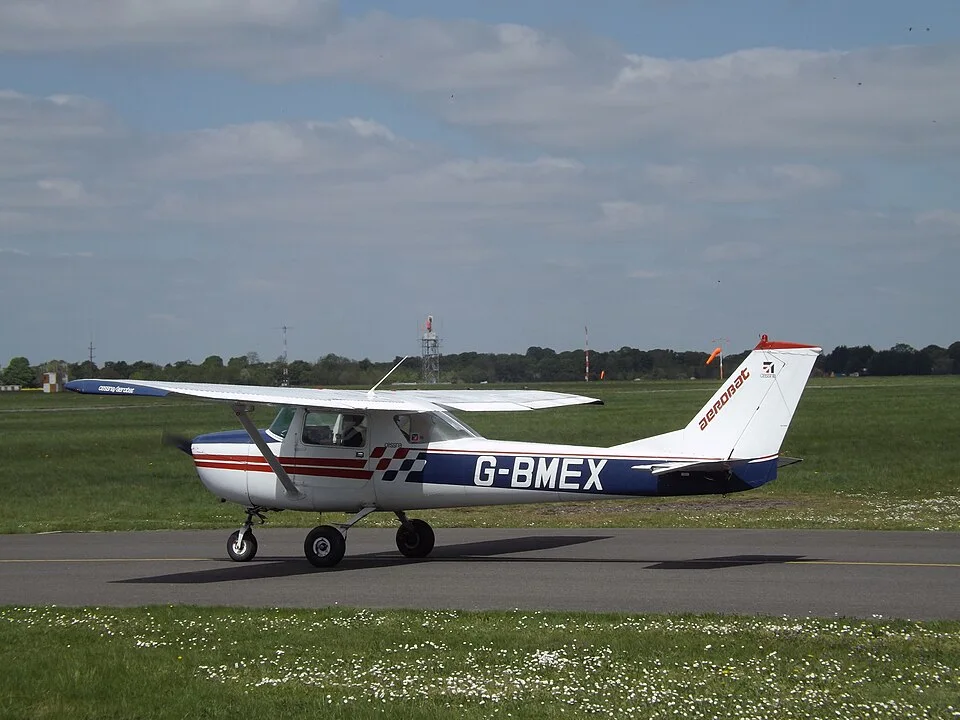

Start with the complete model and serial, then establish the actual engine, propeller and approved configuration. The model directory shows the wider production lines, and the 150-versus-152 comparison explains the standard-family transition. This guide concentrates on the distinctions that matter when an aircraft is described as an Aerobat.
U.S. A150K, A150L and A150M
The A150K opens the U.S. Aerobat sequence in 1970 at A1500001-A1500226. The A150L continues across 1971-1974 and the A150M closes the 150 Aerobat line in 1975-1977. These are legal model distinctions from standard 150K/L/M, not merely names for optional trim or equipment.
All three use the recorded O-200-A factory engine context, but their serials and publication families differ. The L and M also cover multiple model years. A common model letter can therefore conceal both standard-versus-Aerobat and annual-document differences. The model pages retain the exact propeller relationships and source-qualified annual summaries instead of assigning the standard aircraft's complete performance series to the Aerobat.
| Official Model | Model Years | Country of Manufacture | Certification Category | Engine as Type-Certificated | Certified Serial Eligibility | Reference |
|---|---|---|---|---|---|---|
| A150K | 1970 | United States | Acrobatic | Continental O-200-A | A1500001-A1500226 | [1] |
| A150L | 1971-1974 | United States | Acrobatic | Continental O-200-A | A1500227-A1500432; A1500434-A1500523 | [1] |
| A150M | 1975-1977 | United States | Acrobatic | Continental O-200-A | 15064970; A1500524-A1500734 | [1] |
| FA150K | 1970 | France | Acrobatic | Rolls-Royce Continental O-200-A | FA1500001-FA1500081 | [2] |
| FA150L | 1971 | France | Acrobatic | Rolls-Royce Continental O-200-A | FA1500082-FA1500120 | [2] |
| FRA150L | 1972-1974 | France | Acrobatic | Rolls-Royce Continental O-240-A | FRA1500121-FRA1500261; or FA1500121-FA1500261 when equipped with FKA150-2311 and FKA150-2316 | [2] |
| FA150M | 1975-1977 | France | Acrobatic | Rolls-Royce O-240-A or O-240-E in the A13EU higher-power configuration | FA1500262-FA1500336 when equipped with FKA150-2311 and FKA150-2316 | [2] |
| FRA150M | 1975-1977 | France | Acrobatic | Rolls-Royce O-240-A or O-240-E (O-240-E noted for S/N FA00262 and on in A13EU) | FRA1500262-FRA1500336; or FA1500262-FA1500336 when equipped with FKA150-2311 and FKA150-2316 | [2] |
| A-A150L | 1972-1973 | Argentina | Acrobatic (service data context) | Continental O-200-A | A-A1500001-A-A1500009 | [3] |
| A152 | 1978-1985 | United States | Acrobatic | Lycoming O-235-L2C through A1521014; O-235-N2C from A1521015 and on, or aircraft reworked per SK152-15 / SK152-16 | A1500433; 681; A1520735-A1521049 | [1] |
| FA152 | 1978-1986 | France | Acrobatic | Lycoming O-235-L2C for 1978-1982 models; O-235-N2C for 1983 model and on, or aircraft reworked per SK152-15 / SK152-16 | FA1520337-FA1520425 | [2] |
Category and Operating Limits
The U.S. A150K/L/M certified groups retain Acrobatic-category values distinct from standard 150s. The selected limits below preserve the speed basis and the separate A150M flap-speed entry. The later A152 values are on an IAS basis, so a numerical comparison with CAS entries is not a direct measure of an aerodynamic or structural margin.
| Models | Speed Basis | MTOW Land lb | Vne | Vno | Va | Vfe | Source |
|---|---|---|---|---|---|---|---|
| A150K | CAS | 1600 | 168 kt / 193 mph | 122 kt / 140 mph | 103 kt / 118 mph | 87 kt / 100 mph | [1] |
| A150L | CAS | 1600 | 168 kt / 193 mph | 122 kt / 140 mph | 103 kt / 118 mph | 87 kt / 100 mph | [1] |
| A150M | CAS | 1600 | 168 kt / 193 mph | 122 kt / 140 mph | 103 kt / 118 mph | 85 kt | [1] |
| A152 | IAS | 1670 | 172 kt | 125 kt | 108 kt | 85 kt | [1] |
An Acrobatic model identity does not mean every maneuver is permitted in every load or equipment state. The controlling aircraft handbook and supplements establish the applicable operations, loading, speeds and restrictions. Gross weight alone is insufficient: two aircraft can share a headline weight while belonging to different categories or having different usable-load margins. The 150 loading guide and 152 loading guide retain the certified groups, while a current aircraft report supplies the actual empty weight and CG.
The annual specification tables sometimes include Standard, Commuter and Aerobat empty-weight examples together. A labeled Aerobat example is useful historical context, but is not a substitute for the current aircraft's equipment list. Conversely, the lighter standard example must not be selected simply because it produces a more attractive payload figure. Similar engine power does not establish equal performance or interchangeable loading documentation.
A152 and the Lycoming Transition
The A152 brings the Aerobat into the Lycoming O-235 family. Its 1,670-lb U.S. certified entry and Acrobatic speed limits remain distinct from the standard 152's values. The L2C/N2C engine relationship follows exact serial effectivity or approved rework, not an assumption based on the age of the aircraft. The 152 engine guide retains those installation boundaries.
Two exceptional identity cases are particularly important. A1500433 belongs to A152 rather than A150L. The 681/A15200681 notation case must not be counted as two aircraft. These are reasons to establish legal identity before choosing an Aerobat handbook or interpreting a year in an advertisement. The 152 serial reference also preserves the disputed late A152 model-year boundary instead of forcing one unqualified year assignment.
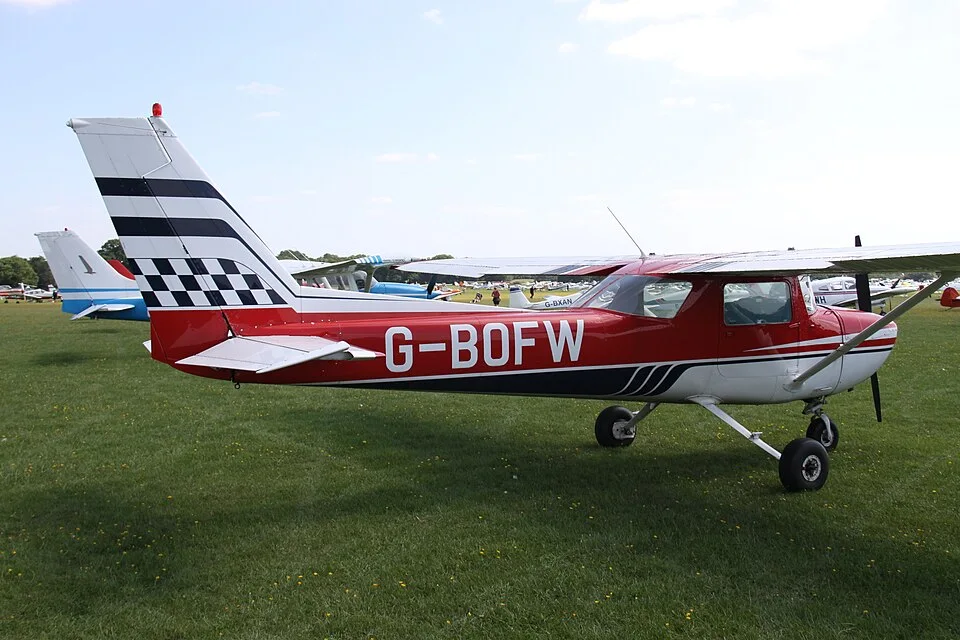

French FA and FRA Aerobats
FA150K opens the French Aerobat line, while FA150L has both an ordinary early range and a role in the later conditional FRA150L identity. The FA prefix is a Reims identity under A13EU; U.S. A150 speed and CG tables are not French approvals. The later FA152 belongs to the French Lycoming-powered family and likewise needs its own exact technical relationships.
FRA150L and FRA150M are the higher-power branch. The configuration rules below require the prescribed kits for eligible FA-prefix aircraft. A serial in the range narrows the research question but does not prove the conversion. Counting both FA and FRA notations as separate aircraft would confuse a conditional identity with additional production.
| Range / Serial Family | Base Prefix Identity | Possible Certified Identity | Condition |
|---|---|---|---|
| FA1500121-FA1500261 | FA150L | FRA150L | With FKA150-2311 and FKA150-2316 per A13EU. |
| FA1500262-FA1500336 | FA150M | FRA150M | With FKA150-2311 and FKA150-2316 per A13EU. |
FA150M remains an established base identity in the directory and the FRA150M explanation, without a separate thin model page. The available independent relationships are not expanded by borrowing standard F150M or U.S. A150M values. The Reims guide explains the O-200/O-240 distinction and the separate flight-manual lineage, including why the aircraft-installed power and exact engine variant must remain explicit.
Manuals and Configuration Evidence
The U.S. annual Aerobat handbook families appear alongside standard-model families in the publication evidence. That combined listing is a search lead, not permission to use either book for every listed aircraft. In the M generation, the 1976-1977 POH families retain their standard/Aerobat and serial distinctions. A similar cover title does not settle amendments, supplements or actual aircraft coverage.
The higher-power Reims models have dedicated SGAC-approved AFM families: D1015-13GB for FRA150L and D1056-13GB for FRA150M. The GB suffix and configuration context are important when a similarly numbered U.S. publication appears in a search. Obtain the correct document rather than constructing a specification from U.S. limits, French engine figures and a third model's performance. The 150 manuals guide and 152 manuals guide identify the relevant publication families.
Buying an Aerobat
For a purchase, establish the legal category first, then compare the aircraft's current loading record, engine/propeller combination and complete operating documents. A photograph, paint scheme or seller's description cannot prove the category or a higher-power kit. Aircraft-specific modification records can also affect operating restrictions, so the original model identity is the beginning of the enquiry rather than its conclusion.
The prebuy guide connects seat locking, tail attachments, corrosion, flap systems, exhaust and other issues with their actual scope. It does not infer an aircraft's past use or condition from the Aerobat label. The buying guide explains how to compare documented capability without assuming that higher acrobatic speed limits mean higher cruise speed, greater payload or lower maintenance cost.


Aerobat identity in directive research
The corrected rudder-stop AD reference retains unusual A150M and A152 serial entries and conditional Reims kit cases. Those entries can be checked in the corrected directive text. That is a concrete reason to research an Aerobat by its exact identity and configuration. It supplies no new maneuver authorization; the applicable aircraft flight manual and limitations remain a separate evidence requirement.
Focused research
The 150K-versus-A150K comparison explains the first K pairing without treating Aerobat as an engine upgrade. The 152-versus-A152 comparison adds separate engine boundaries and special serial identities.
Compare the standard model with its actual Aerobat counterpart
The Aerobat question is more precise when tied to a model: a 150M and an A150M share a period and nominal engine rating while differing in certified category and limitations. The 150M versus A150M guide follows that distinction through serial identity and the buyer's records checks. The broader label A150 should not erase the K, L or M suffix when selecting applicable information.
French Aerobats add another layer. FA and FRA identities can depend on specified configuration conditions; the extra letter is not merely a styling difference. The FRA150L versus FRA150M comparison connects the O-240 engine applications with separate serial ranges and approved flight manuals. Do not transfer a U.S. Aerobat operating limit to either Reims model on the strength of family resemblance.