Cessna 152: The Trainer, Its Design and Ownership
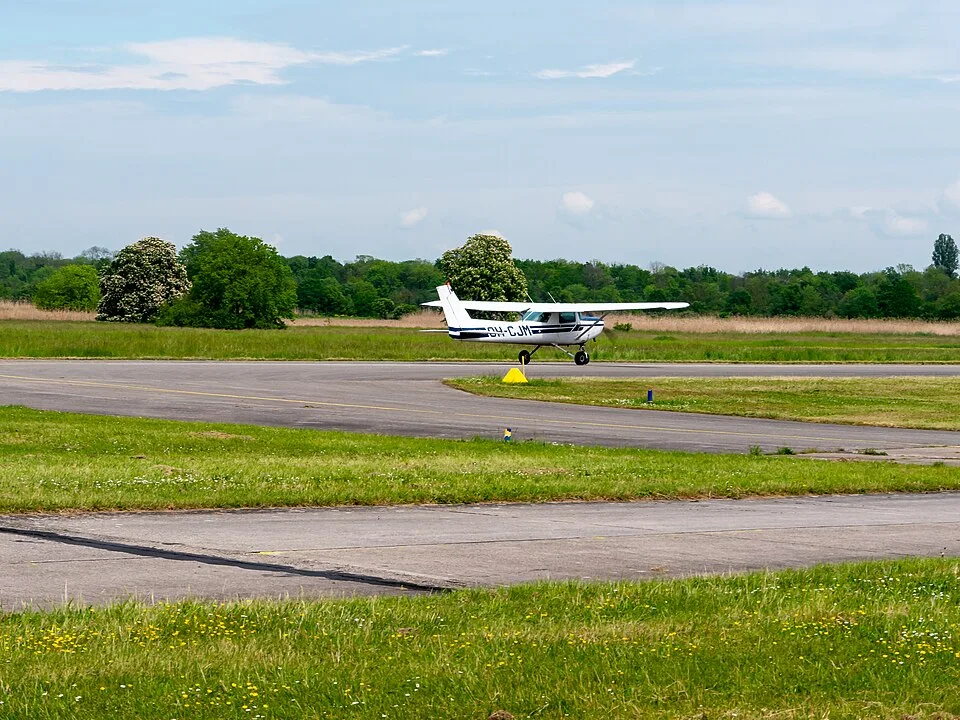
The Cessna 152 is a two-seat, high-wing light airplane used for flight training and personal flying. It followed the Cessna 150 with a Lycoming O-235 engine installation, revised aircraft limits and a different electrical generation, while retaining fixed tricycle landing gear and a side-by-side cockpit. It is a development of the familiar two-seat Cessna idea with its own technical identity.

Understanding a 152 means looking beyond its resemblance to the earlier 150. This article explains the cabin, construction, controls and training role, then connects them to the 152 model references, performance data and ownership questions. Standard 152s, A152 Aerobats and French-built F152/FA152 aircraft share that family story without sharing every limit or document.

Family at a Glance
Start with the official model and full serial, then follow the applicable configuration. Compare the model identities and check serial exceptions before selecting technical limits.
| Model coverage | 152, A152, F152, FA152 |
|---|---|
| Documented model years | U.S. 1978-1985; Reims 1978-1986; see model-year coverage |
| Factory engine families | O-235-L2C, O-235-N2C; power and serial conditions |
| Loading and operating limits | Separate certified model groups; current-aircraft loading evidence |
| Buying and maintenance | Prebuy inspection topics and conditional AD research |
Engine Installation Comparison
Aircraft power and RPM below belong to the listed applications. Engine-manufacturer ratings and current installed configuration are separate questions.
| Model | Aircraft installed hp | Aircraft max rpm | Aircraft Families | Primary Source |
|---|---|---|---|---|
| O-235-L2C | 110 | 2550 | 152/A152/F152/FA152, early production / pre-N2C effectivity | [1] |
| O-235-N2C | 108 | 2550 | 152/A152/F152/FA152, 1983-and-on / approved rework effectivity | [1] |
The Successor to the Late Cessna 150
The 152 arrived for the 1978 model year after the final 150M generation. Its changes were concentrated around an established layout: the Lycoming replaced the standard U.S. 150's Continental O-200-A, the U.S. certified maximum weight increased from the late standard 150's 1,600 lb to 1,670 lb, and maximum flap travel was reduced from 40 to 30 degrees. The 152's 28-volt electrical system was another distinction from the preceding U.S. family. Together these make it more than a new name for a 150M.
The change did not turn the aircraft into a different class of transport. It remained a light two-seat airplane with a fixed-pitch propeller and fixed landing gear, retaining the cockpit tasks associated with basic training. Nor does the extra engine power or maximum weight prove a particular payload or climb advantage without comparing empty weights and performance conditions. The 150 versus 152 comparison examines those tradeoffs; the full 152 history supplies the deeper chronology.
The Lycoming Generation and Its Model History
The U.S. 152 and A152 were approved together on 16 March 1977, with ordinary model-year coverage from 1978 through 1985 in the identity records. The standard aircraft is recorded in the Utility category and the Aerobat in the Acrobatic category. Their relationship is close, but the category distinction is technical, not merely a sales description. The standard 152 model reference and A152 Aerobat reference retain separate certification and serial information.
Reims F152 and FA152 approval is recorded on 2 June 1977 under A13EU. Their model-year coverage extends through 1986 in the manufacturer evidence. This is a reason to preserve origin as well as model year: the final U.S. production year must not become an automatic cutoff for French aircraft. Equally, an authority-recognized handbook family can cover Reims serials beyond the year printed in its familiar publication description.
The Cessna 150 reference remains useful for understanding the predecessor family. It is not a source of interchangeable 152 limits. A comparison should identify the actual 150 model and year, because early 150s, late 150s and higher-power Reims configurations do not represent one uniform baseline. The later family has its own engine, propeller and documentation relationships even where the aircraft retain a recognizable design lineage.
A Cockpit for Two, Built Into a Metal Airframe
The 152's structure combines a high, externally braced wing with a metal fuselage. In semi-monocoque construction, internal frames and lengthwise stiffeners work with the skin rather than leaving it as a decorative covering. Wing spars and ribs support the wing skin, and the wing struts connect the wing structure to the lower fuselage. The 152 handbook reference describes the airframe and systems. This construction makes the condition of attachments and hidden structure as relevant as the finish visible outside.
The occupants sit alongside one another beneath the wing, with a shared panel ahead and baggage space behind the seats. Doors on both sides give access to the cabin. Seat adjustment helps establish pedal reach and the view over the panel; it does not make every combination of two occupants equally comfortable. A practical cabin-fit assessment includes control movement, legroom, shoulder space and restraint fit, with the seats securely locked. The seat and door reference provides the related hardware context.
The wing is above the side windows, leaving a different view from that of a low-wing aircraft. The rear glazing extends the view aft, but cabin posts, wing struts and the wing itself still screen parts of the surroundings. Looking outside during training therefore involves an active scan, not simply relying on a reputation for good visibility. The right seating position also helps connect the outside attitude picture with the instruments.
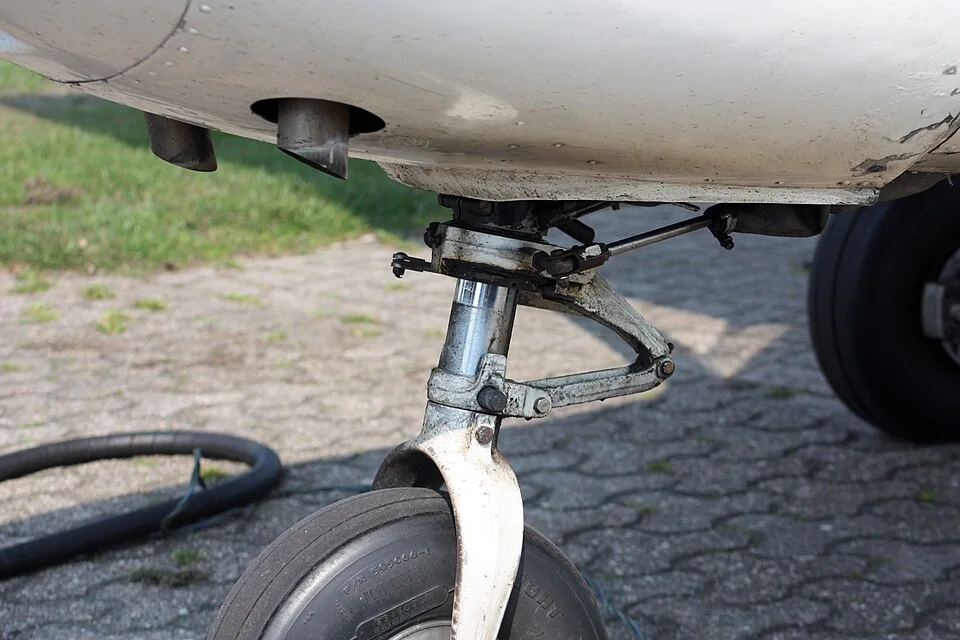
Ailerons on the wings control roll; the elevator at the horizontal tail controls pitch, and the rudder on the vertical tail controls yaw. The control wheels and rudder pedals operate the main surfaces mechanically, while a trim wheel adjusts elevator trim to relieve sustained pitch-control force. Flaps use electrical actuation. The fixed main wheels use spring-steel legs, and the steerable nose wheel has a shock strut. These functions remain recognizable through production changes even when individual components differ.
The shared design and construction guide follows the structural connections beneath the 152’s familiar outline. For the seated perspective, cabin, cockpit and controls explains access, sight lines, reach and baggage, keeping the actual installation separate from a general family description.

The O-235 Installation and the Systems Around It
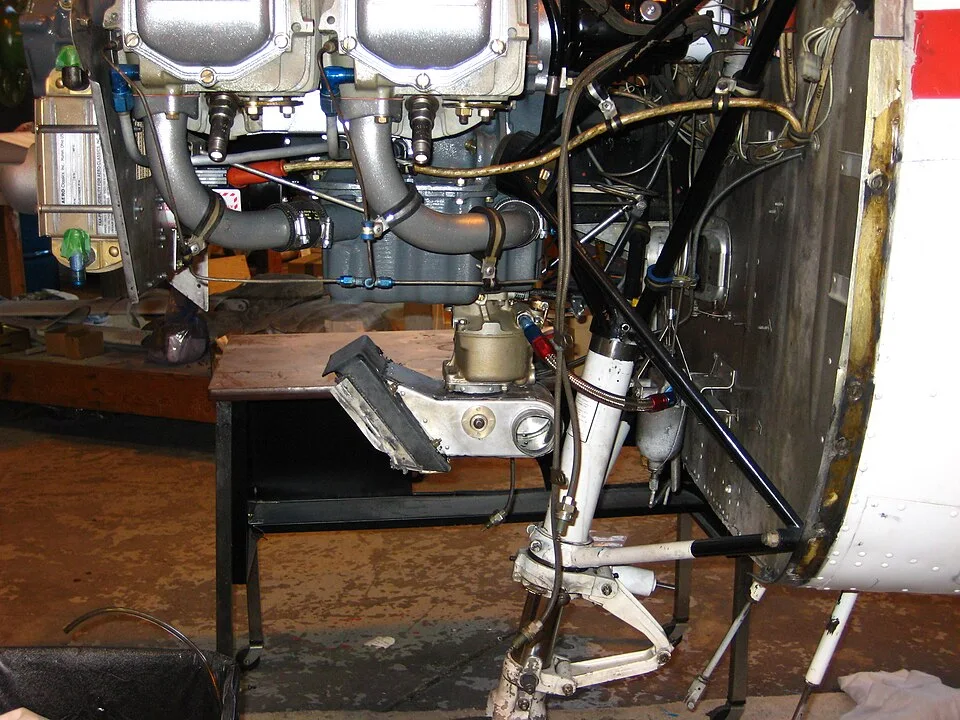
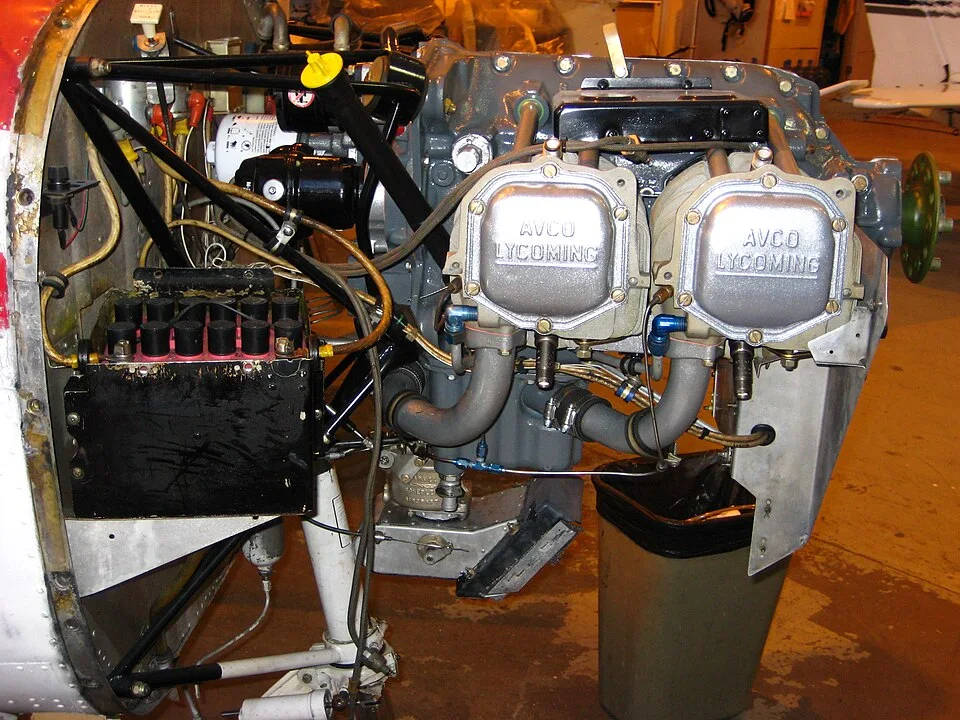
The Lycoming O-235 is a four-cylinder, horizontally opposed, air-cooled piston engine. In the 152 it drives a fixed-pitch propeller: there is no separate cockpit control for varying the blade pitch in flight. The throttle, mixture and carburetor heat still give the pilot distinct engine-management tasks. Moving from a 150 to a 152 therefore means learning a new engine installation and its limits within an otherwise familiar type of cockpit, rather than assuming that the same-looking controls have identical operating details.
The engine overview separates engine design from aircraft installation, while the 152 propeller reference retains approved applications, diameter and RPM conditions. The familiar description of a 110-hp trainer needs qualification for the later engine variant, and a previous owner's engine replacement needs its own documentation.
Why a Cessna 152 Can Be Rated at 110 or 108 Horsepower
The engine guide distinguishes the O-235-L2C installation from the later O-235-N2C. the aircraft ratings are 110 hp and 108 hp respectively at 2,550 RPM. Engine-manufacturer ratings at another RPM are separate figures. A specification quoting an engine's higher rating must not be interpreted as the installed aircraft's approved output.
The U.S. standard model changes engine effectivity at 15285595, and A152 at A1521015, with approved rework also part of the source wording. For Reims aircraft the identity evidence describes the model-year relationship and rework conditions separately. A general statement that a 152 has an O-235 is therefore incomplete when a parts, limitation or maintenance question depends on the exact variant.
Serial effectivity describes the factory or approved design relationship. It cannot establish which engine remains installed today. Engine identification, installation records and the applicable supplements can matter after an overhaul, replacement or alteration. The engine and airframe serials answer different questions and must not be substituted for one another during an AD or component review.
Fuel travels from the wing tanks through the stock gravity-feed system to the carburetor. The fuel shutoff, strainer, venting and primer have different jobs along that path. Carburetor heat supplies heated induction air to address icing; the carburetor-heat article distinguishes that function from warming the occupants. The mixture control adjusts the fuel-air mixture, while the throttle regulates engine power. Knowing the purpose of each control is a foundation for learning the aircraft's actual procedures.
The battery and alternator supply the aircraft's electrical network. Magnetos provide the stock engine's ignition independently of that network, so electrical supply and ignition are related parts of the airplane but different systems. The panel brings together engine indications, fuel quantity and flight instruments. Pitot-static pressure supplies airspeed, altitude and vertical-speed information; other instruments depend on their installed power sources. Older instrument options and later avionics changes mean that the equipment in front of a student must be identified on the actual aircraft.
Systems and Changes Within the Same Model
The systems reference explains the U.S. 152's 24-volt battery and 28-volt electrical architecture, electric flap system, gravity fuel supply and control arrangements. Broad system descriptions are accompanied by configuration wording. Optional equipment and serial-dependent components remain separate from what the basic architecture establishes.
Production changes include control rigging and hardware, brake-master-cylinder detail, ignition equipment, cabin latches and ventilation. The source's exact change description matters: two entries mentioning ailerons can concern different assemblies and different serial boundaries. They must not be compressed into one presumed changeover simply because the system name is similar.
For maintenance, the practical connection is between the full aircraft identity, the installed assembly and the applicable manual. The factory generation is useful orientation but not a substitute for a parts effectivity or a maintenance procedure. Reims source context must likewise remain visible where a U.S. system row does not explicitly establish the French installation.
What the 152 Offers a Student Pilot
The training role follows naturally from the two-seat layout. Student and instructor can share the panel, discuss the outside picture and work with conventional flight controls. Fixed gear removes a retraction task, and the fixed-pitch propeller removes an in-flight pitch-selection task. That leaves plenty to learn: coordinated control, power and attitude, trim, navigation, radio work and the disciplined use of the aircraft's handbook. For a school, those features bring the lesson back to the relationship between the pilot's actions, the instruments and the outside view.
In flight, the controls work together. A bank changes the direction of the lift force; rudder coordination and pitch control remain important. Changes in power, speed or flap position alter the conditions the pilot must manage. A familiar school-aircraft silhouette cannot establish the behavior of an altered airplane, or replace training in the particular example being flown.
For circuit training, runway use and climb capability are recurring practical questions. For a cross-country lesson, fuel, navigation and weather add different demands. The aircraft's seating capacity does not guarantee that the intended instructor, student and fuel load can be carried under all conditions. Training suitability therefore includes the day's loading and airfield environment as well as the number of controls and seats.
The airspeed explanation helps separate what the instrument shows from other published speed measures. The performance guide distinguishes takeoff ground roll from obstacle distance and cruise speed from range. A density-altitude discussion explains the influence of atmospheric conditions. None of these quantities becomes a fixed promise just because the airplane is a 152.
Reading Performance Without Losing the Conditions
The performance reference keeps cruise speed, maximum speed, climb, ceiling, runway distances and range as separate metrics. Power setting, altitude, usable fuel and reserve basis remain attached where supplied. A headline number with omitted conditions is not a full chart and should not acquire assumed conditions simply because another row supplies them.
The source includes distinct standard-tank and long-tank range entries. These describe different fuel configurations, not different estimates of one identical flight. Cruise range, maximum range and optimum range also answer different questions. A useful comparison first matches the metric and its assumptions, then considers the numerical result.
Performance records explicitly assigned to standard Model 152 are not automatically assigned to A152, F152 or FA152. A shared engine or similar model-year description does not establish an exact operating-performance relationship. The controlling handbook and aircraft configuration remain necessary when the question concerns an actual flight rather than historical comparison.
Read the family’s role in flight training for the relationship between the aircraft’s layout and instruction, including the distinction between standard and Aerobat use. The flying article explains pitch, roll, yaw, trim and the progression from ground handling to flight without supplying operating settings.
Matching Fuel and Cabin Load to the Mission
The 152's higher maximum weight is often noticed before its empty weight. For an individual aircraft, useful load depends on both. Radios, instruments, interior equipment and alterations can change the empty weight, leaving different allowances for people, baggage and usable fuel in two aircraft with the same certified maximum. The useful-load guide explains why a published empty-weight example cannot settle a real loading question.
Fuel carried is part of that allowance. More tank capacity can extend the available choices, but filling the larger tanks uses weight that could otherwise be assigned to occupants or baggage. Center of gravity also matters: weight behind the seats has a different effect from weight elsewhere in the airplane. The cabin and baggage space must be considered together with the aircraft's loading record, not independently as storage volumes.
Certified Speeds, Weights and Tank Configuration
The specifications reference separates the standard U.S. 152 and A152 speed limits. Shared maximum weight does not make their airspeed limitations identical. A cruise figure is also not a structural or operating limit: the data distinguishes published performance from certified speeds and retains the stated speed basis.
The weight-and-balance guide keeps the early and later ramp-weight conditions separate from takeoff and landing weight. It also preserves the special A152 identities in their applicable groups. An extra ramp allowance, where established, is not an increased takeoff allowance. Current empty weight, equipment and CG are aircraft-specific, so a family table cannot supply a usable load sheet for an individual flight.
Fuel configuration affects both loading and range. The fuel guide distinguishes standard and long-range tanks, total and usable quantities, and the accounting treatment of unusable fuel and oil. An aircraft advertised with a long-range capability needs evidence of its installed tanks. A handbook entry describing the option is not itself proof of installation.
Standard, Aerobat and French-Built Aircraft
The standard U.S. 152 is a Utility-category aircraft; the A152 is the separately certificated Acrobatic-category Aerobat. The Aerobat extends the family into a different approved maneuver role, with its own operating and restraint considerations. It is not simply the standard airplane given sportier paint. The Aerobat guide traces the relationship back to the A150 series and explains why category, loading and handbook must be kept together.
France's Reims Aviation produced the F152 and FA152 under the Cessna manufacturing relationship. F152 is the standard French branch and FA152 its Aerobat counterpart. Their French origin is a manufacturing fact, separate from the country in which an aircraft is now registered. The Reims article and worldwide history put these aircraft in context. Their existence is also why an account ending all 152 production with the U.S. 1985 model year is incomplete.
Unlike the 150's long letter-model sequence, the U.S. 152 retained its designation while equipment and engine details changed within production. Use the cross-family model directory for the broad relationships and the 152 serial reference when identifying a particular airframe. A model name is an entry point into that work, not a substitute for the aircraft's complete identity.
Serial Identity Before Technical Comparison
Two A152 exceptions are particularly useful reminders that prefixes are not legal-model rules. A1500433 is assigned to A152 despite its A150-form identifier. The short serial 681 is also associated with A152, while later material may express the notation as A15200681. The special-serial explanation preserves these relationships without counting notation variants as separate aircraft.
The serial guide also retains an A152 model-year disagreement and the early F152 starting-serial distinction. An identity authority, a manufacturer year table and an advisory can describe different boundaries. A convenient lookup must not erase that difference. Where a year assignment is disputed, carry the identity and the unresolved year context together into subsequent document research.
A registration mark, manufacture date, model year and delivery date are separate facts. The ordinary serial ranges do not reconstruct an aircraft's ownership history or calendar manufacture date. Buyers checking an advertised year should compare the complete identity with dated aircraft records rather than assume that a difference is resolved by reading only the first digits of a serial.

Ownership Beyond the Specification Sheet
A 152 can be considered for private flying as well as instruction. The first question is whether its cabin, loading capability and performance suit the intended use. The next is whether the specific aircraft's condition and records support the purchase. The buying guide and prebuy guide connect these questions to inspections and documentation, while the ownership guide follows the continuing responsibilities after acquisition.
Time in service, storage environment, maintenance, repairs and modifications all contribute to the present aircraft. Engine time is one piece of that picture; a TBO figure alone cannot describe airframe condition or establish an engine's remaining life. An STC can describe an approved alteration, but the installation and associated operating supplements must be connected to the actual airplane. A simple training layout does not make this history unimportant.
Maintenance Concerns and Airworthiness Directives
The AD guide separates airframe scope from engine, propeller, appliance and alteration conditions. Early exhaust and flap topics can have serial boundaries; oil-pump and propeller-hub research depends on installed products. A model match cannot establish that every candidate directive applies, and applicability cannot establish compliance.
The known-issues reference connects failure modes with prebuy evidence and source status. Seat wear, structural corrosion, exhaust condition, fuel indications and modification-specific concerns deserve different questions. A manufacturer inspection topic or authority advisory must not silently become a mandatory AD, while an AD's presence in a family reference must not become an assertion of a defect on a particular aircraft.
For a buyer, a useful review distinguishes what the records say, what inspection establishes and what remains unresolved. For an owner or mechanic, the same distinction helps maintain a coherent technical history. Neither an attractive specification nor a clean-looking exterior resolves the condition of installed components or the completeness of maintenance evidence.
Manuals and the Controlling Aircraft Documents
The manuals guide organizes POH/AFM families, maintenance publications and aircraft-specific records. A generic information manual can be a useful study reference without being the controlling aircraft document. Publication lineage, revision, title-page serial and supplements are independent parts of the applicability decision.
Use the 3A19 document reference for U.S. identity context and the A13EU reference for the Reims relationship. The technical document library connects these publications with their aircraft and subject coverage. Select the applicable edition, amendments and supplements for the aircraft being studied.
The 152's Place in the Cessna Family
The 152 carried Cessna's two-seat trainer concept into the Lycoming-powered generation without abandoning the arrangement that gave it its purpose. Its legacy joins basic instruction, personal flying and the specialized Aerobat branch. The standard and French-built variants also show why an airplane's international story cannot be reduced to the name painted on its tail.
For today's reader, the appeal of the concept remains understandable: two main seats, a shared cockpit and conventional systems in an airplane of manageable scale. Whether it is the right aircraft is an individual question about fit, mission and condition, not a claim that every survivor is inexpensive or equally capable. Read the Cessna 150 article for the longer preceding evolution, or continue into 152 specifications and systems to examine the details behind this overview.
Individual Cessna 152 Model References
- Cessna 152 - 1978-1985
- Cessna A152 Aerobat - 1978-1985
- Reims/Cessna F152 - 1978-1986
- Reims/Cessna FA152 Aerobat - 1978-1986
Related Cessna 152 Subjects
- Cessna 152 aircraft reference
- Serial ranges and identity exceptions
- Models and Variants
- Specifications and Certified Limits
- Engines and Applicability
- Propellers and Approved Applications
- Performance by Model Year
- Fuel Capacity and Tanks
- Weight, CG and Loading
- Systems and Production Changes
- Airworthiness Directives
- Known Issues and Prebuy Research
- Manuals and Documents