Cessna 150 and 152 History: Models, Aerobats and Worldwide Development
The Cessna 150 and 152 developed into a family of standard trainers, Aerobats and French-built Reims aircraft. The original U.S. Model 150 received FAA approval on 10 July 1958. Its successive letter models led to the 150M, followed by the 152 and A152 approved on 16 March 1977. French production followed its own model and approval sequence, including the distinctive FRA150. These parallel histories explain why the aircraft's complete designation matters as much as the familiar 150 or 152 name.
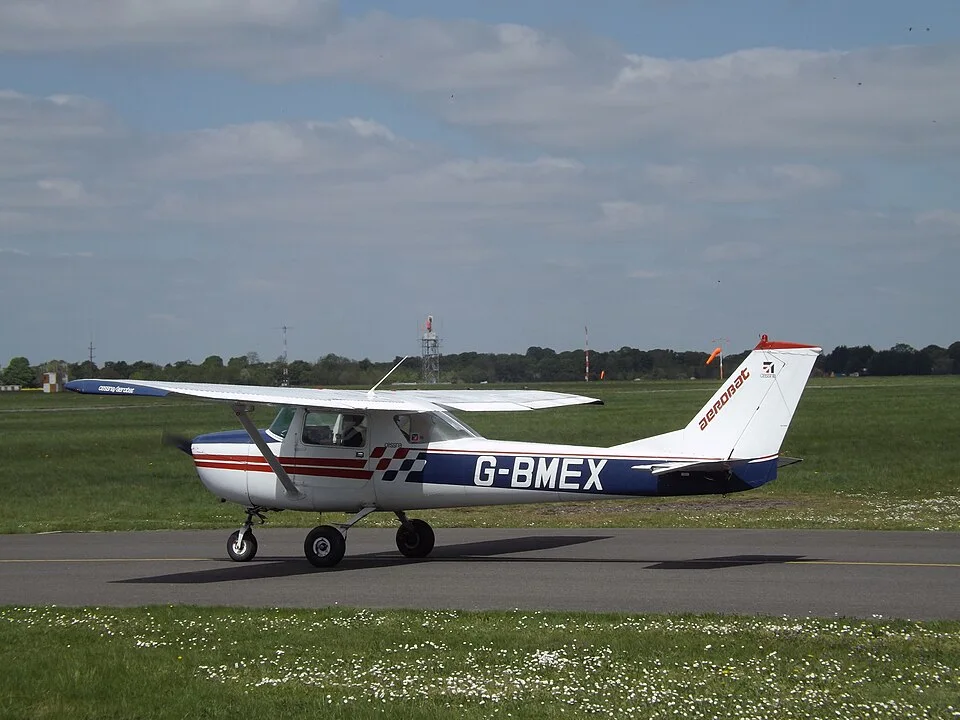

Three ways to follow the history
The Cessna 150 development history follows the airframe from the early fastback models through the rear-window, swept-tail and tubular-main-gear generations. It brings changes scattered across individual model references into one chronological account. The Cessna 152 history explains the successor's introduction, standard and Aerobat branches, and the different U.S. and French model-year endpoints. For the European manufacturing relationship and its separate developments, read the Reims-Cessna history.
Those histories lead into the model directory, where each official model has its own reference. A development milestone can explain why an assembly or manual changed, but the exact model and serial determine which technical information to follow. The historical articles therefore connect broad changes with the aircraft identities behind them, rather than treating the whole family as one unchanging design.
Approval dates and model years answer different questions
The Model 150's 1958 approval and its 1959 model-year introduction describe different events. Similarly, the 150D was approved in July 1963 and belongs to the 1964 model-year generation. The 152's March 1977 approval precedes its 1978 model-year introduction. A chronology becomes misleading if all three events are described simply as the aircraft's year. Type certificate 3A19 provides the U.S. model-approval framework.
An approval date concerns the design. A model year places an aircraft in a manufacturer's model-year sequence. Manufacture, first flight, delivery, registration and an individual airworthiness certificate are other events, which can have different dates. When identifying an aircraft advertised by year, follow the serial-number reference and the aircraft's records. A later registration does not move an early airframe into a later design generation.
| Date / period | Region | Models | Event |
|---|---|---|---|
| 1958-07-10 | USA | 150 | Original Model 150 approval |
| 1964 model year | USA | 150D | Omni-Vision generation |
| 1969-06-05 | USA | 150K / A150K | 150K and A150K approval |
| 1971-12-03 | France | FRA150L | FRA150L approval |
| 1977-03-16 | USA | 152 / A152 | 152 and A152 approval |
| 1977-06-02 | France | F152 / FA152 | F152 and FA152 approval |
The standard line and the Aerobat branch
The U.S. standard sequence runs from the original 150 through 150A, B, C, D, E, F, G, H, J, K, L and M. The model letters do not form a complete alphabet, and later letters cover several model years. The 150L spans 1971-1974; the 150M spans 1975-1977. Their histories are better understood as developing configurations within a named model than as a new model for every calendar year.
The A150K brought the Aerobat into the U.S. approval sequence on 5 June 1969, alongside the standard 150K. Its model-year introduction was 1970. The A150L and A150M continued the branch, followed by A152. The Aerobat reference explains the separate Acrobatic-category identities. An Aerobat is a certificated variant; a paint scheme, similar engine or added equipment does not establish that identity or authorize a maneuver.
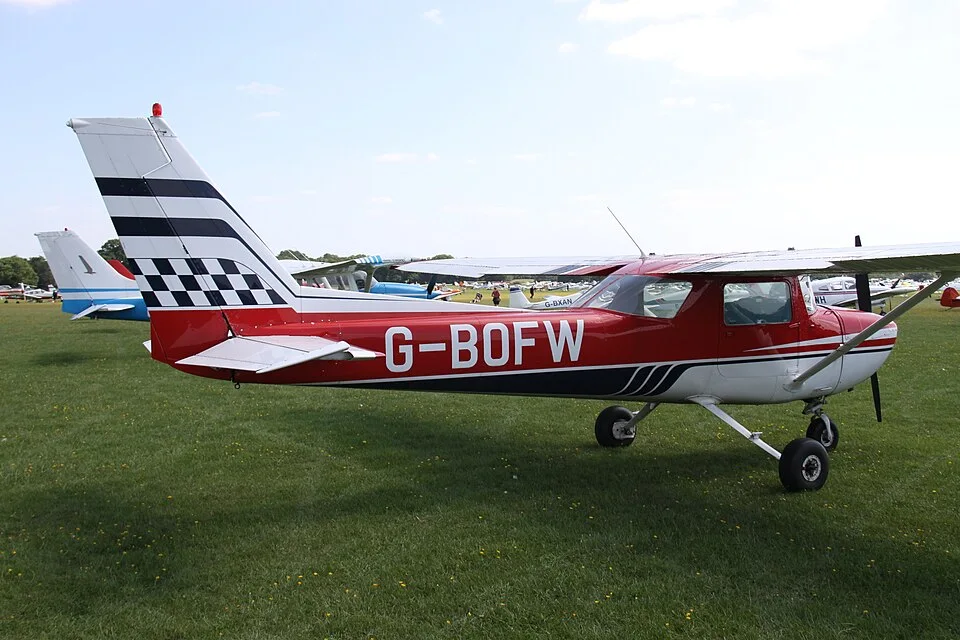

French development belongs in the family story
Reims Aviation manufactured Cessna designs in France under licence. The F150F begins the French F150 model-year sequence in 1966. Standard F150 models, FA Aerobats and the higher-power FRA150 form related branches, followed by F152 and FA152. The New Zealand F150/F152 type-acceptance report describes the manufacturing relationship and the FRA150's separate development.
French history cannot be reconstructed by adding an F to a U.S. chronology. The FRA150 had no direct Cessna equivalent in the acceptance report's account, and the French 152-family model-year sequence reaches 1986, beyond the U.S. sequence's 1985 endpoint. Use the Reims references to follow the specific models, manuals and certification relationships. A later transfer of type-certificate responsibility does not change where an aircraft was originally manufactured.
Argentine identities and worldwide totals
Argentina also belongs in the family history. ANAC Advertencia 286/DAG records AMC/DINFIA identities and Cessna serial relationships for A-150L and A-A150L aircraft in the 1972-1973 context. Some entries expressly identify assembly at Cessna USA. That evidence does not justify describing every local identity as a separate aircraft manufactured wholly in Argentina, nor does it permit an unprinted serial pairing to be filled in from adjacent numbers.
Production totals require the same care. A set of serial labels can contain special identities, alternative notation and local-to-Cessna relationships. Counting those labels is not automatically a count of distinct airframes built. For a particular aircraft, the useful historical result is its documented identity and relationship to a production model. The aircraft-identity guide connects that result with records research without turning a family chronology into an individual ownership history.
A training aircraft with a long historical reach
The 150's introduction in the late 1950s places it within postwar general aviation, followed by successive standard models and the 152 era. Across that span, the family retained a recognizable two-seat, high-wing arrangement while its doors, tail, gear, controls and power installation evolved. Its historical significance lies partly in that combination of continuity and change: a familiar kind of aircraft could embody several distinct production generations.
Primary flight training connects those generations through a shared use. Student and instructor occupied adjacent seats and worked within the same control environment. The training article explains how fixed landplane gear, a fixed-pitch propeller and the paired controls relate to that role, without turning them into a claim that flying was effortless. The flying explanation follows the aerodynamic and performance concepts that this apparently simple arrangement still brings together.
The Aerobat branch adds another dimension. Rather than replacing the standard line, it developed alongside it with separate certificated identities. French production likewise belongs within the family account rather than as a footnote to a solely U.S. sequence. Reims aircraft carried related designs into a distinct manufacturing and approval context, with the FRA150 demonstrating why international development cannot always be described as an identical local copy.
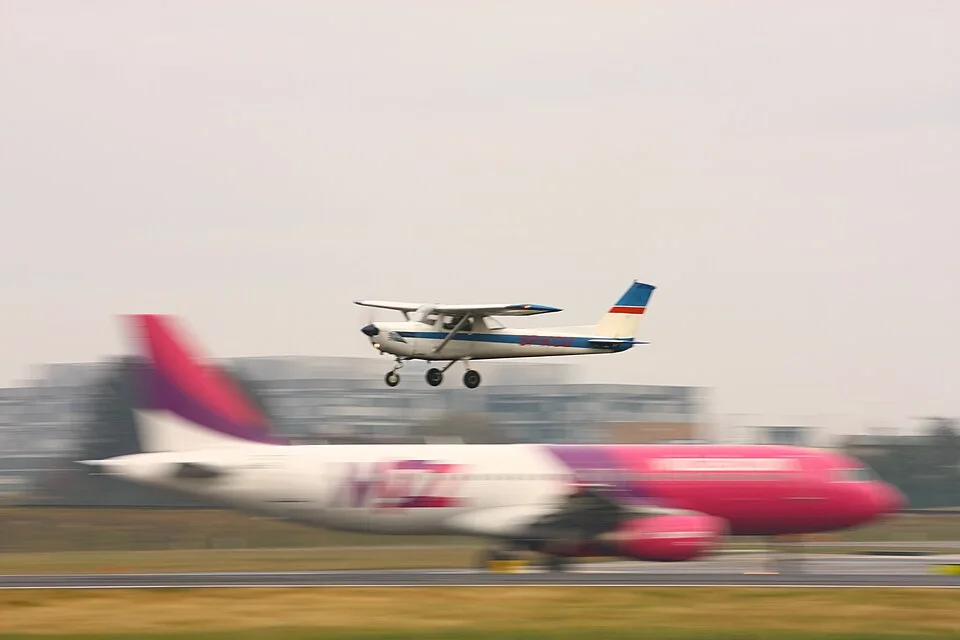

The surviving aircraft connects history with ownership
For an owner or a reader encountering an aircraft today, its model letter links a physical machine with an earlier production decision. A rear window, curved door or tubular gear leg makes part of that history visible. Other changes sit behind the panel or within a control assembly. The design and construction article explains the relationships, and the cabin article follows how several generations changed the space around the occupants.
Continued ownership and operation also give the documentation a purpose beyond historical interest. Type certificates identify approved models; operating handbooks describe specific configurations; service and parts publications address assemblies that may have changed during production. An individual aircraft's later repairs, replacements and alterations then add another history. The technical-document library connects these publication types without implying that possession of an old manual establishes an aircraft's current configuration.
This makes the 150/152 family a useful subject for an encyclopedia as well as a technical reference. Its story joins industrial production, training, international manufacture and the continuing work of understanding individual aircraft. Exact present-day fleet totals or popularity rankings are not needed to explain those relationships. The model chronology gives historical structure, while the technical records let a reader investigate the particular aircraft behind a familiar name.
The organizations behind a familiar aircraft
Cessna and Reims supplied the airframe-manufacturing identities, while engine and propeller manufacturers supplied separately identified products within the aircraft installation. Continental's O-200 and Lycoming's O-235 are therefore part of the family history without making either company the airframe manufacturer. The production and manufacturing account connects these roles with French and Argentine relationships and the different meanings of production dates.
Authorities and document publishers occupy other roles. A type certificate identifies an approved design; an acceptance report describes another jurisdiction's treatment of that design; an operating handbook and service publication answer different aircraft questions. Following those distinctions makes the industrial story more understandable without requiring a separate biography or company history for every name appearing in a manual.
Legacy includes the work of keeping individual aircraft understandable
The family connects several generations of two-seat aircraft through a recognizable arrangement and an extensive technical literature. Its significance includes primary training, a parallel Aerobat branch, international manufacture and subsequent private ownership. These strands remain meaningful even when a particular survivor no longer carries all of its original equipment.
Repairs, replacement components and alterations add an aircraft-level history beneath the model chronology. The configuration-history article explains that second timeline. A later instrument panel may describe one chapter of an aircraft's life, while its model, serial and structural generation describe another. Neither history cancels the other.
The resulting legacy is more concrete than a claim that the family is universally popular. Surviving aircraft still require their identities, operating information and maintenance records to be understood together. The training article follows the people-and-use context; the ownership guide follows the continuing care. Exact present fleet counts and named operator histories require their own evidence and are not inferred from the length of the production sequence.
Explore this topic
- Cessna 150 History: From the Original 150 to the 150M - Trace Cessna 150 development from fastback models through Omni-Vision, electric flaps, Aerobats and the multi-year 150L and 150M generations.
- Cessna 152 History: Introduction, Aerobat and Production Years - Understand the 1978 model-year Cessna 152 introduction, O-235 transition, A152 Aerobat and different U.S. and Reims production-year endpoints.
- Reims-Cessna History: French Production and the FRA150 - Follow Reims F150, FA150, FRA150, F152 and FA152 history, from licensed French manufacture to distinct developments and later certificate administration.
- Cessna 150 and 152 Production: Manufacturers, Years and International Branches - Follow U.S., Reims and Argentine production relationships, engine and propeller makers, model-year transitions and the limits of serial-number totals.