Cessna 150 Serial Numbers and Model Years
A Cessna 150 serial number connects an aircraft to its documented model identity and model-year range, but the complete identifier matters. This guide covers U.S. 150 and A150 Aerobat aircraft, French-built Reims F150 and FA150 aircraft, configuration-dependent FRA150 identities, and Argentine A-150L and A-A150L records. It explains how to read the ranges, apply special assignments and follow the supporting certification sources.
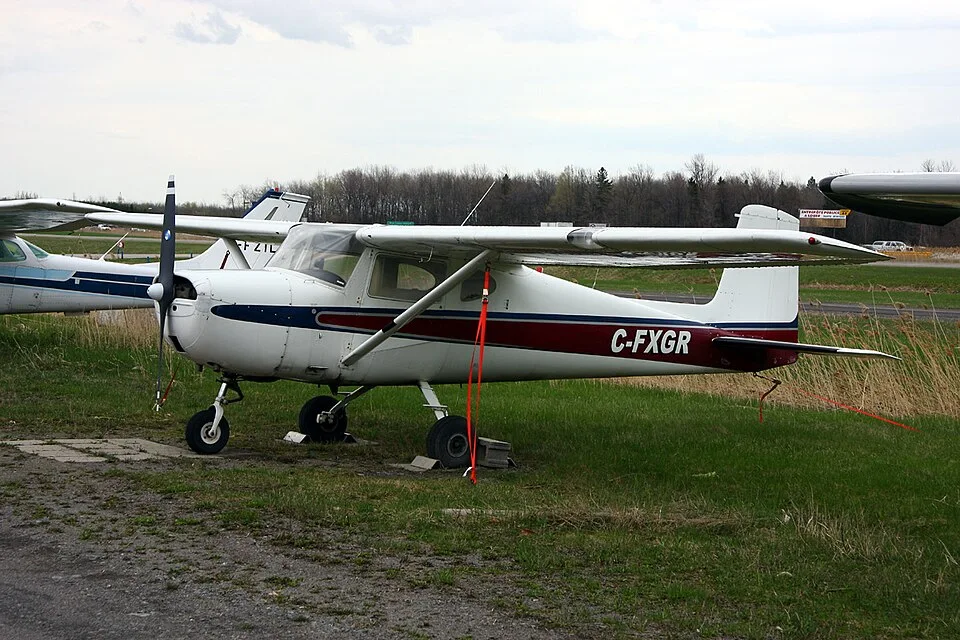

This reference contains 52 source-recorded ranges and 23,948 serial identities within those ranges. These are serial namespace counts, not a worldwide physical production total. Special serials are listed separately, and Argentine cross-references can describe another identifier for the same aircraft.
How to Identify a Cessna 150 by Serial Number
Start with the aircraft identification plate and the serial recorded in its documents. A registration mark belongs to a different identification system and cannot be substituted for the manufacturer serial. Treat the model designation, origin and complete serial as related evidence: a match on the numeric portion alone can lose the distinction between U.S., Reims and Argentine records.
- Read the complete aircraft serial from the identification plate and aircraft records. Keep prefixes, hyphens and leading zeros; a registration mark is a separate identifier.
- Check the special-serial table first. An explicit override takes priority over the normal range.
- Match the full serial format and origin to the inclusive start and end values below. Apply every stated exclusion.
- For Reims FA150 aircraft, also check the configuration rules. For Argentine aircraft, retain the local and Cessna-assigned identifiers separately.
Use the Cessna 150 model and variant guide to compare the resulting identity with its certification and historical context. Model year is not a calendar manufacture date, delivery date or registration year. Serial eligibility and factory/type-design data do not establish an aircraft's current installed equipment or modifications.
How Do Cessna 150 Serial Numbers Relate to Model Years?
The tables group serial identities by the model year assigned in the source data. They are not a date code that can be decoded from a few digits. For example, the 1960 Model 150 is represented by two intervals, 17684-17999 and 59001-59018. Both belong to the same model year even though they are not one continuous numeric sequence. Later 150 model letters and the A150 Aerobat sequence must likewise be interpreted through their documented ranges.
A model year is distinct from the calendar date of manufacture, delivery or registration. A seller's stated year may refer to a different event, so a discrepancy should be checked against the aircraft records rather than automatically corrected to the serial table. This source record intentionally leaves individual manufacture and delivery dates unresolved where original records are unavailable.
Reading Range Starts, Ends and Identity Counts
Start and end values are inclusive within the stated serial format. The identity count is the source's adjusted count, including any exclusion from that interval. Keep leading zeros and prefixes when comparing identifiers. Do not expand a range across a change of prefix, interpolate an Argentine cross-reference, or assume that every number in an interval retains the ordinary model assignment.
Cessna A150, Reims FA150 and Argentine Aerobat Serials
The U.S. Aerobat models represented here are A150K, A150L and A150M. Their A150 serial sequence is distinct from the ordinary 150 sequence, but the special A150M assignment of 15064970 shows why prefix recognition alone is not sufficient. Conversely, A1500433 carries an A150-form serial yet resolves to the later A152 legal model. Both exceptions must survive any search or manual comparison.
French-built FA150 aircraft require their own Reims ranges and A13EU certification context. For certain L and M ranges, the FA150/FRA150 identity depends on the documented configuration. Argentine A-A150L identifiers belong to a separate local namespace and should be read with the ANAC mappings. An Aerobat designation or an eligible serial does not establish the current equipment or the operating documentation for an individual aircraft.
Special Serials and Model Overrides
Serial 15064970 belongs to A150M, despite falling numerically within a 150G range. Serial A1500433 is excluded from A150L and belongs to A152; it is included here to prevent a false Cessna 150 assignment. An unresolved or special model year remains as recorded in the source.
The short special serials 617, 628, 644 and 649 also have explicit model identities. Their model years remain unresolved in the source record. Assigning an adjacent production year would introduce information the source does not supply. In practical research, record the legal identity and the unresolved year separately, then seek aircraft-specific records for any date-dependent question.
These exceptions follow the FAA TCDS 3A19 identity reference. A normal range is still useful, but it must be read together with its exclusions. This prevents an owner or mechanic from starting a manual or parts search under the wrong model.
| Serial | Legal Model | Model Year | Override Type | Effect | Primary Source |
|---|---|---|---|---|---|
| 617 | 150 | Unresolved | Special eligible serial | Model identity confirmed; not assigned to a normal model-year range here. | [1] |
| 628 | 150A | Unresolved | Special eligible serial | Model identity confirmed; not assigned to a normal model-year range here. | [1] |
| 644 | 150E | Unresolved | Special eligible serial | Model identity confirmed; not assigned to a normal model-year range here. | [1] |
| 649 | 150H | Unresolved | Special eligible serial | Model identity confirmed; not assigned to a normal model-year range here. | [1] |
| 15064970 | A150M | Special | Range override | Explicitly not 150G despite numeric location inside 150G sequence. | [1] |
| A1500433 | A152 | 1978 | Range override | Explicitly excluded from A150L and carried as A152. | [1] |


U.S. Cessna 150 and A150 Serial Numbers
Early Model 150 aircraft use five-digit numeric serials. Later 150 and A150 sequences use different serial formats. The split 1960 ranges are retained as separate entries.
The U.S. table preserves the model letters from 150 through 150M and the separate A150 Aerobat models, with FAA 3A19 as the primary identity authority. Read the model-year column together with the full serial and the exclusion column. A continuous-looking numeric sequence can contain an aircraft assigned to a different legal model; the adjustment is reflected in the identity count.
| Model Year | Official Model | Serial Start | Serial End | Identity Count | Excluded / Override Serials | TC / Approval | Notes | Primary Source |
|---|---|---|---|---|---|---|---|---|
| 1959 | 150 | 17001 | 17683 | 683 | - | 3A19 | - | [1] |
| 1960 | 150 | 17684 | 17999 | 316 | - | 3A19 | - | [1] |
| 1960 | 150 | 59001 | 59018 | 18 | - | 3A19 | - | [1] |
| 1961 | 150A | 15059019 | 15059350 | 332 | - | 3A19 | - | [1] |
| 1962 | 150B | 15059351 | 15059700 | 350 | - | 3A19 | - | [1] |
| 1963 | 150C | 15059701 | 15060087 | 387 | - | 3A19 | - | [1] |
| 1964 | 150D | 15060088 | 15060772 | 685 | - | 3A19 | - | [1] |
| 1965 | 150E | 15060773 | 15061532 | 760 | - | 3A19 | - | [1] |
| 1966 | 150F | 15061533 | 15064532 | 3000 | - | 3A19 | - | [1] |
| 1967 | 150G | 15064533 | 15067198 | 2665 | 15064970 | 3A19 | 15064970 is explicitly excluded from 150G identity and assigned to A150M. | [1] |
| 1968 | 150H | 15067199 | 15069308 | 2110 | - | 3A19 | - | [1] |
| 1969 | 150J | 15069309 | 15071128 | 1820 | - | 3A19 | - | [1] |
| 1970 | 150K | 15071129 | 15072003 | 875 | - | 3A19 | - | [1] |
| 1970 | A150K | A1500001 | A1500226 | 226 | - | 3A19 | - | [1] |
| 1971 | 150L | 15072004 | 15072628 | 625 | - | 3A19 | - | [1] |
| 1971 | A150L | A1500227 | A1500276 | 50 | - | 3A19 | - | [1] |
| 1972 | 150L | 15072629 | 15073658 | 1030 | - | 3A19 | - | [1] |
| 1972 | A150L | A1500277 | A1500342 | 66 | - | 3A19 | - | [1] |
| 1973 | 150L | 15073659 | 15074850 | 1192 | - | 3A19 | - | [1] |
| 1973 | A150L | A1500343 | A1500429 | 87 | - | 3A19 | - | [1] |
| 1974 | 150L | 15074851 | 15075781 | 931 | - | 3A19 | - | [1] |
| 1974 | A150L | A1500430 | A1500523 | 93 | A1500433 | 3A19 | A1500433 is explicitly excluded from A150L identity and assigned to A152. | [1] |
| 1975 | 150M | 15075782 | 15077005 | 1224 | - | 3A19 | - | [1] |
| 1975 | A150M | A1500524 | A1500609 | 86 | - | 3A19 | - | [1] |
| 1976 | 150M | 15077006 | 15078505 | 1500 | - | 3A19 | - | [1] |
| 1976 | A150M | A1500610 | A1500684 | 75 | - | 3A19 | - | [1] |
| 1977 | 150M | 15078506 | 15079405 | 900 | - | 3A19 | - | [1] |
| 1977 | A150M | A1500685 | A1500734 | 50 | - | 3A19 | - | [1] |
Reims F150 and FA150 Serial Numbers
Reims serial prefixes form a distinct namespace. FA150L and FA150M ranges must also be read with the FRA150 configuration conditions below.
French manufacture is more than a cosmetic prefix difference: Reims aircraft have their own certification identity. A handbook, engine reference or parts entry for a similar U.S. model cannot be selected solely because both names contain 150. Retain the F150 or FA150 identity and investigate the appropriate configuration before using technical data.
| Model Year | Official Model | Serial Start | Serial End | Identity Count | Excluded / Override Serials | TC / Approval | Notes | Primary Source |
|---|---|---|---|---|---|---|---|---|
| 1966 | F150F | F150-0001 | F150-0067 | 67 | - | A13EU | - | [1] |
| 1967 | F150G | F150-0068 | F150-0219 | 152 | - | A13EU | - | [1] |
| 1968 | F150H | F150-0220 | F150-0389 | 170 | - | A13EU | - | [1] |
| 1969 | F150J | F150-0390 | F150-0529 | 140 | - | A13EU | - | [1] |
| 1970 | F150K | F15000530 | F15000658 | 129 | - | A13EU | - | [1] |
| 1970 | FA150K | FA1500001 | FA1500081 | 81 | - | A13EU | - | [1] |
| 1971 | F150L | F15000659 | F15000738 | 80 | - | A13EU | - | [1] |
| 1971 | FA150L | FA1500082 | FA1500120 | 39 | - | A13EU | - | [1] |
| 1972 | F150L | F15000739 | F15000863 | 125 | - | A13EU | - | [1] |
| 1972 | FRA150L | FRA1500121 | FRA1500166 | 46 | - | A13EU | - | [1] |
| 1973 | F150L | F15000864 | F15001013 | 150 | - | A13EU | - | [1] |
| 1973 | FRA150L | FRA1500167 | FRA1500211 | 45 | - | A13EU | - | [1] |
| 1974 | F150L | F15001014 | F15001143 | 130 | - | A13EU | - | [1] |
| 1974 | FRA150L | FRA1500212 | FRA1500261 | 50 | - | A13EU | - | [1] |
| 1975 | F150M | F15001144 | F15001248 | 105 | - | A13EU | - | [1] |
| 1975 | FRA150M | FRA1500262 | FRA1500281 | 20 | - | A13EU | - | [1] |
| 1976 | F150M | F15001249 | F15001338 | 90 | - | A13EU | - | [1] |
| 1976 | FRA150M | FRA1500282 | FRA1500311 | 30 | - | A13EU | - | [1] |
| 1977 | F150M | F15001339 | F15001428 | 90 | - | A13EU | - | [1] |
| 1977 | FRA150M | FRA1500312 | FRA1500336 | 25 | - | A13EU | - | [1] |
Argentine A-150L and A-A150L Serial Numbers
These local identity ranges retain the published A-150L and A-A150L designations and their approval context. The ANAC cross-reference below is a separate source table; do not silently normalize its identifiers to these ranges.
The Argentine records preserve local designations rather than forcing them into a direct U.S. 3A19 model entry. When a Cessna-assigned serial is also available, it remains a second identifier connected by source evidence. Counting both identifiers as separate aircraft would distort production accounting and can also split an aircraft's research history into misleading duplicate records.
| Model Year | Official Model | Serial Start | Serial End | Identity Count | Excluded / Override Serials | TC / Approval | Notes | Primary Source |
|---|---|---|---|---|---|---|---|---|
| 1972 | A-150L | A-1501001 | A-1501018 | 18 | - | Argentine licensed-production approval context | ANAC cross-reference confirms AMC/DINFIA serial family and Cessna-assigned serial relationships. | [1] |
| 1973 | A-150L | A-1501019 | A-1501039 | 21 | - | Argentine licensed-production approval context | ANAC cross-reference confirms AMC/DINFIA serial family and Cessna-assigned serial relationships. | [1] |
| 1972 | A-A150L | A-A1500001 | A-A1500006 | 6 | - | Argentine licensed-production approval context | ANAC cross-reference confirms AMC/DINFIA serial family and Cessna-assigned serial relationships. | [1] |
| 1973 | A-A150L | A-A1500007 | A-A1500009 | 3 | - | Argentine licensed-production approval context | ANAC cross-reference confirms AMC/DINFIA serial family and Cessna-assigned serial relationships. | [1] |
Reims FA150 / FRA150 Configuration Rules
A serial number alone cannot resolve these certified identities. The listed kit conditions and the aircraft's configuration records are needed; do not count the alternative FRA designation as another aircraft.
For FA1500121-FA1500261 and FA1500262-FA1500336, the source record records the kit conditions FKA150-2311 and FKA150-2316 per A13EU. A range match establishes where the condition can matter; it does not establish that the kits or the resulting configuration are present. Preserve the possible identity until aircraft records resolve it. The Reims FA150/FRA150 document reference explains this distinction.
| Range / Serial Family | Base Prefix Identity | Possible Certified Identity | Condition | Serial interpretation | Primary Source |
|---|---|---|---|---|---|
| FA1500121-FA1500261 | FA150L | FRA150L | With FKA150-2311 and FKA150-2316 per A13EU. | Serial alone is insufficient; return configuration-dependent identity. | [1] |
| FA1500262-FA1500336 | FA150M | FRA150M | With FKA150-2311 and FKA150-2316 per A13EU. | Serial alone is insufficient; return configuration-dependent identity. | [1] |


Argentine AMC / DINFIA and Cessna Serial Cross-Reference
Exact pairs and block endpoints have different precision. Where ANAC supplies only block endpoints, intermediate one-to-one mappings are not inferred. Local identifiers are reproduced exactly as published, including differences from the production-range table.
For example, the exact ANAC entry links local serial A-1501001 to Cessna-assigned serial 15073428. That is a documented pair, not a general conversion formula for other local numbers. For an endpoint-only block, a buyer researching a middle aircraft needs additional evidence before connecting records. Assembly notes are retained only where the source supplies them. See the ANAC Advertencia 286/DAG mapping reference for the evidence boundary.
| Year | Cessna Model Assignment | AMC / DINFIA Serial | Cessna-Assigned Serial | Mapping Precision | Assembly Note / Context | Mapping notes | Source |
|---|---|---|---|---|---|---|---|
| 1972 | A150L | A-1501001 | 15073428 | Exact | ANAC: aircraft assembled in Cessna USA. | Exact pair printed by ANAC. | [1] |
| 1972 | A150L | A-1501002 | 15073463 | Exact | ANAC: aircraft assembled in Cessna USA. | Exact pair printed by ANAC. | [1] |
| 1972 | A150L | A-1501003 | 15073464 | Exact | ANAC: aircraft assembled in Cessna USA. | Exact pair printed by ANAC. | [1] |
| 1972 | A150L | A-1501004 through A-1501018 | 15073465 through ANAC-printed ending value | Block endpoints only | - | Do not interpolate exact intermediate pairings. | [1] |
| 1973 | A150L | A-1501019 through A-1501039 | 15074067 through 15074840 | Block endpoints only | - | Do not interpolate exact intermediate pairings. | [1] |
| 1972 | A-A150L | A-A1501001 | A1500333 | Exact | - | Exact pair printed by ANAC. | [1] |
| 1972 | A-A150L | A-A1501002 | A1500334 | Exact | - | Exact pair printed by ANAC. | [1] |
| 1972 | A-A150L | A-A1501003 | A1500335 | Exact | - | Exact pair printed by ANAC. | [1] |
| 1972 | A-A150L | A-A1501004 | A1500337 | Exact | - | Exact pair printed by ANAC. | [1] |
| 1972 | A-A150L | A-A1501005 | A1500338 | Exact | - | Exact pair printed by ANAC. | [1] |
| 1972 | A-A150L | A-A1501006 | A1500339 | Exact | - | Exact pair printed by ANAC. | [1] |
| 1973 | A-A150L | A-A1501007 through A-A1501009 | A1500366 through A1500377 | Block endpoints only | - | Middle exact pair not inferred. | [1] |
Source Conflicts and Range Exclusions
The table explains competing serial assignments and the controlling model identity. Here the key conflicts concern naive range assignment versus explicit special identity. The numeric position of 15064970 or A1500433 must not override the legal-model exception. Keeping the conflict visible lets a reader understand why a lookup differs from a simple printed interval.
The type certificate controls these assignments; a manufacturer cross-check is provided by Cessna SEB00-7. This does not make one source authoritative for every purpose: an identity table, a maintenance task, an AD and an installed-equipment record answer different questions. Unresolved evidence is retained as unresolved rather than converted into a confident aircraft-specific claim.
| Affected Serials | Source A Result | Source B Result | Model assignment | Reason | Source A | Source B |
|---|---|---|---|---|---|---|
| 15064970 | 15064970 excluded from 150G | Naive range includes it | Special override to A150M. | Explicit authority listing overrides numeric inference. | [1] | [2] |
| A1500433 | A1500433 excluded from A150L | Naive range includes it | Special override to A152. | Explicit authority listing overrides numeric inference. | [1] | [2] |
Using Serial Data for Maintenance, Manuals and Buying Research
Maintenance, Parts and Airworthiness Directives
A model-and-serial match narrows the documents and effectivity groups worth investigating. It does not complete the applicability decision for a maintenance instruction or AD. An affected engine, propeller, appliance or modification can introduce conditions beyond the airframe serial. AD applicability is also distinct from evidence that the required action has been completed.
Mechanics can use the Cessna 150 AD overview and parts-catalog source context to follow those distinctions. A catalog entry is not proof of an installed part, and a historical directive used as a serial cross-check is not an aircraft compliance record.
Factory Engines and Propellers Versus Installed Configuration
Serial-range data can identify a factory or type-design engine and an approved propeller application. Subsequent modifications and component changes require aircraft-specific evidence. Owners comparing an aircraft against the engine overview or propeller applicability overview should preserve that difference instead of treating an eligible configuration as an inspection finding.
The distinction is particularly important where Reims identity is configuration-dependent. A correct serial does not resolve a kit condition, prove installation of an STC or establish current weight and balance. Pilots need the documentation and configuration information controlling the actual aircraft, rather than a generic value selected from its model name.
Which Manual Belongs to a Cessna 150 Serial Number?
Match the manual's model, model-year or serial effectivity and configuration. A technically similar or adjacent-year handbook is not automatically the controlling document. The handbook applicability overview provides context for that research, while the source references explain the evidence used to identify the aircraft. Argentine technical-equivalent mappings do not by themselves establish an approved Argentine aircraft flight manual.
Buying History and Aircraft Identity Checks
Buyers can compare the plate serial, stated model and records against the ranges and exceptions before connecting an aircraft to technical or historical data. A discrepancy is a question to resolve with evidence. A serial alone cannot reconstruct ownership, title, registration changes, delivery dates or maintenance condition from a serial alone.
For Argentine aircraft, keep both identifiers and the precision of their cross-reference. For special serials, keep the legal assignment and any unresolved model year. This avoids carrying an assumed identity into later research, while leaving the aircraft's actual history to dated records and inspection.
Sources and Counting Method
The serial reference is dated 8 September 2026. Row references connect the serial entries to the relevant documents. U.S. identity uses FAA TCDS 3A19; Reims identity uses A13EU; Argentine cross-references retain ANAC's stated precision.
Identity counts use the source's adjusted count after exclusions, rather than subtracting serial endpoints blindly. Published worldwide production claims are separate from these serial identities. This page does not infer missing manufacture dates, registration histories or intermediate Argentine mappings.
Certification, Manufacturer and Authority Source References
The following references identify the primary identity documents and supporting serial cross-checks. They include the primary identity documents and the supporting cross-checks recorded for these rows.
- FAA TCDS 3A19: Cessna 150 and A150 Model Identity - U.S. model identity, eligibility, special serials, A152 year splits.
- FAA TCDS A13EU: Reims F150, FA150 and FRA150 Identity - Reims legal identity and configuration-dependent FA/FRA status.
- DGAC France AD 2000-529(A): Reims Serial Cross-Reference - Reims historical serial cross-check.
- ANAC Advertencia 286/DAG: Argentine and Cessna Serial Mappings - AMC/DINFIA to Cessna serial cross-reference.
- Cessna 150/A150 Parts Catalog: Argentine Serial Context - Confirms Cessna-assigned serial concept.
- Cessna SEB00-7: Serial and Model-Year Cross-Check - Year-by-year serial cross-check.
Continue with the Cessna 150 aircraft reference for model identity, specifications, engines and document applicability.