Cessna 150 and 152 Production: Manufacturers, Years and International Branches
Production history connects the Cessna 150 and 152 with manufacturers, suppliers, approval systems and individual airframes. The family was not one aircraft built unchanged in one place. U.S. standard and Aerobat lines developed alongside French Reims models, while Argentine records connect local identities with particular Cessna identifiers. Understanding those relationships explains both the worldwide family and the different documents attached to its members.
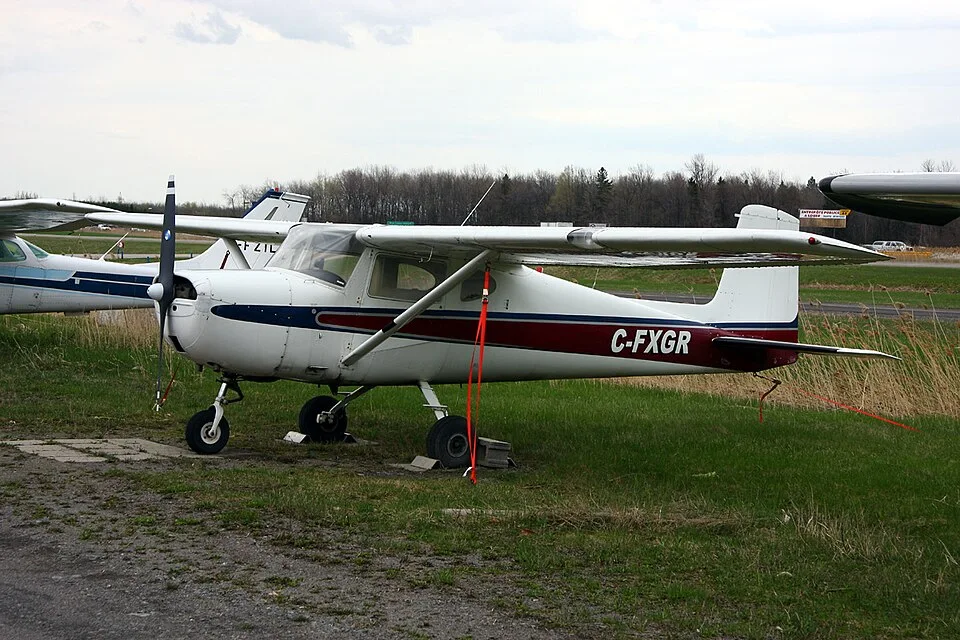

The model-family map follows the designations in order. Here the subject is what lies behind that order: who manufactured the aircraft, what a production year means, how an engine supplier differs from an airframe manufacturer, and why a serial list is not automatically a worldwide production total.
A production story with several clocks
The original Model 150 received U.S. design approval in 1958 and enters the model-year sequence in 1959. The 152 received approval in 1977 and follows as a 1978 model. These pairs of dates describe different events. Approval establishes a design milestone; a model year organizes a manufacturer's product sequence. Neither date alone says when a particular airframe was completed, first flown, delivered or registered.
This matters when an aircraft's advertisement, handbook cover and registration record show different years. They need not be contradictory, but the meaning of each date has to be established. The serial-number guide connects the complete identifier with ordinary model-year groups and explicit exceptions. An individual manufacturing or delivery history needs the records of that aircraft, rather than a date inferred from the model name.
Cessna and the U.S. production line
Cessna Aircraft Company is the airframe manufacturer in the U.S. branch. Its role brings the structure, controls, installed powerplant and approved aircraft configuration together. An engine or propeller manufacturer has a different role: it supplies a product that must have an established relationship to that aircraft installation. Seeing several company names in a set of records is therefore normal and does not imply several competing identities for the airframe.
The standard 150 line developed through successive letter models. Early aircraft led to the rear-window D/E generation, the swept-tail F and subsequent refinements, then the multi-year L and M models. The 150 development history explains the changes themselves. From a production perspective, the important point is that one designation may cover several years, and one year may include distinct standard and Aerobat models.
The Aerobat sequence begins with A150K beside the standard 150K. A150L and A150M continue that branch. An A150 is not merely a standard aircraft with a later paint scheme: the category and model identity are separate. Production history must keep those parallel identities visible even where the aircraft share an engine family or look similar in photographs.

From the final 150s into the 152 era
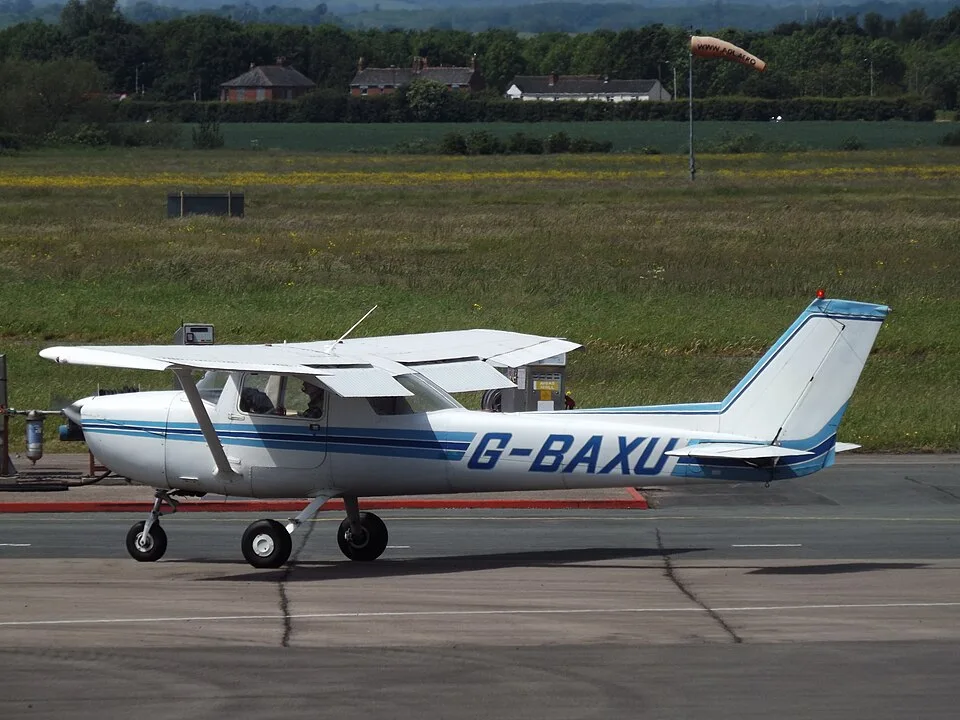
The final 150M and A150M model-year groups cover 1975-1977. The 152 and A152 follow in the 1978 sequence, with Lycoming O-235 installations replacing the earlier U.S. O-200 context. The immediate predecessor comparison connects the engine transition with the other aircraft differences. A successor designation does not mean that all the recognizable structural arrangements disappeared.
The U.S. 152 family then retains its model names through the ordinary 1985 endpoint. Changes within that span can be expressed through engine variants, serial effectivity or publication coverage rather than another letter suffix. French 152-family coverage reaches 1986. These are model-year endpoints; they do not establish an exact final factory shift or delivery date. Nor does the chronology, on its own, explain the commercial motives for introducing or discontinuing a product.
U.S. manufacture
Cessna Aircraft Company
French manufacture
Reims Aviation, under licence
Argentine identities
A-150L and A-A150L
Reims was a manufacturing branch
Reims Aviation manufactured Cessna designs under licence in France. The F150F starts the French F150 model-year sequence in 1966. The standard F150 line, FA Aerobats and higher-power FRA150 aircraft belong to a French manufacturing and approval history, followed by F152 and FA152. The Reims-Cessna history places these developments within their own chronology.
French manufacture is not the same thing as French registration. An aircraft can move to another country without becoming a U.S.-built aircraft, and a U.S.-built aircraft registered in France does not thereby become an F150. Manufacturer, model, registration and applicable approval context are different facts. Their separation is especially helpful when following an aircraft through later ownership or comparing similarly named models across borders.
The FRA150 also prevents the licensed-production story from being reduced to identical copies. Its higher-power engine and dedicated flight-manual relationships require their own account. Eligible FA identities and prescribed kit conditions participate in the FRA relationship; they are not an instruction to count every alternative designation as another airframe. The FRA development article explains that configuration history in more detail.
Argentine records connect two identifier systems
The Argentine A-150L and A-A150L identities appear in the documented 1972-1973 context. They distinguish a local standard aircraft and Aerobat, rather than successive replacements. Their punctuation matters: the local standard A-150L must not be confused with the U.S. Aerobat A150L. The Argentine standard profile and Aerobat profile retain those distinctions.
The ANAC cross-reference connects local and Cessna identifiers at differing levels of precision, and some entries explicitly identify assembly at Cessna USA. A local designation alone therefore cannot establish that every stage of manufacture took place in Argentina. Exact printed pairs can connect records; endpoint entries cannot supply all the missing pairs between them. This is a production relationship worth explaining without expanding it into an unsupported factory narrative.

Engine and propeller makers in the aircraft story
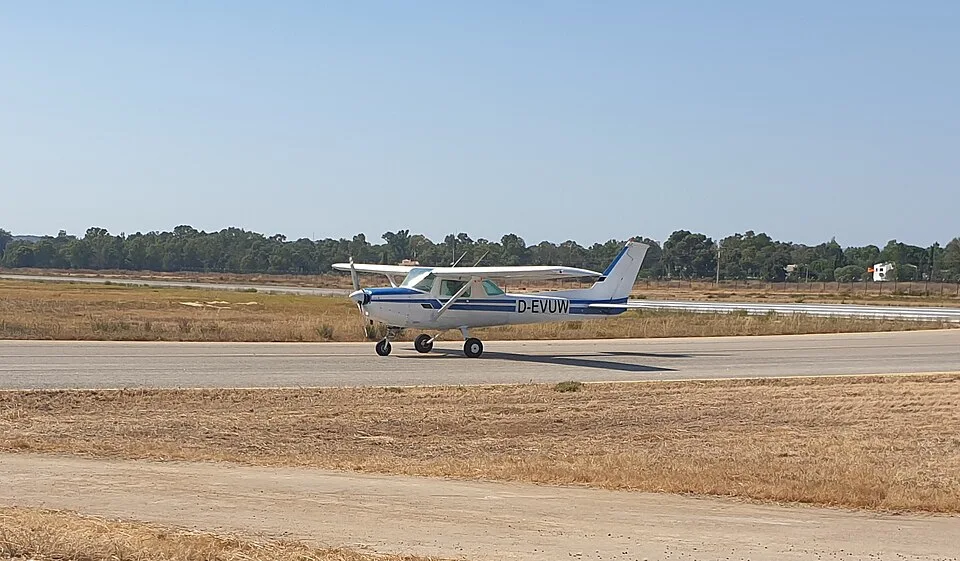
Continental is central to the U.S. 150 through the O-200-A. The French records include Rolls-Royce Continental installations, and the FRA branch brings the O-240 into the picture. Lycoming is central to the 152 through the O-235 family. These names explain the aircraft's powerplant lineage, but the exact engine suffix and installation conditions matter more than a general statement that an airplane has a Continental or Lycoming engine.
McCauley and Sensenich appear through specific propeller applications. A propeller is a separately identified component, and a manufacturer's name is not a complete application. Model, diameter, pitch designation and any applicable conditions have to be read together. The propeller references connect those details with the aircraft and engine, while the engine overview separates factory installations from later conversions.
An aircraft may consequently preserve its original airframe identity while carrying a replacement engine or propeller with a later component history. This is where industrial history meets ownership: the company that built the airframe, the maker of the currently installed engine and the author of a modification approval may all be different organizations with different responsibilities.
Authorities and the document trail
The U.S. models use the 3A19 type-certificate framework; the Reims models have their distinct A13EU history. Type acceptance in another jurisdiction is another part of the aircraft's documentary journey. An authority's acceptance report can explain a manufacturing relationship without making that authority the manufacturer or proving the equipment installed in every accepted aircraft.
Later certificate administration is also separate from original manufacture. The Reims history describes a later transfer of certificate responsibility; that event does not relocate the factory history of an already completed aircraft. The technical-document library distinguishes certificates, acceptance reports, operating publications and service literature so that these different roles remain intelligible.
Why serial arithmetic cannot settle worldwide totals
A serial interval is first a way of expressing identity or applicability. Before using it as a production count, a historian would need to establish that it represents completed, distinct aircraft and account for exceptions, unused entries, alternative notation and cross-references. Adding a local identifier to its corresponding Cessna identifier can count the same aircraft twice. Adding a conditional FA identity to its FRA designation can do the same.
The value of the production chronology does not depend on an estimated total. It establishes the major generations, parallel manufacturing branches and transition into the 152 era. The next step for a particular survivor is its configuration and modification history: the production model explains its starting context, while aircraft-specific records explain what happened afterward.