Reims-Cessna F150, FA150, FRA150, F152 and FA152 Guide
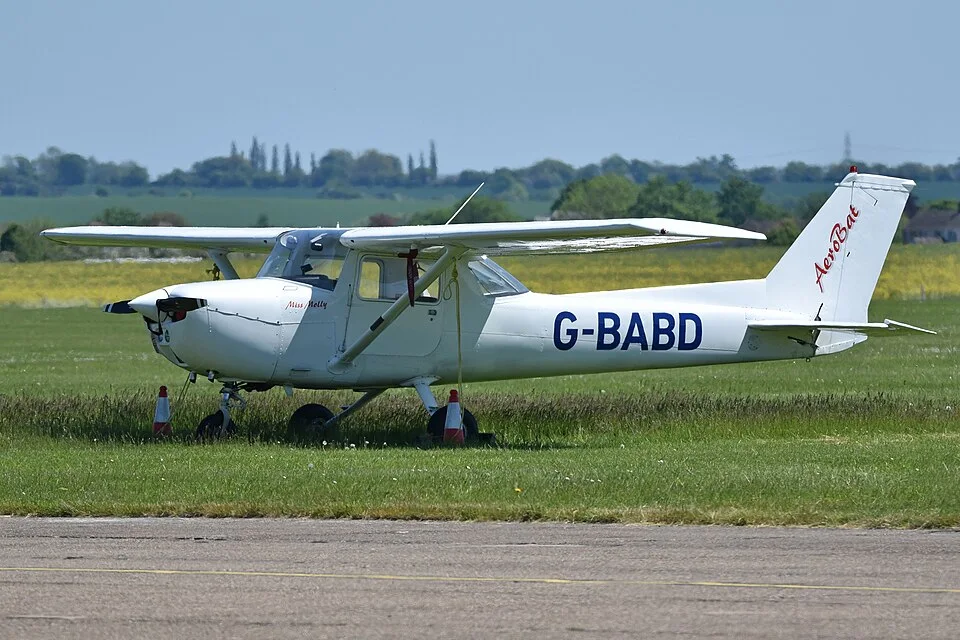
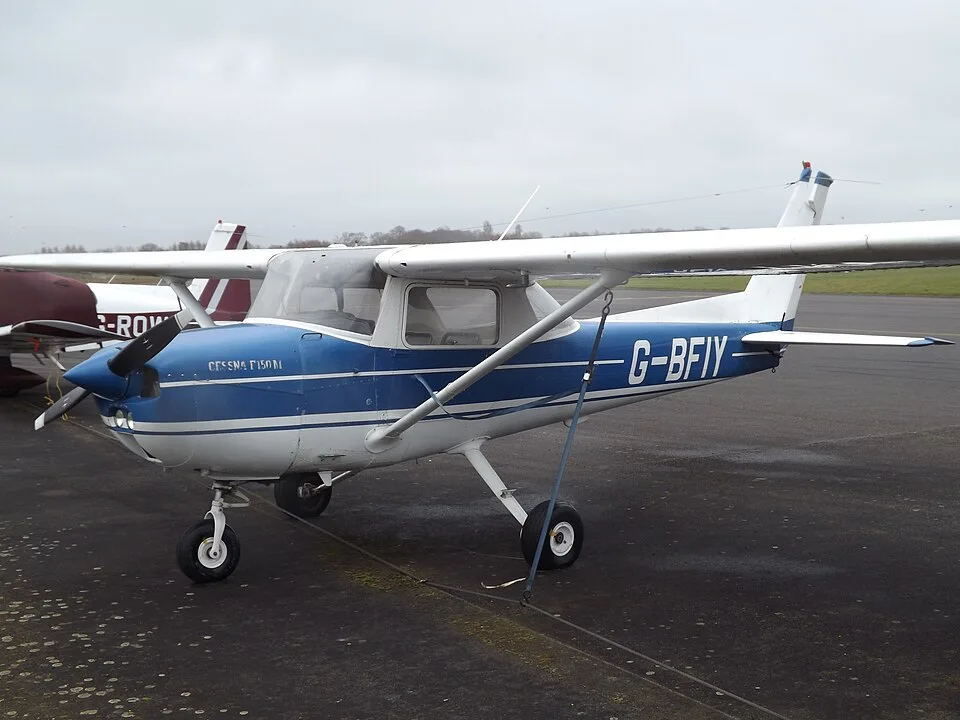
Reims-Cessna aircraft belong to the same broad design history as U.S. Cessna 150s and 152s, but French manufacture and certification relationships remain distinct. F150 and F152 identify standard branches, FA identifies French Aerobats, and FRA150L/M identify a higher-power configuration-sensitive branch. The complete designation determines which serials, engines, propellers and manuals should be researched.


The Reims-Cessna history traces licensed manufacture, the FRA150 development and the later F152/FA152 era. It connects those events to the separate model and certification references below.
The available identity evidence names Reims Aviation as the historical manufacturer and records French production/assembly context. It also preserves A13EU and later type-certificate-holder context separately from the aircraft's present registration jurisdiction. This guide uses those documented relationships; it does not turn a common model letter into permission to apply every U.S. technical value to a French aircraft.
Reims Aviation and the Model Sequence
The documented F150 sequence begins with F150F in 1966, followed by F150G, H, J and K, then the multi-year F150L and F150M. The standard F152 and Aerobat FA152 continue into the later Lycoming-powered family. The source-assigned French 152-family year coverage extends to 1986, so the U.S. 1985 endpoint should not be imposed on every French record.
| Official Model | Model Years | Country of Manufacture | Certification Category | Engine as Type-Certificated | Certified Serial Eligibility | Reference |
|---|---|---|---|---|---|---|
| F150F | 1966 | France | Utility | Continental O-200-A | F150-0001-F150-0067 | [1] |
| F150G | 1967 | France | Utility | Rolls-Royce Continental O-200-A | F150-0068-F150-0219 | [1] |
| F150H | 1968 | France | Utility | Rolls-Royce Continental O-200-A | F150-0220-F150-0389 | [1] |
| F150J | 1969 | France | Utility | Rolls-Royce Continental O-200-A | F150-0390-F150-0529 | [1] |
| F150K | 1970 | France | Utility | Rolls-Royce Continental O-200-A | F15000530-F15000658 | [1] |
| FA150K | 1970 | France | Acrobatic | Rolls-Royce Continental O-200-A | FA1500001-FA1500081 | [1] |
| F150L | 1971-1974 | France | Utility | Rolls-Royce Continental O-200-A | F15000659-F15001143 | [1] |
| FA150L | 1971 | France | Acrobatic | Rolls-Royce Continental O-200-A | FA1500082-FA1500120 | [1] |
| FRA150L | 1972-1974 | France | Acrobatic | Rolls-Royce Continental O-240-A | FRA1500121-FRA1500261; or FA1500121-FA1500261 when equipped with FKA150-2311 and FKA150-2316 | [1] |
| F150M | 1975-1977 | France | Utility | Continental O-200-A | F15001144-F15001428 | [1] |
| FA150M | 1975-1977 | France | Acrobatic | Rolls-Royce O-240-A or O-240-E in the A13EU higher-power configuration | FA1500262-FA1500336 when equipped with FKA150-2311 and FKA150-2316 | [1] |
| FRA150M | 1975-1977 | France | Acrobatic | Rolls-Royce O-240-A or O-240-E (O-240-E noted for S/N FA00262 and on in A13EU) | FRA1500262-FRA1500336; or FA1500262-FA1500336 when equipped with FKA150-2311 and FKA150-2316 | [1] |
| F152 | 1978-1986 | France | Utility | Lycoming O-235-L2C for 1978-1982 models; O-235-N2C for 1983 model and on, or aircraft reworked per SK152-15 / SK152-16 | F15201429-F15201980 | [1] |
| FA152 | 1978-1986 | France | Acrobatic | Lycoming O-235-L2C for 1978-1982 models; O-235-N2C for 1983 model and on, or aircraft reworked per SK152-15 / SK152-16 | FA1520337-FA1520425 | [1] |
The cross-family model directory places these identities beside U.S. and Argentine production. A common suffix supplies historical orientation, but the exact model page is the better place to resolve publication or component questions. For example, F150H has a recognized handbook lead without an established exact propeller application in the selected table, while the explicit F150G/J/K propeller group includes its neighbors. Alphabetical interpolation would hide that real evidence distinction.
A13EU, Country and Registration
The A13EU reference explains the French model identity and configuration context. A U.S. authority document can describe a French-built design without making the aircraft U.S.-built. Likewise, the current type-certificate holder is not necessarily the historical manufacturer, and neither field establishes the aircraft's current State of Registry. Keeping these questions separate avoids misleading descriptions of ownership, origin and applicable approval.
For operating limitations, seek the controlling aircraft document and the appropriate authority relationship. The U.S. 3A19 certified weight/CG tables used elsewhere on this site do not automatically supply missing Reims limits. A similar wing, cabin or engine is not enough to establish the relationship. The French model references therefore preserve unresolved numerical coverage instead of silently transferring U.S. values.
The same distinction matters in maintenance research. A source's named model or installed product scope must be established alongside the applicable jurisdiction and document status. Use the Technical Documents to identify the relevant publication, then confirm that its model, edition and effectivity match the aircraft and question.
Serial Formats and Early Electric Flaps
F150F through F150J use the hyphenated F150-xxxx presentation in the source. F150K begins the later unhyphenated form at F15000530. Keep the full printed identifier when reconciling an aircraft plate, a historical record and a manual. Stripping punctuation or adding zeros without an explicit source rule can conceal the namespace rather than improve the match.
The first F150F range also contains a concrete systems boundary. The source identifies a right-wing flap relay for F150-0001-F150-0034, followed by the improved-motor/relay-deleted arrangement from F150-0035 onward. The corresponding U.S. 150F breakpoints are different numbers. An owner tracing a flap fault needs the French serial and actual installation, not the U.S. interval copied from a related-model summary.
Later F152 source-specific year/effectivity distinctions remain visible in the 152 serial guide. The certification start and manufacturer/service/advisory table starts do not all serve the same purpose. The FA152 service-year evidence also has no 1984 entry in the cited table; the guide does not invent one to make the sequence look regular.

O-200, O-240 and O-235 Branches
Standard F150 and the applicable base FA150 identities use the recorded O-200 context. FRA150L/M introduce the O-240 branch; F152/FA152 belong to the later O-235 family. These engine branches are more informative than the broad phrase French Cessna, but still need exact aircraft/serial and configuration evidence. The type-design engine description does not prove which engine or accessories are currently installed.
For the higher-power M, more than one O-240 variant can appear in the source context. Keep the exact variant and the aircraft-installed power/RPM limits together rather than interpreting the family name as unrestricted interchangeability. The 150 engine guide separates installed-aircraft ratings from engine-manufacturer ratings; the 152 engine guide retains L2C/N2C factory and approved-rework effectivity.
FA-to-FRA Configuration Rules
The FA150L/FRA150L and FA150M/FRA150M relationships are conditional identities. Eligible FA-prefix serials require the stated FKA150-2311 and FKA150-2316 kits. A serial lookup alone must leave that question open rather than automatically choosing the higher-power model. The related notations do not describe extra physical aircraft to add to a production count.
| Range / Serial Family | Base Prefix Identity | Possible Certified Identity | Condition |
|---|---|---|---|
| FA1500121-FA1500261 | FA150L | FRA150L | With FKA150-2311 and FKA150-2316 per A13EU. |
| FA1500262-FA1500336 | FA150M | FRA150M | With FKA150-2311 and FKA150-2316 per A13EU. |
The dedicated FRA150L and FRA150M pages explain the positive engine, propeller and AFM relationships. FA150M remains covered in the base/conditional discussion without a redundant standalone page built from insufficient independent evidence. The Aerobat guide compares these aircraft with U.S. A150/A152 and French FA152 while preserving category and approval differences.
Handbooks and Approved Flight Manuals
Some Reims models appear in recognized equivalent-model publication families with U.S. models. That is useful for finding a candidate handbook, but does not mean every similarly named copy controls every aircraft. F150G retains the D397 versus D397-1 lineage distinction; F150H and F150J have their own annual manual leads; the multi-year F150L has several standard/Aerobat family mappings.
The O-240 branch requires dedicated AFM treatment: D1015-13GB for FRA150L and D1056-13GB for FRA150M. Do not omit the suffix when comparing a similarly numbered U.S. book. Check the selected manual’s revision, amendments and aircraft coverage. The 150 manual reference and 152 manual reference explain the available evidence without offering unauthorized document downloads.

Researching a French-Built Aircraft
A useful Reims record set keeps the official model, complete French serial, historical origin, actual engine/propeller, applicable AFM/handbook and current weight-and-balance evidence together. If the aircraft has a conditional FA/FRA identity, add the kit and approval records before selecting the operating reference. This is a more reliable comparison basis than a seller's year, horsepower claim or a U.S. specification sheet with a matching final letter.
Continue to the buying guide for selecting between actual aircraft and the prebuy guide for source-qualified inspection topics. The narrower numerical coverage of some French models reflects a limit in the evidence presented here, not lesser historical importance. Expanding that coverage requires exact French authority and document relationships, which will add more value than copying a complete-looking but inapplicable U.S. table.
For approval research, distinguish Reims certification history from individual modification evidence. The FRA150 development branch needs its own configuration trail; higher power does not make it an ordinary U.S. Aerobat.
Focused research
For a focused comparison, F152 versus U.S. 152 separates origin, manual and STC evidence. F150L versus FRA150L addresses the different standard and O-240 Aerobat configuration paths.
Identify a French serial
The Serial Number Decoder keeps French prefixes and conditional FA/FRA relationships visible. It supplies a starting identity for research while leaving installed-kit questions attached to the aircraft’s own records.
Explore this topic
- Reims Cessna Serial Identification: F, FA and FRA Model Relationships - Resolve Reims model and serial evidence without dropping prefixes, inventing missing annual ranges or importing U.S. assignments.
- Reims Cessna Manuals: Model, Serial, Engine and Publication Applicability - Choose Reims document research by exact model and configuration rather than assuming U.S. Cessna operating limits apply.
- Reims-Cessna Certification: A13EU, French Manufacture and Approval Research - Separate Reims manufacturing history, A13EU model identity and later certificate administration when researching approvals.
- Reims F150 and F152 Modifications: Exact Model and Approval Evidence - Research Reims alterations without assuming a U.S. Cessna STC or component listing automatically covers French-built aircraft.
- Reims FRA150 Development: O-240 Power and FA Configuration Relationships - Trace the Reims-developed FRA150 branch, its separate flight-manual context and conditional FA-to-FRA relationships.
- Reims F150/F152 Airworthiness Directives: Authority and Applicability - Research Reims ADs across airframe, engine and appliance identities without treating a U.S. Cessna list or an EASA search result as complete compliance evidence.