McCauley 1A102/OCM6948: Cessna 150L/M and Reims Applications
The McCauley 1A102/OCM6948 appears in several later Cessna 150 and Reims 150 applications with the O-200-A engine. Its year and model coverage varies: the standard 150L entry spans 1971-1974, while the A150L entry names 1974. The 150M/A150M application covers 1975-1977. Reading only the propeller designation would hide these differences and could incorrectly transfer one aircraft's eligibility to another.


Model and year applicability
The L-generation aircraft have multiple propeller entries, including GCM, HCM, PCM and OCM designations. They are not interchangeable labels for the same application. The OCM table below isolates the exact 1A102/OCM6948 designation and retains every matching aircraft application. It does not select records merely because their notes mention another propeller or because they belong to the 150 family.
The 150L model reference explains the aircraft's multi-year production context. The 150M follows the later generation, while the O-200-A engine guide shows why a shared engine does not produce one universal propeller specification. The aircraft model, year/configuration and applicable authority remain part of every application decision.
| Origin | Aircraft Model | Model Year / Config | Engine | Exact Propeller Application | Maximum diameter (in) | Minimum diameter (in) | Static RPM minimum | Static RPM maximum | Notes | Primary Authority |
|---|---|---|---|---|---|---|---|---|---|---|
| USA | 150L | 1971-1974 | O-200-A | 1A102/OCM6948 | 69 | 67.5 | 2460 | 2560 | - | [1] |
| USA | A150L | 1974 | O-200-A | 1A102/OCM6948 | 69 | 67.5 | 2460 | 2560 | - | [1] |
| USA | 150M/A150M | 1975-1977 | O-200-A | 1A102/OCM6948 | 69 | 67-67.5 | 2460 | 2560 | Aircraft TCDS row controls exact min diameter/weight. | [1] |
| France | F150L | 1971-1974 | O-200-A | 1A102/OCM6948 | 69 | 67.5 | 2460 | 2560 | - | [2] |
| France | FA150L | 1971-1974 base | O-200-A | 1A102/OCM6948 | 69 | 67.5 | 2460 | 2560 | - | [2] |
| France | F150M | 1975-1977 | O-200-A | 1A102/OCM6948 | 69 | 67.5 | 2460 | 2560 | - | [2] |


Standard aircraft and Aerobats
An A150L cannot inherit every 150L row simply by dropping the initial A from its designation. In this application set, the A150L OCM row is specifically the 1974 entry. Earlier Aerobat rows identify other applications and retain their own year conditions. The later combined 150M/A150M row is explicit evidence for that pairing; it does not justify combining other standard and Aerobat records by analogy.
The same care applies to the Reims branches. F150L and FA150L have separately recorded OCM entries, and their coverage must be read as printed. The presence of “base” in a configuration field matters where later conversion or FRA identity may be involved. The Reims guide explains those distinctions, and the FRA engine reference follows the O-240/BRM installation instead of borrowing the OCM row.
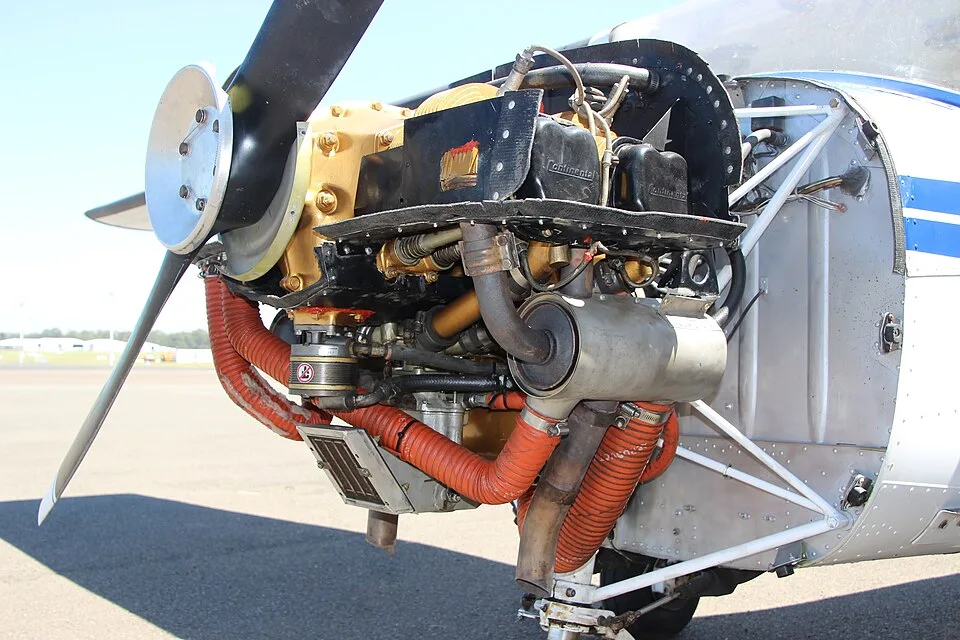

Dimensions and operating checks
Diameter and static RPM appear with the individual application, because the installation context is the useful unit of comparison. Static RPM is neither an aircraft cruise recommendation nor the maximum RPM from the engine certificate. If a maintenance record or sales description quotes a number without identifying which limit it represents, the correct next step is to recover the applicable source rather than choose whichever number seems familiar.
A matching diameter also does not establish an approved substitution. Propeller model, pitch designation, installation hardware, spinner arrangements and the applicable aircraft approval have to be reconciled. The source notes retained in the table are part of that research. This article does not provide instructions to repitch, shorten, repair or install a propeller, and it does not turn a published application into evidence of acceptable condition.
Avoiding the wrong AD association
The similarly named McCauley 1A103/TCM6958 belongs to the 152-family applications. Its hub-cracking directive is keyed to the 1A103/TCM series. A shared manufacturer name is not a basis for assigning that directive to the OCM installation. Equally, the absence of that particular relationship does not establish that an OCM propeller is free of all maintenance or regulatory requirements.
For an aircraft investigation, record the installed propeller identity and compare it with the exact model's eligibility, repair history and current documentation. The Cessna 150 propeller reference provides the wider application set; the prebuy guide connects installation records to the aircraft inspection. Preserve the distinction between what a model could accept when approved and what the aircraft demonstrably has today.