Cessna 150L Model Reference
The 150L spans several model years rather than one short annual interval. Its chronology records the tubular-main-gear phase, while multiple serial-break entries identify more specific changes in cabin, electrical and wheel details. A reference that collapses the entire L series into one year would lose useful maintenance and historical distinctions.
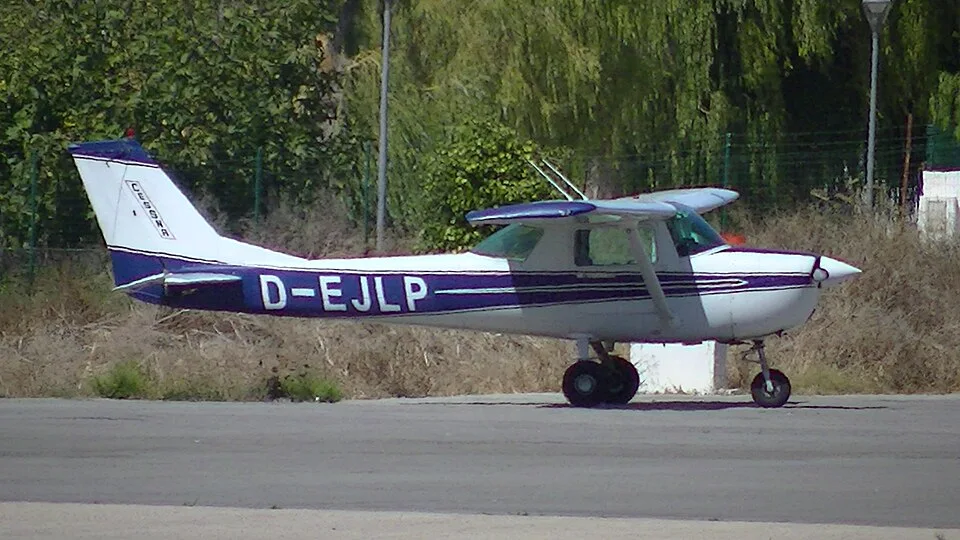

One model spans four years of development
The 150L replaces the 150K and covers 1971 through 1974 before the 150M. This longer span changes how the letter should be read. L identifies a model across several annual equipment and publication contexts, not one frozen specification. Its tubular-main-gear phase is a major generational marker, while the separate changes within those years require more precise identification.
The gear explanation helps connect a visible leg arrangement with the structure and attachments carrying it. The K-to-L comparison places that change in time. Cabin, electrical and wheel details recorded later in L production need not share its introduction date. A later-looking interior therefore cannot date every assembly beneath it.
The concurrent A150L and F150L provide category and manufacturing comparisons around the same broad period. They are not substitute names for this standard U.S. aircraft. For a buyer, the useful result of identifying an L is a more focused set of year, installation and document questions, rather than a promise that all four model years offer the same equipment or cabin load.
| Model Years | 1971-1974 |
|---|---|
| Certification Category | Utility |
| Certified Serial Eligibility | 15072004-15075781 |
| Type-design engine context | Continental O-200-A |
Generation and Certification
The propeller applications and handbook families also vary within the L-series context. Keep the year and configuration conditions with each row. For owners comparing two 150L aircraft, the same official model does not establish identical equipment, dimensions or publication applicability. The serial and records are needed to resolve the detailed comparison.
The 150L spans 1971-1974 and marks the tubular-main-gear phase in the chronology. It therefore needs more than a single annual specification. The published length changes from 23 ft 3 in in 1971 to 23 ft 9 in in later L-year summaries, while height descriptions also change. These entries should remain year-qualified rather than averaged into one dimension. The standard model stays in the 1,600-lb Utility category. The simultaneous A150L and Reims L identities are comparisons, not alternative names for the same certification record.
| Model | TC | Category | Initial Model Approval Date | Core Cert Basis | Certification / Identity Note | Reference |
|---|---|---|---|---|---|---|
| 150L | 3A19 | Utility | 1970-06-08 | CAR 3 (1956-05-15) amended 3-4 | - | [1] |

Serial Numbers and Production
For 150L, the ordinary source assignments are 1971: 15072004 through 15072628; 1972: 15072629 through 15073658; 1973: 15073659 through 15074850; 1974: 15074851 through 15075781. The serial guide retains source conflicts and exceptional identities alongside these intervals.
| Model Year | Official Model | Serial Start | Serial End | Excluded / Override Serials | Notes | Primary Source |
|---|---|---|---|---|---|---|
| 1971 | 150L | 15072004 | 15072628 | - | - | [1] |
| 1972 | 150L | 15072629 | 15073658 | - | - | [1] |
| 1973 | 150L | 15073659 | 15074850 | - | - | [1] |
| 1974 | 150L | 15074851 | 15075781 | - | - | [1] |
Engine, Propeller and Equipment Changes
Four narrower changes appear in the L-series evidence: a dual-detent inside door handle from 15073080, a 125-W flasher bulb from 15074397, a steel-flange nose wheel from 15074404 and a steel-flange main wheel from 15074510. The source's year column and serial effectivity should both remain visible; the serial trigger is the component-research boundary. These changes involve different assemblies and should not be collapsed into a single assumed upgrade package. An early and a late L can therefore pose different cabin, electrical and wheel-parts questions while sharing the same official model.
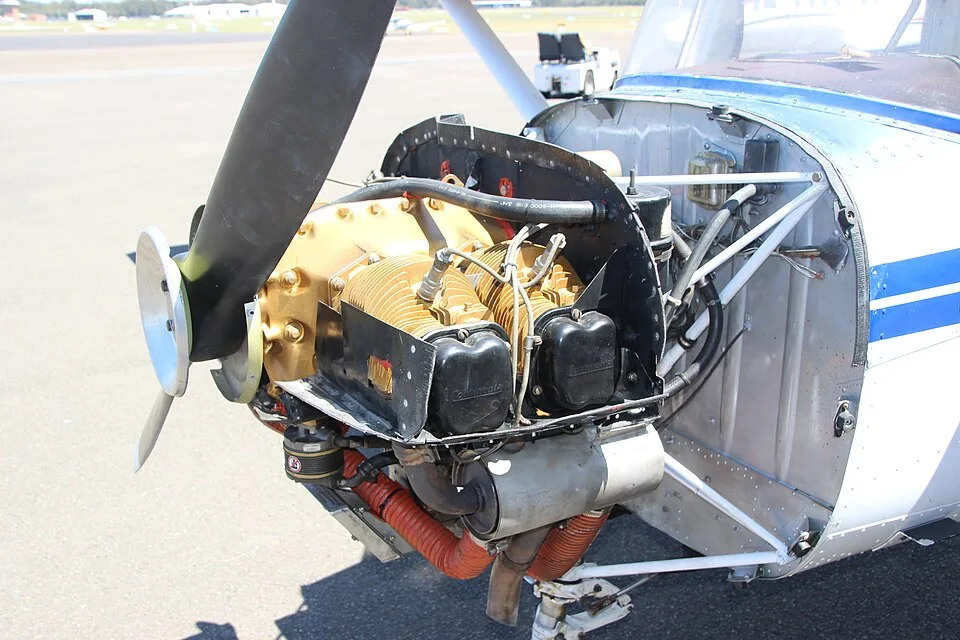
The 150L factory installation groups specify 1971: O-200-A, 100 hp at 2750 RPM; 1972: O-200-A, 100 hp at 2750 RPM; 1973: O-200-A, 100 hp at 2750 RPM; 1974: O-200-A, 100 hp at 2750 RPM. Its named propeller applications are 1A101/GCM6948; 1A101/HCM6948; 1A101/PCM6948; 1A102/OCM6948. Their diameter, static-RPM and configuration conditions are preserved together below.
| Origin | Model Year | Aircraft Model | Factory Engine | Installed hp | RPM Limit | First Serial in Group | Last Serial in Group | Applicability Basis | Aircraft Source |
|---|---|---|---|---|---|---|---|---|---|
| USA | 1971 | 150L | O-200-A | 100 | 2750 | 15072004 | 15072628 | Factory / type-design | [1] |
| USA | 1972 | 150L | O-200-A | 100 | 2750 | 15072629 | 15073658 | Factory / type-design | [1] |
| USA | 1973 | 150L | O-200-A | 100 | 2750 | 15073659 | 15074850 | Factory / type-design | [1] |
| USA | 1974 | 150L | O-200-A | 100 | 2750 | 15074851 | 15075781 | Factory / type-design | [1] |
| Aircraft Model | Model Year / Config | Engine | Exact Propeller Application | Max Dia | Min Dia | Static Min | Static Max | Notes | Primary Authority |
|---|---|---|---|---|---|---|---|---|---|
| 150L | 1971-1973 | O-200-A | 1A101/GCM6948 | 69 | 67 | 2500 | 2600 | - | [1] |
| 150L | 1972-1974 | O-200-A | 1A101/HCM6948 | 69 | 67 | 2500 | 2600 | - | [1] |
| 150L | 1974 | O-200-A | 1A101/PCM6948 | 69 | 67 | 2500 | 2600 | - | [1] |
| 150L | 1971-1974 | O-200-A | 1A102/OCM6948 | 69 | 67.5 | 2460 | 2560 | - | [1] |
| Year | Model | Serial Trigger | Change | Effectivity | System | Source |
|---|---|---|---|---|---|---|
| 1973 | 150L | 15073080 | Inside door handle dual detent | 15073080 and on | Cabin | [1] |
| 1973 | 150L | 15074397 | Flasher bulb increased to 125 W | 15074397 and on | Electrical | [1] |
| 1973 | 150L | 15074404 | Nose wheel changed to steel flange | 15074404 and on | Landing gear | [1] |
| 1973 | 150L | 15074510 | Main wheel changed to steel flange | 15074510 and on | Landing gear | [1] |
Specifications, Fuel and Loading
The L-model performance evidence covers multiple years and distinguishes standard-fuel and long-tank range conditions. This is one reason to place the metrics in a single year/condition table rather than separate tiny tables that encourage comparing unmatched figures. The 1973 empty-weight summary labels Standard, Trainer, Commuter and Aerobat examples; the Aerobat label is not a standard-L empty weight. Actual equipment and fuel carried determine the practical cabin-load margin beneath the certified limit. The larger year coverage makes a current aircraft weight-and-balance record especially valuable when comparing two L-series sale listings.
The L-model year summaries also show the limits of a sales-name comparison. A 1973 source lists 990-lb Standard, 1,010-lb Trainer, 1,060-lb Commuter and 1,040-lb Aerobat examples. The standard 150L page can preserve that mixed year-context record without claiming that the Aerobat weight belongs to the standard aircraft. The current weight-and-balance report is needed to turn a useful historical comparison into a loading answer for an individual L. The ordinary L range spans 15072004-15075781, but handbook families, propeller conditions and equipment breakpoints divide that interval for different purposes. Do not expect every division to occur at the same serial. A 125-W flasher-bulb change and a steel-flange wheel change concern different systems even when their source lists them in the same year. The published dimensions likewise carry year context; a later length should not be used to silently fill the earlier L summary. The practical lesson for an owner is to identify the question first: model identity, handbook selection, wheel parts, cabin hardware or performance conditions. Then use the matching L-series boundary. This provides a more useful comparison with the preceding K and following M than treating all four L years as a single equipment package or assuming that the newest-looking cockpit identifies the production year.
| Models | Category | Speed Basis | Vne | Vno | Va | Vfe | MTOW Land lb | MTOW Sea lb | Baggage lb | Source |
|---|---|---|---|---|---|---|---|---|---|---|
| 150L | Utility | CAS | 141 kt / 162 mph | 104 kt / 120 mph | 95 kt / 109 mph | 87 kt / 100 mph | 1600 | - | 120 | [1] |
| Models / Serial Applicability | Config | Category | Ramp lb | TO lb | Landing lb | Fwd CG light | Light wt | Fwd CG heavy | Heavy wt | Aft CG | Baggage | Datum / Reference | Leveling | Source |
|---|---|---|---|---|---|---|---|---|---|---|---|---|---|---|
| 150L | Land | Utility | - | 1600 | 1600 | 31.5 | 1280 | 32.9 | 1600 | 37.5 | 120 lb, reference W&B data | Firewall/front face Sta 0.0 handbook convention | Jig points +94.63/+132.94 | [1] |
| Year | Model(s) | Max Speed | Cruise | ROC SL | Ceiling | Published Gross / MTOW | Published Empty Weight | Baggage | Notes | Source |
|---|---|---|---|---|---|---|---|---|---|---|
| 1971 | 150L/A150L | 122 mph | 117 mph @75% /7000 ft | 670 fpm | 12,650 ft | 1600 lb | 975 Std; 1060 Commuter | 120 lb | Detailed secondary page. | [1] |
| 1972 | 150L/A150L | 122 mph | 117 mph @75% /7000 ft | 670 fpm | 12,650 ft | 1600 lb | - | 120 lb | Empty-weight line not established, not inferred. | [2] |
| 1973 | 150L/A150L | 122 mph | 117 mph @75% /7000 ft | 670 fpm | 12,650 ft | 1600 lb | 990 Std; 1010 Trainer; 1060 Commuter; 1040 Aerobat | 120 lb | Detailed secondary page. | [3] |
| 1974 | 150L/A150L | 122 mph | 117 mph @75% /7000 ft | 670 fpm | 12,650 ft | 1600 lb | 995 Std; 1060 Commuter | 120 lb | Detailed secondary page. | [4] |

Performance and Comparison Conditions
One published 150L example is 1971 cruise speed: 117 mph (power % 75; altitude ft 7000). The table keeps each metric's year, units, power, altitude, fuel and reserve columns together. Use the performance guide to distinguish headline comparisons from handbook operating calculations; no unreported condition is supplied for 150L.
| Year | Model | Value | Units | Power % | Altitude ft | Fuel Usable gal | Reserve Basis | Obstacle ft | Condition Note | Source |
|---|---|---|---|---|---|---|---|---|---|---|
| 1971 | 150L | 122 | mph | - | - | - | - | - | Published headline value | [1] |
| 1971 | 150L | 117 | mph | 75 | 7000 | - | - | - | Published headline condition | [1] |
| 1971 | 150L | 670 | fpm | - | - | - | - | - | - | [1] |
| 1971 | 150L | 12650 | ft | - | - | - | - | - | - | [1] |
| 1971 | 150L | 735 | ft | - | - | - | - | - | - | [1] |
| 1971 | 150L | 1385 | ft | - | - | - | - | 50 | - | [1] |
| 1971 | 150L | 445 | ft | - | - | - | - | - | - | [1] |
| 1971 | 150L | 1075 | ft | - | - | - | - | 50 | - | [1] |
| 1972 | 150L | 122 | mph | - | - | - | - | - | Published headline value | [2] |
| 1972 | 150L | 117 | mph | 75 | 7000 | - | - | - | Published headline condition | [2] |
| 1972 | 150L | 670 | fpm | - | - | - | - | - | - | [2] |
| 1972 | 150L | 12650 | ft | - | - | - | - | - | - | [2] |
| 1972 | 150L | 735 | ft | - | - | - | - | - | - | [2] |
| 1972 | 150L | 1385 | ft | - | - | - | - | 50 | - | [2] |
| 1972 | 150L | 445 | ft | - | - | - | - | - | - | [2] |
| 1972 | 150L | 1075 | ft | - | - | - | - | 50 | - | [2] |
| 1973 | 150L | 122 | mph | - | - | - | - | - | Published headline value | [3] |
| 1973 | 150L | 117 | mph | 75 | 7000 | - | - | - | Published headline condition | [3] |
| 1973 | 150L | 670 | fpm | - | - | - | - | - | - | [3] |
| 1973 | 150L | 12650 | ft | - | - | - | - | - | - | [3] |
| 1973 | 150L | 735 | ft | - | - | - | - | - | - | [3] |
| 1973 | 150L | 1385 | ft | - | - | - | - | 50 | - | [3] |
| 1973 | 150L | 445 | ft | - | - | - | - | - | - | [3] |
| 1973 | 150L | 1075 | ft | - | - | - | - | 50 | - | [3] |
| 1974 | 150L | 122 | mph | - | - | - | - | - | Published headline value | [4] |
| 1974 | 150L | 117 | mph | 75 | 7000 | - | - | - | Published headline condition | [4] |
| 1974 | 150L | 670 | fpm | - | - | - | - | - | - | [4] |
| 1974 | 150L | 12650 | ft | - | - | - | - | - | - | [4] |
| 1974 | 150L | 735 | ft | - | - | - | - | - | - | [4] |
| 1974 | 150L | 1385 | ft | - | - | - | - | 50 | - | [4] |
| 1974 | 150L | 445 | ft | - | - | - | - | - | - | [4] |
| 1974 | 150L | 1075 | ft | - | - | - | - | 50 | - | [4] |
| 1973 | 150L | 475 | mi | 75 | 7000 | 22.5 | No reserve | - | Condition-preserved published range | [3] |
| 1973 | 150L | 725 | mi | 75 | 7000 | 35 | No reserve | - | Condition-preserved published range | [3] |
| 1973 | 150L | 565 | mi | - | 10000 | 22.5 | No reserve | - | Condition-preserved published range | [3] |
| 1973 | 150L | 889 | mi | - | 10000 | 35 | No reserve | - | Condition-preserved published range | [3] |
Manuals, Maintenance and Research
Handbook leads advance through D836-13 / D839-13, D901-13 / D900-13, D962-13 / D963-13 and D1013-13 / D1014-13. These are year- and variant-sensitive families, not one interchangeable L manual. The 1974 mapping explicitly avoids FRA inheritance. For a standard U.S. L, connect its own serial and publication year before using a handbook performance chart, then check the named component breakpoints and actual modification records. Argentine A-150L wording and Reims F150L wording need separate identity work even when a handbook offers related technical context. The positive 150L publication leads are 1971: D836-13 / D839-13 (Owner's Manual); 1972: D901-13 / D900-13 (Owner's Manual); 1973: D962-13 / D963-13 (Owner's Manual); 1974: D1013-13 / D1014-13 (Owner's Manual).
| Family / Year | Model | Publication | Document Class | Serial / Year Effectivity | Authority Basis | Operational Status | Special Boundary | Reference |
|---|---|---|---|---|---|---|---|---|
| 1971 | 150L/A150L/F150L/FA150L | D836-13 / D839-13 | Owner's Manual | Standard vs Aerobat family | CAA TAR 98/08 + FAA 3A19 | Authority-recognized family | A150L acrobatic category | [1] |
| 1972 | 150L/A150L/F150L/FA150L | D901-13 / D900-13 | Owner's Manual | Standard vs Aerobat family | CAA TAR 98/08 + FAA 3A19 | Authority-recognized family | Argentina technical equivalence only | [1] |
| 1973 | 150L/A150L/F150L/FA150L | D962-13 / D963-13 | Owner's Manual | Standard vs Aerobat family | CAA TAR 98/08 + FAA 3A19 | Authority-recognized family | Argentina technical equivalence only | [1] |
| 1974 | 150L/A150L/F150L | D1013-13 / D1014-13 | Owner's Manual | Standard vs Aerobat family | CAA TAR 98/08 + FAA 3A19 | Authority-recognized family | No FRA inheritance | [1] |
| Publication | Title | Document Class | Model Applicability | Years | Serial Effectivity | Revision Context | Authority Status | Use Boundary | Reference |
|---|---|---|---|---|---|---|---|---|---|
| D901-13 | 150L (1972) Owner's Manual | Owner's Manual | 150L | 1972 | Model-year specific; verify aircraft serial before operational use | Original issue / status-report basis | Historical / reference | Operational reference; aircraft-specific approved AFM/POH controls where required | [1] |
| D962-13 | 150L (1973) Owner's Manual | Owner's Manual | 150L | 1973 | Model-year specific; verify aircraft serial before operational use | Original issue / status-report basis | Historical / reference | Operational reference; aircraft-specific approved AFM/POH controls where required | [1] |
| D1013-13 | 150L (1974) Owner's Manual | Owner's Manual | 150L | 1974 | Model-year specific; verify aircraft serial before operational use | Original issue / status-report basis | Historical / reference | Operational reference; aircraft-specific approved AFM/POH controls where required | [1] |
Related Models and Technical Research
The GCM, HCM and PCM propeller comparison preserves overlapping year applications within the L generation. Use the 150K-versus-150L comparison to separate the landing-gear generation from smaller serial-dependent component changes.