Cessna 150 Seaplane Configuration: Floats, Weight and Propeller Context
The retained Cessna 150 certification evidence includes a seaplane configuration for the 150G, 150H, 150J and 150K group. This is a configuration branch with its own loading and propeller context, not a statement that every aircraft of those models was built or operated on floats. A landplane model reference alone is insufficient to describe an installed float arrangement.
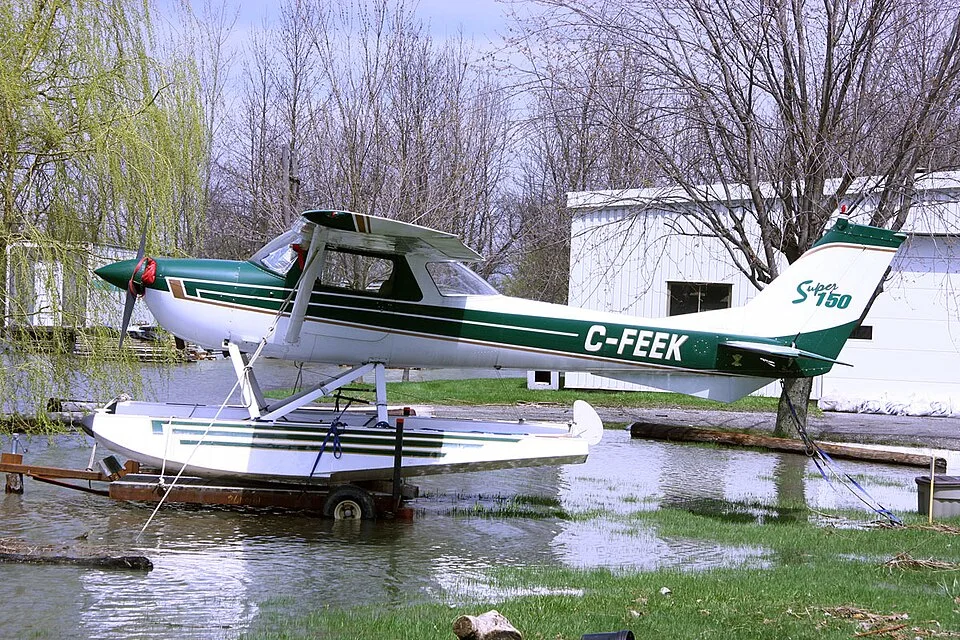

Keep land and seaplane loading groups separate
The weight-and-balance records retain different configuration labels and associated limits for the G/H/J/K landplane and seaplane groups. They are shown together here to make the distinction visible. The source-specific datum, category, weight and CG information should travel with the selected configuration.
| Reference family | WB Group | Models / Serial Applicability | Config | Category | TO lb | Landing lb | Fwd CG light | Light wt | Fwd CG heavy | Heavy wt | Aft CG | Seats / Arm | Baggage | Datum / Reference | Leveling | Source |
|---|---|---|---|---|---|---|---|---|---|---|---|---|---|---|---|---|
| Cessna 150 | WB-150-GHJK-L | 150G, H, J, K | Land | Utility | 1600 | 1600 | 31.5 | 1280 | 32.9 | 1600 | 37.5 | 2 @ +39 | 120 lb, reference W&B data | Certified datum | Top of tailcone | [1] |
| Cessna 150 | WB-150-GHJK-S | 150G, H, J, K with approved seaplane configuration | Sea | Utility | 1650 | 1650 | 33 | 1400 | 33.8 | 1650 | 36.5 | 2 @ +39 | 120 lb, reference W&B data | Certified datum | Top of tailcone | [1] |
Do not apply an empty-weight example from a wheel-equipped aircraft to a float-equipped aircraft. The actual installed equipment and current weight report are needed. The same caution applies after a return to wheels: configuration history and the latest applicable records matter more than an old photograph or a historical description in an advertisement.
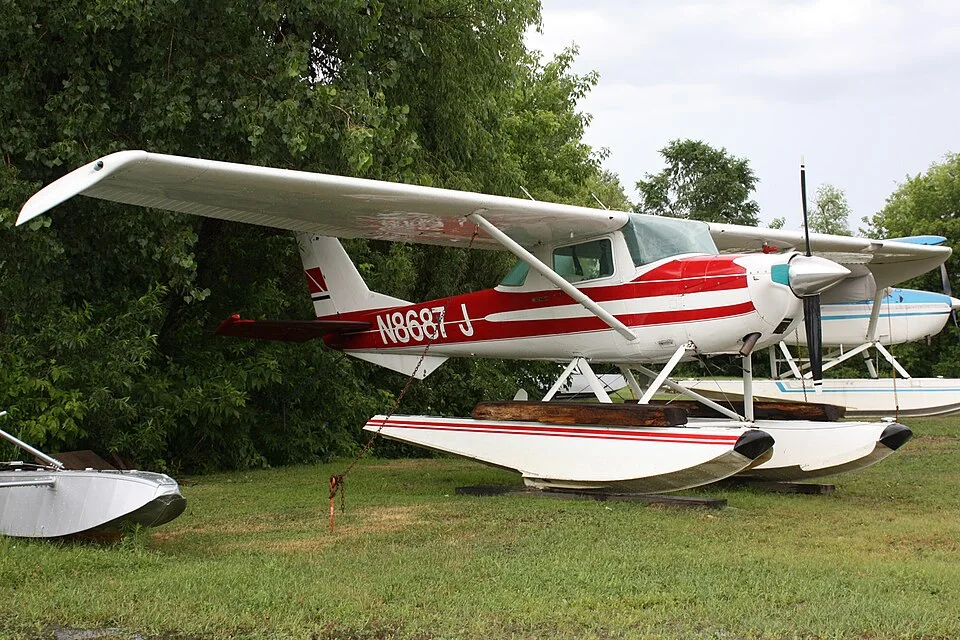

A separate propeller application
The McCauley 1A90/CF application in the retained table is explicitly marked seaplane only. It has its own diameter and static-RPM context. That line should not be assigned to a landplane simply because the airframe falls within the 150G-through-150K model group or uses an O-200-A engine.
| Reference family | Origin | Aircraft Model | Model Year / Config | Engine | Exact Propeller Application | Max Dia | Min Dia | Static Min | Static Max | Notes | Primary Authority | Manufacturer Cross-check |
|---|---|---|---|---|---|---|---|---|---|---|---|---|
| Cessna 150 | USA | 150G through 150K | Seaplane | O-200-A | 1A90/CF | 75 | 73.5 | 2500 | 2600 | Seaplane only. | [1] | [2] |
The record does not supply a universal pitch selection for every float installation. Its value is to identify the application branch and prevent the larger seaplane propeller context from being blended into a generic Cessna 150 propeller table without qualification.
More than a landing-gear substitution
The system record explains that floats replace the land-gear assumptions and affect related operating and loading interfaces. The landing-gear overview provides the wider system context, while the actual float installation requires its own approved data.
| Reference family | System ID | Domain | Subsystem | Factory Applicability | Architecture / Components | Operational Interface | Configuration Status | Primary Source |
|---|---|---|---|---|---|---|---|---|
| Cessna 150 | SYS-FLOAT | Landing gear | Seaplane interface | 150G/H/J/K approved float configurations | Float installation replaces land gear assumptions and changes related W&B/operating interfaces. | Water operation. | Exact float installation approved data required. | [1] |
Fuel evidence also needs care. The fuel-capacity guide retains the distinct usable-fuel context in the relevant seaplane record. A familiar total-capacity number is not enough to establish the usable amount for another configuration.
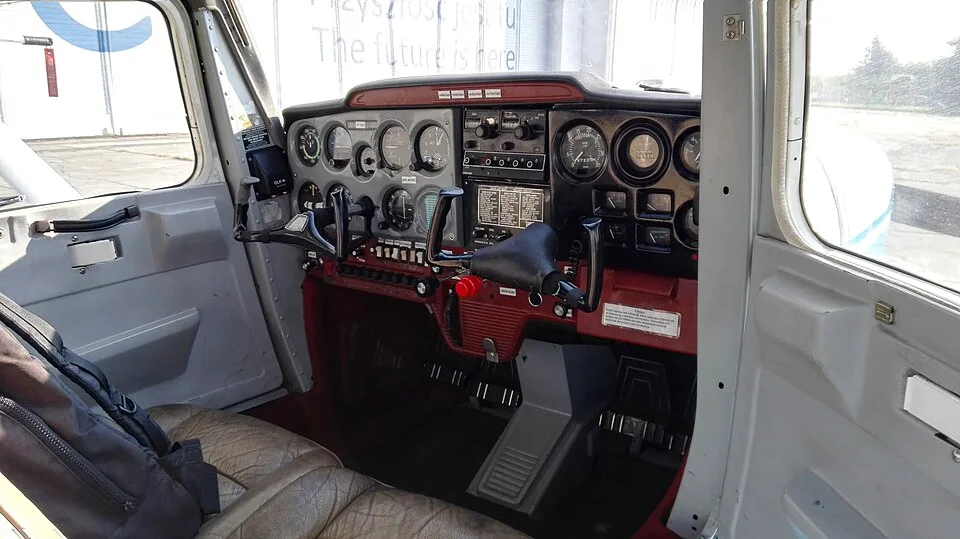

What a buyer should assemble
Collect the exact aircraft identity, installed float identification, installation approval and supplements, current weight-and-balance information, and engine/propeller records. If the aircraft has changed between floats and wheels, preserve that sequence. A type-design eligibility entry is not an installation log, and an installation log does not establish present condition.
No takeoff-water distance, cruise penalty or payload advantage is inferred here. Those claims would need applicable configuration-specific performance evidence. This page instead explains why the float branch must remain distinct and which records are required to turn a model-level reference into a useful investigation of a particular aircraft.
The 150H model reference retains both landplane and approved-seaplane loading contexts. Its special serial 649 has an unresolved model year, so the ordinary 1968 interval cannot supply that missing year.