Cessna 152 Models: 152, A152, Reims F152 and FA152


A Cessna 152 model search should resolve four questions: the official designation, manufacturing origin, certification category and relevant serial namespace. The standard U.S. 152, U.S. A152 Aerobat, Reims F152 and Reims FA152 are separately documented identities. They share family relationships without sharing every technical limit or every publication's effectivity. This page explains those distinctions before the individual model references develop their exact source relationships.


Begin with the serial-number reference if the plate serial or advertised identity is uncertain. A complete identifier is more useful than a loose description such as late model, French Aerobat or 110-horsepower trainer. Those descriptions may point toward a research topic but cannot resolve the engine variant, approval basis or handbook belonging to the aircraft.
Two comparison directions within four models
The 152 family is not a four-step sequence in which 152 becomes A152, then F152 and FA152. Standard versus Aerobat is one comparison direction; U.S. versus Reims manufacture is another. The four identities occupy those two relationships together. A chronological navigation link therefore follows a production branch, while a counterpart link compares category or origin within the period.
The U.S. standard 152 follows the 150M, and the U.S. A152 follows A150M in the Aerobat line. French standard F152 follows F150M. The FA152 belongs to the later French Aerobat history, but the distinct earlier FRA configuration is not drawn as an automatic conversion or component succession. The model-family map keeps that boundary visible.
Development continues without another model letter
A single 152-family model can span many years while engines, equipment and document effectivity change within it. That differs from a directory organized around the 150's succession of letters. The exact engine and serial sections on each profile explain the internal distinctions. A later year can matter without becoming a new official model, and a missing annual table entry does not create one either.
For the historical transition, the 150M-versus-152 comparison answers a different question from 152 versus A152 or Reims F152 versus U.S. 152. The first crosses a generation, the second a category branch, and the third a manufacturing and approval context. Keeping those questions separate prevents an attractive figure from one comparison becoming an unsupported conclusion in another.
All four profiles connect to the larger encyclopedia where shared explanation is useful. The training article describes the educational setting, and the cabin article explains the physical layout. Their shared context leaves each model page room to explain its specific identity, changes within production and positive technical relationships.
The Four Official Identities
The identity table keeps public names separate from official models. The U.S. standard model is 152, while A152 is the separate Aerobat identity. For French manufacture the corresponding designations are F152 and FA152. The F is meaningful origin and type-design context, and the A in the Aerobat designation is not an equipment-option code that can be added to a standard aircraft's name.
The manufacturing location and approval context also describe different things. An aircraft built in France can later be registered elsewhere without losing its Reims identity. A change of registration jurisdiction does not turn an F152 into a U.S. 152 for the purpose of choosing technical limits or component applications. Preserve the manufacturer's model as recorded on the aircraft and in its documents.
| Official Model | Public Name | Model Years | Variant Type | Certification Category | Historical Manufacturer | Country of Manufacture | Primary Type Certificate |
|---|---|---|---|---|---|---|---|
| 152 | Cessna 152 | 1978-1985 | Standard | Utility | Cessna Aircraft Company | United States | 3A19 |
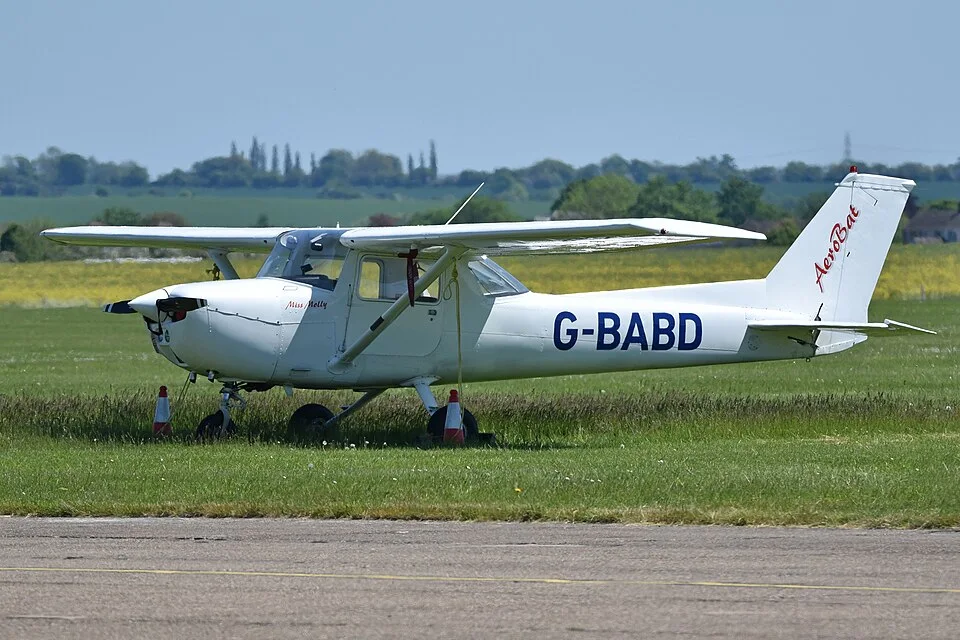
| A152 | Cessna A152 Aerobat | 1978-1985 | Aerobat | Acrobatic | Cessna Aircraft Company | United States | 3A19 |
| F152 | Reims/Cessna F152 | 1978-1986 | Standard | Utility | Reims Aviation S.A. (Reims-Cessna) | France | A13EU |
| FA152 | Reims/Cessna FA152 Aerobat | 1978-1986 | Aerobat | Acrobatic | Reims Aviation S.A. (Reims-Cessna) | France | A13EU |
U.S. 152 and A152 Certification
The standard Model 152 and A152 Aerobat have the same recorded initial approval date, 16 March 1977, under 3A19. Their categories differ: Utility and Acrobatic respectively. Approval date is a model-level certification event. It does not state when each airframe was manufactured, delivered or first registered.
The standard and Aerobat aircraft retain separate certified-speed groups. Similar takeoff weights or a shared Lycoming engine family do not authorize transferring one model's speeds to the other. Read the category and the actual aircraft limitations together. The specifications guide makes that distinction explicit rather than displaying one generic set of family airspeeds.
The U.S. certification source also preserves the A152 exceptional serials. Their existence is a reason to check exact identity rather than deciding that every A150-form serial must be an A150. The correct legal-model assignment is more important than making a serial search conform to a tidy prefix rule.
| Model | TC | Category | Initial Model Approval Date | Core Cert Basis | Certification / Identity Note | Reference |
|---|---|---|---|---|---|---|
| 152 | 3A19 | Utility | 1977-03-16 | CAR 3 (1956-05-15) amended 3-4 | Later-model serial groups carry additional FAR requirements. | [1] |
| A152 | 3A19 | Acrobatic | 1977-03-16 | CAR 3 (1956-05-15) amended 3-4 | Special S/N 681 is part of the later FAR 23.1559 trigger set. | [1] |
| F152 | A13EU | Utility | 1977-06-02 | CAR 3 (1956-05-15) amended 3-4 | Reims 152 family | [2] |
| FA152 | A13EU | Acrobatic | 1977-06-02 | CAR 3 (1956-05-15) amended 3-4 | Reims Aerobat 152 family | [2] |

Reims F152 and FA152 Through 1986
The F152 and FA152 have a recorded approval date of 2 June 1977 under A13EU. Their manufacturer evidence extends model-year coverage through 1986, beyond the U.S. 1985 endpoint. A worldwide model list that stops every 152-family aircraft at the U.S. endpoint would conceal valid Reims research context.
The F152 record has a further starting-serial distinction. Certified eligibility begins at F15201429, while some service-year tables begin at F15201449. That disagreement is not resolved by discarding the earlier aircraft or assigning a convenient manufacture date. The model identity and source-specific year question are preserved separately in the serial conflicts.
FA152 has a gap in the service-manual production-year table for 1984. The absence of that annual entry does not create a new legal model or invalidate the continuing certified FA152 identity. Do not interpolate a missing range merely to make the annual sequence look complete. A model's production span and the completeness of a particular annual table are different kinds of evidence.
Engine Changes Without a New Model Name
The Lycoming O-235-L2C and O-235-N2C appear within the same four official model names. The U.S. standard transition is recorded from 15285595 and the Aerobat transition from A1521015, with the source also recognizing aircraft reworked under SK152-15 / SK152-16. This makes model-only engine selection insufficient for a component or limitation question.
the installed ratings are 110 hp for L2C and 108 hp for N2C, both at 2,550 RPM. The engine reference also distinguishes these from manufacturer engine ratings at another RPM. A seller's general horsepower description is therefore not a substitute for the engine identification and aircraft approval record.
Reims identity wording associates the later engine with 1983-and-on models or approved rework. Keep that wording with its authority and origin. A U.S. numerical serial boundary cannot be applied to an F152 or FA152 by stripping its prefix. The French engine-range rows and aircraft records provide the relevant relationship for French manufacture.
Model Year Is Not an Aircraft Birth Date
The U.S. chronology organizes the 152 successor generation and the Aerobat companion. It is useful historical context, but annual production groups do not reconstruct individual delivery dates. A model-year range can begin before or after a calendar event that appears in aircraft paperwork. Conflicting advertised dates require record research rather than a guess based on serial order.
A152 illustrates another counting boundary. The source recognizes 681 and a later notation A15200681; these are not evidence of two physical aircraft. Production statements should distinguish canonical identities, alternative identifiers and exact serial ranges. This guide does not convert a count of source rows into a worldwide physical-production total.
| Model | Model Years in Serial DB | Historical Phase | Major Historical Change / Context |
|---|---|---|---|
| 152 | 1978, 1979, 1980, 1981, 1982, 1983, 1984, 1985 | 152 successor / Lycoming generation | Successor type introduced with Lycoming O-235 family and certified 1,670-lb maximum weight. |
| A152 | 1978, 1979, 1980, 1981, 1982, 1983, 1984, 1985 | 152 Aerobat | Acrobatic 152 companion model approved simultaneously with 152. |
Comparing Standard and Aerobat Aircraft
A standard/Aerobat comparison should start with category and aircraft limitations, then proceed to equipment and condition. The A152 and FA152 references do not simply repeat the standard-model pages with an added label. Their serial evidence, exceptional cases and handbook boundaries change the questions an owner or pilot needs to resolve.
The weight-and-balance reference retains the U.S. A152 early and later groups, including the special serials. A shared maximum weight does not prove that every loading arrangement or maneuver is acceptable. Actual empty weight, the CG envelope and the controlling operating documentation must be considered together.
A modified aircraft can have additional supplements or restrictions. An Aerobat model name does not cancel a limitation attached to an installed conversion, and a standard aircraft does not acquire Aerobat identity through resemblance or accessories. The AD guide includes alteration-dependent potentially applicable items whose installation must be established before applicability can be resolved.

How to Compare Technical Values Across Models
The propeller reference lists the same exact McCauley application in separate U.S. and French rows. Keeping those rows separate preserves the authority establishing each application even when the dimensions and RPM figures agree. Agreement in one component table is not evidence that unrelated limits also transfer between origins.
The performance relationship is narrower. The normalized published metric series explicitly names standard Model 152. It is not assigned automatically to A152, F152 or FA152. A reader comparing variants can follow the performance guide to understand source conditions while using the correct aircraft handbook to resolve actual operating performance.
Fuel, dimensions and systems also need their stated scope. A handbook tip/strobe configuration can change a published wingspan, and an optional tank can change fuel capacity without changing the official model designation. The useful comparison preserves those differences instead of selecting a single most attractive value for each model name.
Publications and a Useful Model Research File
For a specific aircraft, assemble the plate identity, full serial, installed engine and propeller identifications, equipment list, current weight-and-balance report and relevant alteration documents. The purpose is to connect each technical question to the evidence that answers it. A list of family specifications cannot supply missing aircraft records.
The manuals reference identifies publication families and explains why a generic information manual is not interchangeable with a serial-specific POH/AFM. The late handbook relationship includes Reims 1986 serial context; the publication year alone must not be used to reject or accept that applicability.
The Cessna 152 pillar connects these subjects, while the individual model pages below retain only established model relationships. Missing exact-model tables are deliberately left unresolved. That approach supports comparison without suggesting that the nearest U.S. or French aircraft is an approved substitute for the model being researched.
Individual Cessna 152 Model References
- Cessna 152 - 1978-1985
- Cessna A152 Aerobat - 1978-1985
- Reims/Cessna F152 - 1978-1986
- Reims/Cessna FA152 Aerobat - 1978-1986
Related Cessna 152 Subjects
- Cessna 152 aircraft reference
- Serial ranges and identity exceptions
- Specifications and Certified Limits
- Engines and Applicability
- Propellers and Approved Applications
- Performance by Model Year
- Fuel Capacity and Tanks
- Weight, CG and Loading
- Systems and Production Changes
- Airworthiness Directives
- Known Issues and Prebuy Research
- Manuals and Documents