Cessna 150 and 152 Landing Gear: Main Gear, Nose Gear and Shimmy
The landplane system records describe fixed main gear with a steerable nose gear and shock strut. The nose-steering system also has a hydraulic shimmy dampener. These are connected functions, but a report of shimmy does not identify a single failed part or establish the cause of a landing-gear discrepancy.
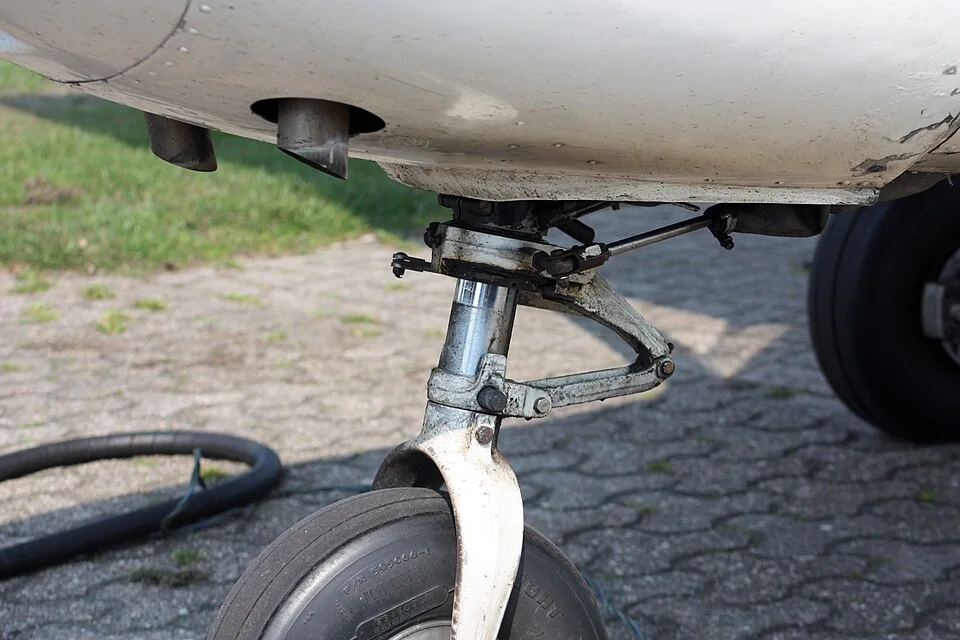

Separate the assemblies
Main-gear structure, nose-gear components, steering and braking should be identified separately in a prebuy or maintenance record. The system table is an overview of those relationships. Its broad description is not a parts-interchangeability statement or a complete history of every gear detail across the model range.
| Reference family | System ID | Subsystem | Factory Applicability | Architecture / Components | Operational Interface | Configuration Status | Primary Source |
|---|---|---|---|---|---|---|---|
| Cessna 150 | SYS-GEAR | Fixed landing gear | Landplanes | Spring-steel main gear plus steerable nose gear/shock strut. | Ground support, steering, braking. | Standard landplane. | [1] |
| Cessna 150 | SYS-SHIMMY | Shimmy dampener | Landplanes | Hydraulic shimmy dampener on nose steering system. | Damps nosewheel oscillation. | Standard/configuration by manual. | [2] |
| Cessna 150 | SYS-FLOAT | Seaplane interface | 150G/H/J/K approved float configurations | Float installation replaces land gear assumptions and changes related W&B/operating interfaces. | Water operation. | Exact float installation approved data required. | [3] |
| Cessna 152 | SYS-GEAR | Fixed landing gear | Landplanes | Spring-steel main gear plus steerable nose gear/shock strut. | Ground support, steering, braking. | Standard landplane. | [1] |
| Cessna 152 | SYS-SHIMMY | Shimmy dampener | Landplanes | Hydraulic shimmy dampener on nose steering system. | Damps nosewheel oscillation. | Standard/configuration by manual. | [2] |
Structural condition and specific concerns
the issue records include main-gear spring or fitting corrosion and wear, as well as a distinct early nose-fork cracking concern. One is associated with the relevant structural maintenance program; the other has its own affected configuration and directive context. The landing-gear issue reference keeps those evidence paths separate.
Ask for records that identify the component, findings and disposition. A note that the aircraft had a gear inspection can be too broad to answer whether the particular concern was examined. The appropriate mechanic needs the installed configuration and applicable maintenance information to interpret any discrepancy.


Floats change the configuration
The source records identify approved float configurations for specified 150 models. A float installation replaces the landplane assumptions and introduces separate operating and weight-and-balance conditions. Do not extend wheel, brake or nose-gear conclusions to that installation simply because the same basic airframe model is involved.
The weights reference preserves configuration-specific groups, while the brake-system page covers the hydraulic brake relationship. For a purchase, connect all three subjects to damage and repair records rather than relying on a visual impression or a claim that the aircraft has standard gear.
Interpreting a replacement history
A replacement nose assembly or gear component should be connected with its part identity and the supporting maintenance entry. The fact that an aircraft is within an early production range does not prove that every original component remains installed. Conversely, a claimed replacement does not establish compatibility or condition without the relevant records and assessment. Preserve both the airframe identity and the component history.
The 150G/H/J/K seaplane configuration brings separate loading and propeller evidence; it should not inherit all of the landplane assumptions.
The 150B reference records a landing-gear attachment change at 15059380, within the model interval. Keep that production boundary separate from a present finding about the gear structure.


Gear generation versus the installed assembly
The original 150-versus-150A comparison separates an early gear change from the A’s within-model wheel/brake breakpoint. The 150K-versus-150L comparison follows the later tubular-main-gear generation and its independent component changes. These comparisons help choose the correct research records, but they do not establish an individual gear assembly’s condition, approval or repair history.