Cessna 150 History: From the Original 150 to the 150M
The Cessna 150 developed from the original fastback Model 150 into the rear-window 150D, swept-tail 150F and later 150L/M generations. FAA approval of the original model on 10 July 1958 preceded its 1959 model-year introduction. The U.S. standard sequence continued through the 1977 model-year 150M, with a separate A150 Aerobat branch during the later years. This history follows the documented design stages rather than assigning a different aircraft configuration to every year mentioned in an advertisement.
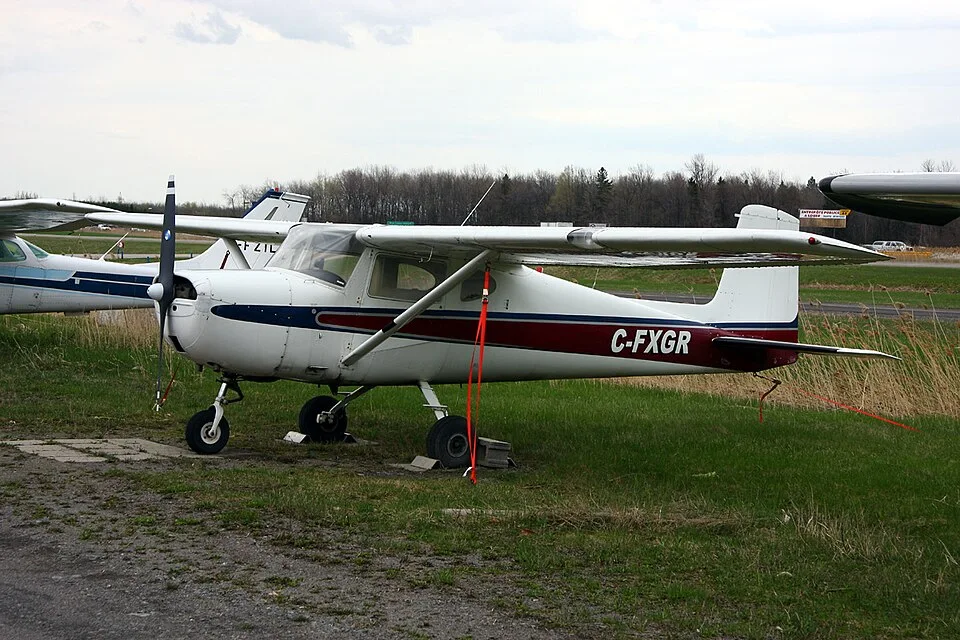

The original 150 and the early fastback models
The original Model 150 occupies the 1959 and 1960 model-year groups, followed by 150A in 1961, 150B in 1962 and 150C in 1963. The early group is identified in the design history by its fastback fuselage and straight-fin configuration. The original 150 reference gives the model-specific starting point, while the 150A comparison explains why adjacent models still need separate component and serial research.
The dates of design approval precede those model years: 150A was approved on 14 June 1960, 150B on 20 June 1961 and 150C on 15 June 1962. This sequence is recorded under FAA type certificate 3A19. It explains how an aircraft can belong to a later model-year group than the year in which its model received approval. It does not establish the manufacture or delivery date of any particular serial.
The 150D rear-window transition
The 150D, approved on 19 July 1963 for the 1964 model-year generation, marks the Omni-Vision rear-window transition. The 150E continues that rear-window, straight-tail phase in the 1965 model-year sequence. These models sit between the early fastbacks and the later swept-tail aircraft. The familiar rear window and swept fin therefore represent two different development stages, even though both are often associated with later Cessna 150 appearance.
The 150D also begins the U.S. standard landplane's 1,600 lb certified-weight group, compared with 1,500 lb for the original 150 through 150C. That is a model/configuration distinction, not permission to load an early aircraft to the later figure. The 150C versus 150D comparison connects the historical transition with certified weight and equipment questions. Current empty weight, alterations and the aircraft's applicable loading instructions remain necessary when calculating useful load.


The F generation and subsequent refinements
The 150F belongs to the 1966 model-year generation after approval on 27 May 1965. Its documented redesign combines a swept vertical tail, larger doors and baggage space, and electric flaps. The 150E versus 150F comparison explains the change from the preceding generation. Electric flaps introduce their own motor and relay effectivity questions; the historical introduction of the system is broader than the serial boundaries for individual components.
The 150G follows in 1967, with curved doors described in the design history as improving shoulder room. The 150H and 150J then occupy the 1968 and 1969 model-year groups. Key-start and rocker-switch modernization are associated with the J in the historical account. These are useful clues to original design context, but a surviving aircraft's cockpit may reflect later replacement or alteration. Use the 150F versus 150G comparison and exact model references when the question concerns installed equipment.
The Aerobat enters alongside the 150K
The 150K and A150K share an initial approval date of 5 June 1969 and a 1970 model-year introduction. The A150K is the beginning of the U.S. Aerobat branch in this sequence. Its Acrobatic-category identity distinguishes it from the standard Utility-category 150K. The 150K versus A150K comparison explains why a shared period and engine family do not make the two models interchangeable.
The A150L and A150M continue that parallel branch. An account organized only around standard-model letters would miss this development, while an account based only on the Aerobat name would obscure the exact model. The Aerobat guide connects the U.S. variants with French FA and FRA branches. Historical category descriptions do not replace the applicable flight manual's maneuver, weight or configuration limitations.
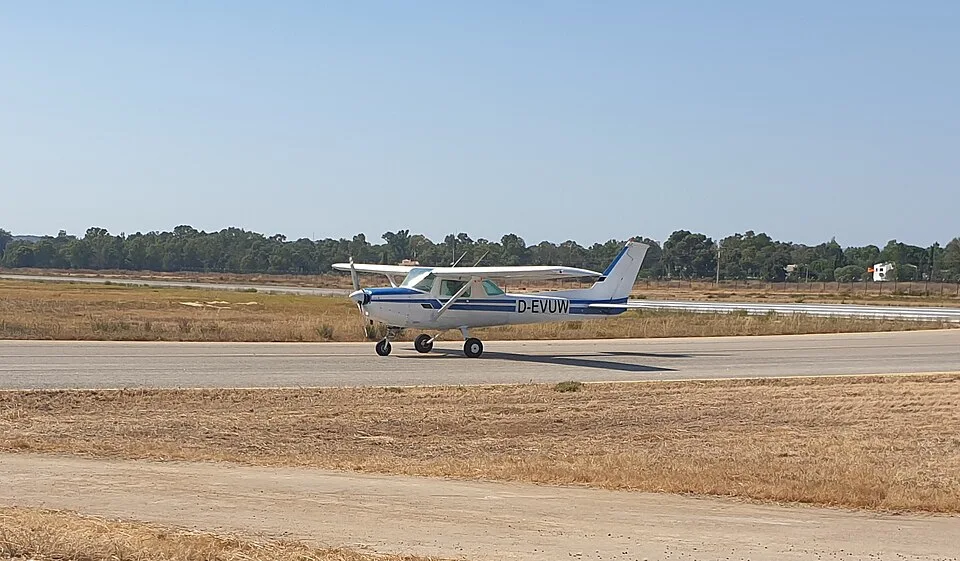

The multi-year L and M generations
The 150L and A150L were approved on 8 June 1970. Their ordinary model-year sequence spans 1971-1974, and the standard L marks the tubular-main-gear and wider-track phase described in the design history. A single letter now covers several model years, so a 1971 L and a 1974 L should not be assumed identical in every equipment detail. The K-to-L comparison links the major change to narrower technical references.
The 150M and A150M were approved on 6 May 1974 and occupy the 1975-1977 model-year groups. They are the final U.S. 150 letter-model generation before the 152 successor. The L-to-M comparison is useful for the adjacent-model question; the 152 history follows the subsequent production era. The chronology does not supply an exact last delivery date or establish which surviving aircraft retains its factory equipment.
Follow the model before following the number
The 150 serial reference retains exceptions that a simple numerical chronology would miss. Serial 15064970 is assigned to A150M rather than the ordinary 150G range, and A1500433 belongs to A152 rather than an inferred A150L identity. These exceptions are reasons to use the explicit model relationship instead of treating a serial as a date code. Reims and Argentine names require their own identity context within the worldwide history.
Use the generations to choose the next comparison
The early straight-tail aircraft, the rear-window generation and the later swept-tail aircraft give readers useful historical groupings, but a grouping does not replace the individual model entries. The transition comparisons explain the major changes without implying that every adjacent suffix needs its own buying verdict. For a quieter year-to-year transition, compare the chronology, the model identity and the aircraft's actual equipment before deciding that the suffix establishes a practical advantage.
The late 150L-to-150M transition and the subsequent 150M-to-152 change are different steps. The former belongs within the 150 history; the latter brings the 152 engine-family change into the comparison. The Aerobat branch runs alongside this sequence. In particular, the 150M and A150M comparison separates the common period and engine from category and loading questions. A later model name does not establish a better-maintained individual aircraft.