Reims-Cessna History: French Production and the FRA150
Reims-Cessna history is the history of French manufacture under licence and of distinct French developments within the Cessna 150/152 family. Reims Aviation manufactured U.S.-designed Cessnas using kits of parts supplied by Cessna, as described in New Zealand's F150/F152 type-acceptance report. The F150F begins the French F150 model-year sequence in 1966. The later FRA150 was a higher-power development with its own flight-manual basis, followed in the family chronology by the Lycoming-powered F152 and FA152.
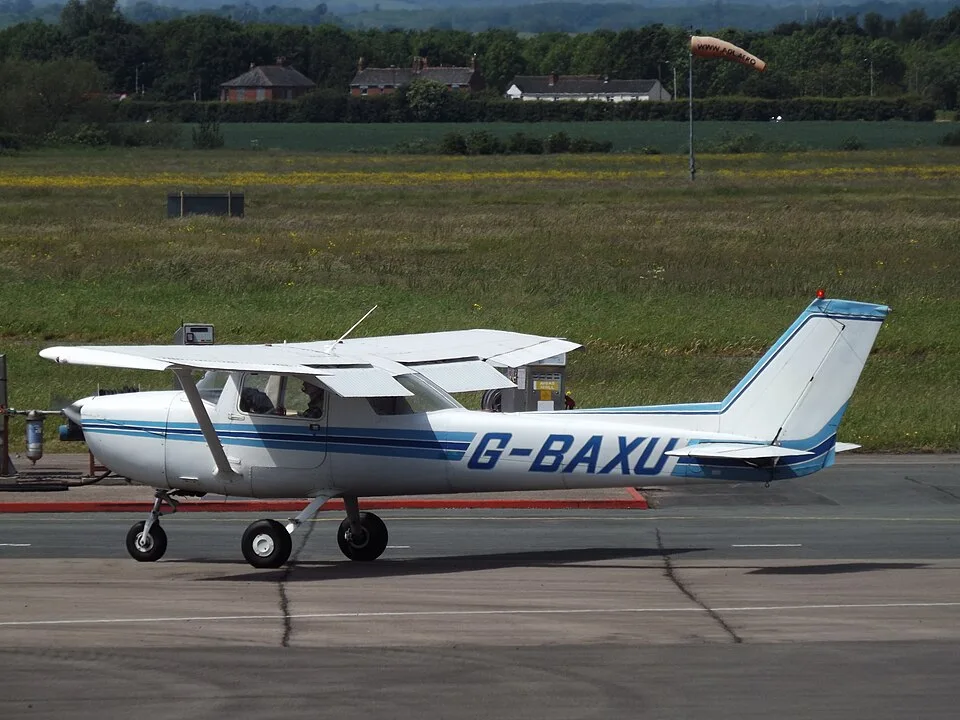

A manufacturing relationship with separate model identities
The New Zealand type-acceptance report describes the licensed manufacturing method. That relationship explains the close design connection to the U.S. aircraft, but it does not make French and U.S. model identities interchangeable. Reims Aviation remains the historical manufacturer of the French aircraft. A registration in another country or a later change in certificate responsibility does not change that manufacturing history.
The F150F received approval under the FAA A13EU framework on 17 February 1966. That approval belongs to the imported-product history and must be distinguished from the original French certification relationship. The A13EU reference and Reims certification guide keep those relationships connected to the exact models. The manufacturing account is useful historical context; operating and modification questions still require the applicable aircraft and approval documents.
From F150F to the multi-year L and M
The French standard sequence proceeds from F150F to F150G, F150H, F150J and F150K, followed by F150L and F150M. The opening F model belongs to the same broad swept-tail and electric-flap era described in the U.S. 150 history. The complete French designation is nevertheless essential when selecting a serial range or researching a component. A corresponding U.S. model letter does not supply a French serial breakpoint.
F150F through F150J use hyphenated serial presentation in the relevant records. F150K begins the later unhyphenated form at F15000530. This is a concrete historical change in how identities are printed, not a reason to strip punctuation from earlier records. The Reims reference connects these model and serial distinctions with systems and documentation. It also explains the early F150F flap-system boundary, which uses French serials rather than the U.S. 150F numbers.
The F150L covers the 1971-1974 model-year group and F150M the 1975-1977 group. Their multi-year coverage resembles the broad U.S. sequence, but each remains a French model. The F150L reference and F150M reference provide the appropriate paths into technical data. A historical sequence is most useful when it leads to these exact identities rather than encouraging substitution of a similar U.S. handbook.
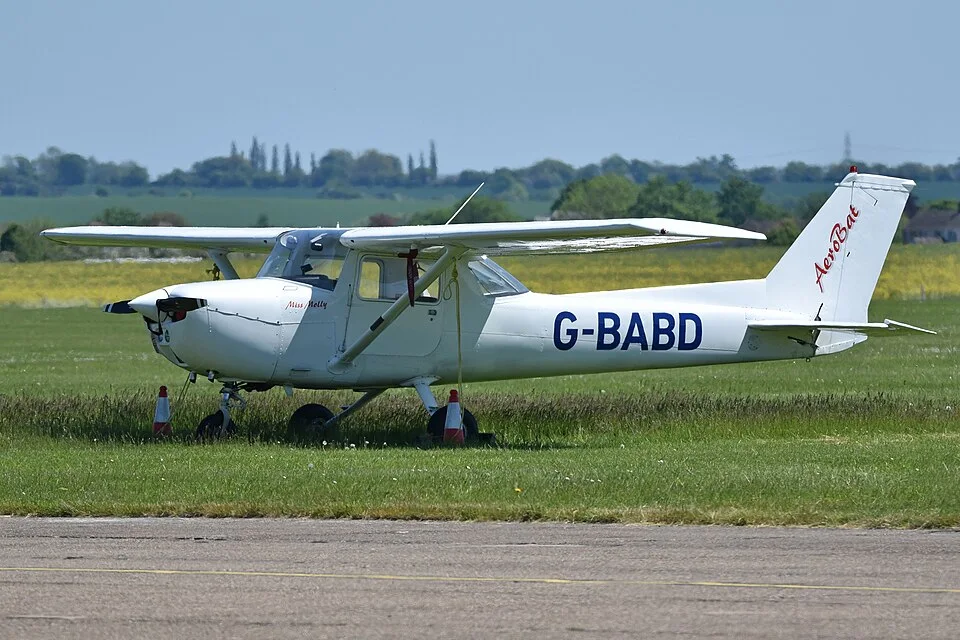

FA Aerobats and the distinct FRA150 development
FA150K and FA150L identify the earlier French Aerobat branch. The FRA150L then received A13EU approval on 3 December 1971. The acceptance report describes the FRA150 as having no direct Cessna equivalent: Miles Aviation & Transport (R&D) Ltd developed it for Reims, with UK CAA approval followed by adoption by the French authority. Its 130-hp O-240 engine family and separate approved flight manual distinguish it from an ordinary U.S. A150 label.
The report states that Reims produced only the FRA150 Aerobat version during 1972-1977 and that no FA150M aircraft were manufactured. This is a statement about the report's production account, not an instruction to erase configuration-sensitive FA designations from certification or modification records. The FRA150 development reference explains the FA/FRA relationship, including the need to establish the applicable kit configuration instead of inferring it from a serial alone.
FRA150L and FRA150M also retain distinct engine and manual relationships. The M branch's O-240-A/E context should not be reduced to an assumed identical installation on every FRA aircraft. The Reims manual reference keeps the separate handbook identifiers together, while F150L versus FRA150L answers the standard-aircraft versus higher-power-Aerobat question. Neither the development story nor the power label establishes a complete flight-performance comparison.
| Model | Initial approval | Model years | Category |
|---|---|---|---|
| F150F | 1966-02-17 | 1966 | Utility |
| FA150K | 1969-11-05 | 1970 | Acrobatic |
| FRA150L | 1971-12-03 | 1972, 1973, 1974 | Acrobatic |
| FRA150M | 1974-10-08 | 1975, 1976, 1977 | Acrobatic |
| F152 | 1977-06-02 | 1978, 1979, 1980, 1981, 1982, 1983, 1984, 1985, 1986 | Utility |
| FA152 | 1977-06-02 | 1978, 1979, 1980, 1981, 1982, 1983, 1985, 1986 | Acrobatic |
F152 and FA152 continue the French branch
F152 and FA152 received A13EU approval on 2 June 1977 and enter the 1978 model-year successor sequence. They form the standard and Aerobat French branches of the Lycoming-powered family. The 152 history places that introduction beside the U.S. 152/A152 approvals. The French model-year coverage continues to 1986, whereas the ordinary U.S. sequence ends with 1985 groups.
Those differing endpoints explain why worldwide 152 history cannot be reduced to the U.S. production years. They do not establish the exact final delivery date for a French aircraft. The F152 versus U.S. 152 comparison also describes document and serial-start distinctions that matter when identifying an early F152. A common engine family does not remove those distinctions or make modification approvals automatically transferable.
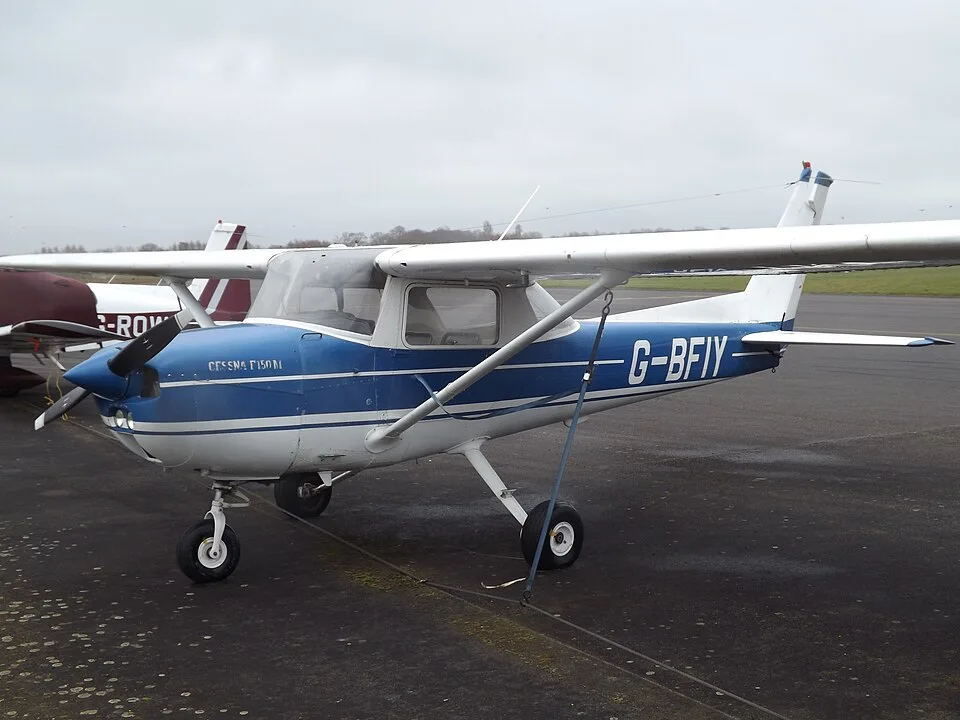

Later certificate administration and historical origin
A13EU records a transfer from Reims Aviation to Cessna Aircraft Company on 11 December 2006, with the FAA accepting State-of-Design and State-of-Manufacture status alongside that transfer. This administrative event occurred long after the production years described above. It should be read as part of the design's later certificate history, without rewriting the original manufacturer of the aircraft as the later certificate holder.
The worldwide history places France beside the U.S. and documented Argentine identities. Argentine local serial relationships have their own ANAC evidence and must not be folded into French production merely to produce a combined total. For a particular Reims aircraft, preserve the complete model and serial, the original manufacturer, the current registration and the relevant approved configuration as separate facts. Together they provide a more useful historical description than a family name and a single year.
Follow the higher-power Aerobat branch separately
The FRA150 sequence deserves to be followed through its own identities and approved documents. The FRA150L versus FRA150M guide explains the transition from the L model period to the M period without borrowing U.S. performance data. The specified kit conditions for eligible FA serials remain part of the identity, and the M model's engine entry must not be shortened into a claim that every aircraft has an O-240-E.
Later F152 and FA152 names belong to the Reims 152 generation. They should not be read as further O-240-powered FRA150 suffixes. Keeping the F150, FA150, FRA150, F152 and FA152 branches distinct gives a reader a clearer history and gives an owner a practical route to the right engine, certification and manual references.
Manufacture, registration and later ownership
A Reims-built aircraft remains part of the French manufacturing story when it changes country of registration. Its later owner, current registration and certificate administration are different facts from the factory identity. The worldwide production account follows those roles alongside Cessna's U.S. branch and the separately documented Argentine relationships.
A surviving French aircraft can also have a later equipment history. The configuration and modification explanation connects that history with installation records and operating documents, while preserving the distinct approval questions for Reims models. Neither a shared suffix nor an engine-family resemblance is enough to transfer every U.S. modification relationship.