Cessna 152 History: Introduction, Aerobat and Production Years
The Cessna 152 succeeded the 150 in the 1978 model-year production sequence. The U.S. 152 and A152 Aerobat received FAA approval on 16 March 1977; Reims F152 and FA152 approval followed on 2 June 1977 under the separate A13EU framework. The new generation introduced the Lycoming O-235 family and changed certified weight and flap limits relative to the late U.S. 150 baseline. Its history includes four model identities and different U.S. and French production-year endpoints.
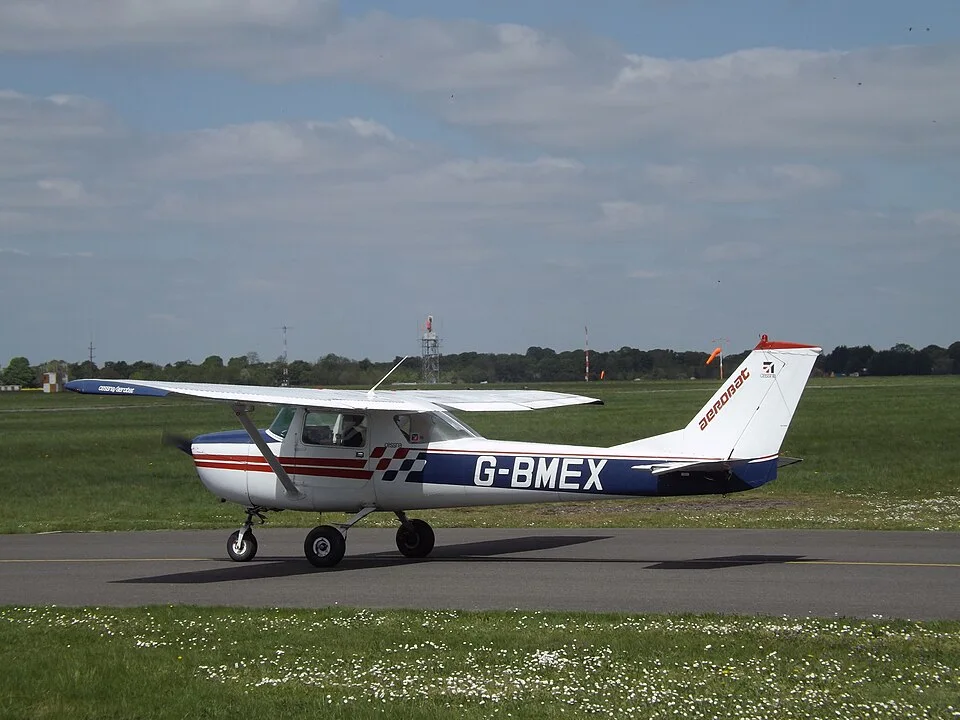

When did the 152 replace the 150?
The final U.S. 150M/A150M model-year groups run through 1977. The ordinary 152/A152 sequence begins with model year 1978. Approval in 1977 and introduction as a 1978 model are compatible statements: one concerns design approval and the other concerns the model-year sequence. Neither gives the first delivery date of an individual aircraft. The 150 history follows the preceding generations, while type certificate 3A19 provides the U.S. approval context.
The designation also changed how the production history is described. The preceding standard line used successive letters, with the L and M each spanning several years. The U.S. successor retains the model name 152 across its ordinary 1978-1985 groups. A later model year therefore does not acquire a new official letter merely because its equipment or engine effectivity differs. The 152 model reference connects the stable model identity to those narrower distinctions.
What changed in the successor generation?
The standard U.S. 150's Continental O-200-A lineage gives way to Lycoming O-235 installations in the 152. The U.S. certified maximum-weight comparison is 1,600 lb for the late standard 150 landplane and 1,670 lb for the 152. The design history also identifies a 30-degree maximum-flap setting for the successor relative to the late 150 baseline. Those changes belong together in a historical description of the transition, but each has its own technical applicability.
The 150M versus 152 comparison examines the immediate predecessor and successor. The broader 150 versus 152 comparison includes early 150s and other family branches. A 70 lb difference between two certified maximum weights does not establish a 70 lb payload advantage between two surviving aircraft: empty weight and equipment also enter the calculation. Likewise, a different engine rating does not establish an equivalent percentage change in cruise speed or climb.
A mechanical description can answer what changed without supplying a single reason for the manufacturer's decision. The chronology establishes the O-235 successor and its design differences. It does not, by itself, establish a particular commercial motive or show that one alteration alone caused the replacement of the 150. For a technical comparison, the installed aircraft configuration is a firmer starting point than an unsupported explanation of why Cessna chose it.
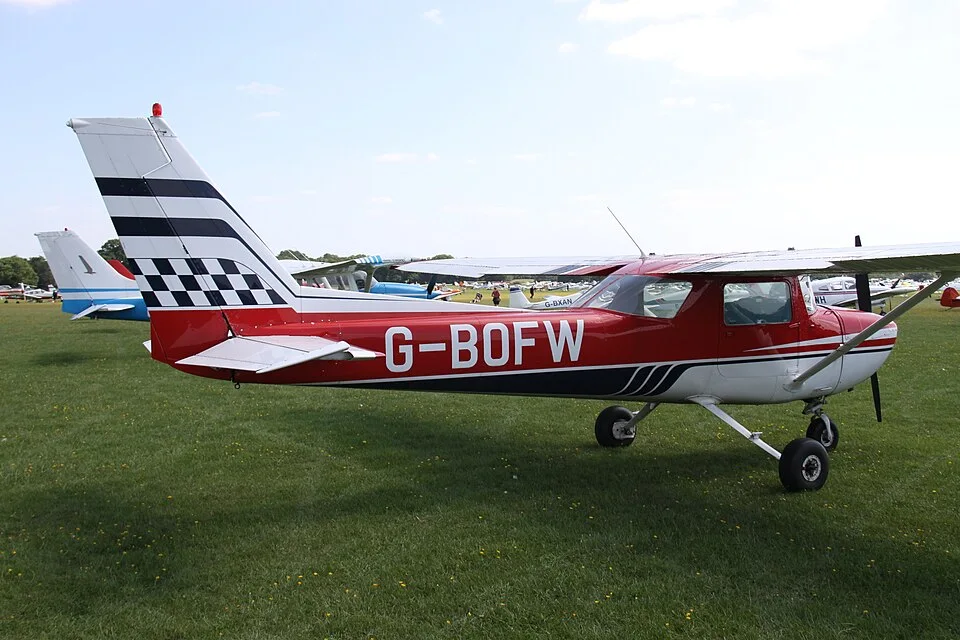

Standard 152 and A152 Aerobat
The 152 and A152 received approval on the same day, but occupy Utility and Acrobatic categories respectively. The A152 continues the Aerobat branch established by A150K and developed through A150L/M. It is a separate official model, not a later-year trim level of the standard 152. The 152 versus A152 comparison connects that historical relationship with the model and serial distinctions used in technical research.
The exceptional A152 identities are especially instructive. A1500433 is assigned to A152 despite its earlier-looking identifier, and the short serial 681 has an A152 relationship with alternative notation appearing in later material. These examples prevent the prefix or length of a number from becoming a substitute for the documented model. The 152 serial guide preserves the exceptions and the separate A152 model-year boundary disagreement.
Development within the O-235 era
The 152 engine references distinguish O-235-L2C from O-235-N2C and retain factory serial effectivity and approved rework. The aircraft installation ratings are 110 and 108 hp respectively at 2,550 RPM. An engine-manufacturer rating at a different RPM is a different figure. Calling the whole production era simply the 110-hp generation would conceal the later installation distinction and could misdescribe an individual aircraft.
The L2C versus N2C guide provides that narrower comparison. Factory effectivity describes a design relationship; it does not prove that the original engine is still installed. Historical model-year research and present-day engine identification therefore complement each other. The 152 engine reference is the route from the production history to exact installation information and relevant component research.


Why 1985 and 1986 both appear in 152 history
The U.S. 152 and A152 ordinary model-year sequence ends in 1985. French F152 and FA152 coverage extends to 1986. A worldwide description can therefore reach a later year than a description of U.S. models alone. The Reims history explains the French manufacturing branch, and the New Zealand type-acceptance report supplies relevant French model and handbook context.
These endpoints describe model-year coverage, not an exact date on which every factory activity or aircraft delivery stopped. Nor should the French sequence be filled with an assumed entry for every model in every year: the FA152 service-year evidence has no 1984 entry. When researching a late aircraft, retain origin, complete model, full serial and the meaning of the date being quoted. Those fields connect the worldwide family history to a specific airframe without inventing its individual chronology.
Four designations, two distinctions
Read 152, A152, F152 and FA152 as related identities with two important distinctions: standard versus Aerobat, and U.S. versus Reims manufacture. The A152 is the U.S. Aerobat; the F152 and FA152 are the corresponding French standard and Aerobat designations. Those relationships make the history easier to follow, but they do not establish identical equipment, certification documents or every operating limit across the four models.
A comparison within the 152 family should therefore begin with the actual model and serial, then the installed engine and applicable manual. The POH and AFM guide explains why the cover's family name cannot carry the whole applicability decision. Engine suffix, installed modifications and record history can be more consequential to a purchase than a general assertion that one production country or later year is preferable.