Reims/Cessna F150K Model Reference
The F150K identity note records a change from the earlier hyphenated Reims serial style to the later format. Preserving the full source identifier matters when comparing aircraft records or matching a production range. Removing punctuation and prefixes without an explicit normalization rule can conceal the namespace being researched.
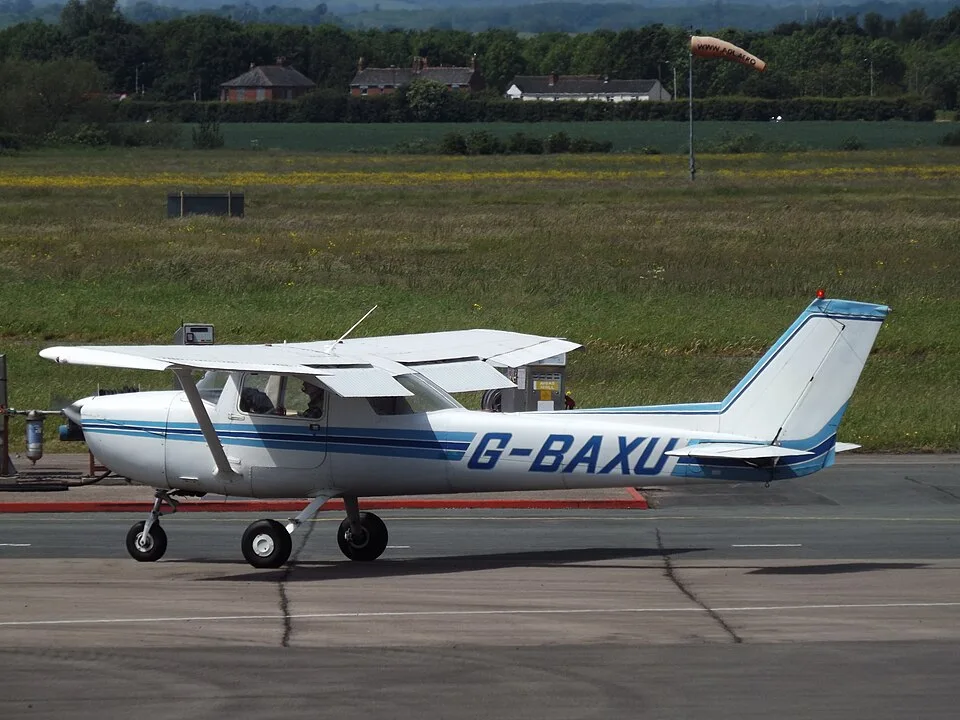

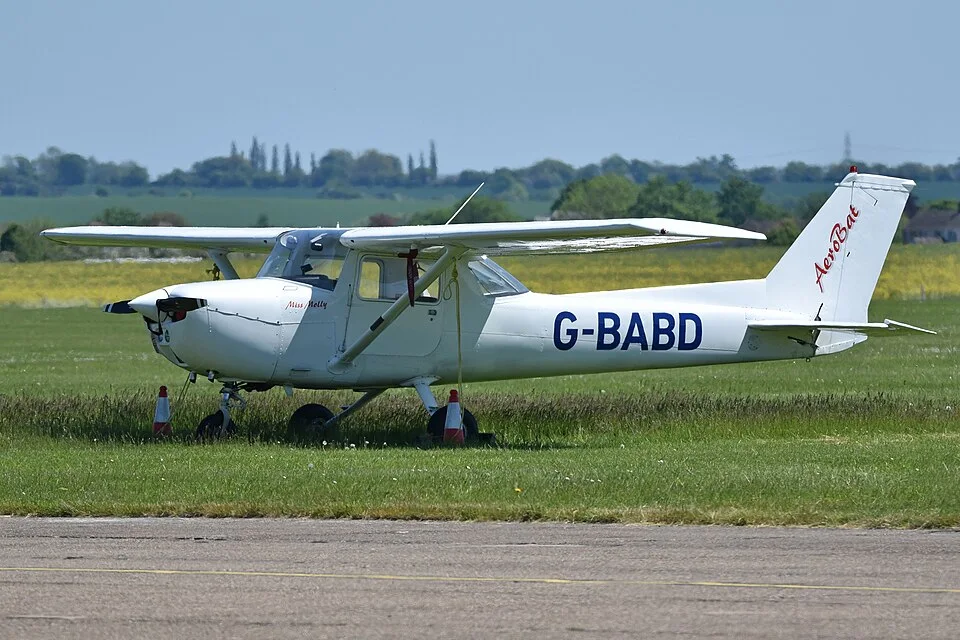
Standard French production beside an Aerobat branch
The F150K follows the F150J in 1970 and leads into the multi-year F150L. Its revised serial presentation is one clear boundary. The appearance of the FA150K alongside it is another: Reims now has a separately identified Aerobat branch as well as this standard aircraft.
These two changes answer different questions about the K period. Serial notation helps identify an aircraft record, while F versus FA distinguishes the standard and Acrobatic-category branches. Neither establishes an installed modification or imports U.S. K-model limits. The Reims guide keeps those relationships together, and the exact factory engine and propeller entries below provide the installation context for this standard French model.
| Model Years | 1970 |
|---|---|
| Certification Category | Utility |
| Certified Serial Eligibility | F15000530-F15000658 |
| Type-design engine context | Rolls-Royce Continental O-200-A |
Generation and Certification
The model has a grouped Reims propeller relationship in addition to its serial and handbook context. That group must remain within the stated model coverage; it does not authorize adding every adjacent Reims model. The U.S. 150K and the Reims Aerobat identities remain separate comparisons rather than interchangeable sources.
The 1970 F150K starts at F15000530, changing the serial presentation from the hyphenated F150J pattern. This is a documented identity distinction, not evidence that a registration number or arbitrary leading zero can be treated as equivalent. The standard K also sits beside the opening FA150K Aerobat line. Reims thus requires both the F/FA category distinction and the French-versus-U.S. authority distinction when comparing aircraft with a shared K suffix.
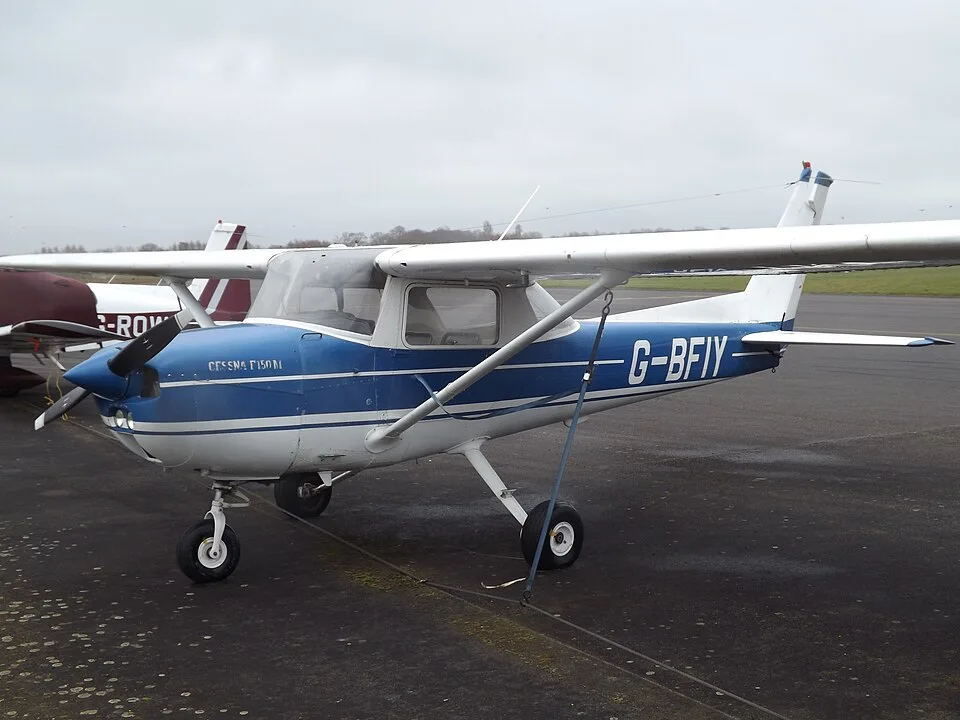
F150K is recorded as Standard in the Utility category, with model years 1970 and approval context A13EU. The manufacturer entry is Reims Aviation S.A. (Reims-Cessna); the manufacture/assembly location is Reims-Prunay, France. Its approval date is 1969-08-20, a model approval event rather than an individual aircraft's manufacture date.
| Model | TC | Category | Initial Model Approval Date | Core Cert Basis | Certification / Identity Note | Reference |
|---|---|---|---|---|---|---|
| F150K | A13EU | Utility | 1969-08-20 | CAR 3 (1956-05-15) amended 3-4 | - | [1] |

Serial Numbers and Production
For F150K, the ordinary source assignments are 1970: F15000530 through F15000658. The serial guide retains source conflicts and exceptional identities alongside these intervals.
| Model Year | Official Model | Serial Start | Serial End | Excluded / Override Serials | Notes | Primary Source |
|---|---|---|---|---|---|---|
| 1970 | F150K | F15000530 | F15000658 | - | - | [1] |
Engine, Propeller and Equipment Changes
F150K retains the explicit F150G/J/K propeller relationship and the O-200-A engine group. Those facts do not transfer the U.S. standard K's spinner breakpoint to the French interval. The French Aerobat's FA prefix likewise cannot be reduced to a cosmetic label because category and document selection differ. A useful K-model component enquiry begins with the full F15000530-F15000658 eligibility, actual engine and propeller identification, and A13EU documentation rather than a generic 1970 Cessna parts description.
The F150K factory installation groups specify 1970: O-200-A, 100 hp at 2750 RPM. Its named propeller applications are 1A100/MCM6950 / 1A101/DCM6950. Their diameter, static-RPM and configuration conditions are preserved together below.
| Origin | Model Year | Aircraft Model | Factory Engine | Installed hp | RPM Limit | First Serial in Group | Last Serial in Group | Applicability Basis | Aircraft Source |
|---|---|---|---|---|---|---|---|---|---|
| France | 1970 | F150K | O-200-A | 100 | 2750 | F15000530 | F15000658 | Factory / type-design | [1] |
| Aircraft Model | Model Year / Config | Engine | Exact Propeller Application | Max Dia | Min Dia | Static Min | Static Max | Notes | Primary Authority |
|---|---|---|---|---|---|---|---|---|---|
| F150G/J/K | All applicable | O-200-A | 1A100/MCM6950 / 1A101/DCM6950 | 69 | 67-67.5 | 2375/2500 | 2475/2600 | F150F source notation retained separately. | [1] |

Manuals, Maintenance and Research
D727-13 / D740-13 is a combined publication-family lead covering standard and Aerobat identities. Locate the applicable standard-Reims copy within that family before using it operationally. The F150L successor expands into several model years and multiple propeller conditions; the K's shorter coverage should not be widened to imitate that later history. Exact French CG, weight and performance evidence remains unresolved here, so the U.S. K's familiar numbers are linked as comparisons only, not printed as F150K approvals. The positive F150K publication leads are 1970: D727-13 / D740-13 (Owner's Manual).
| Family / Year | Model | Publication | Document Class | Serial / Year Effectivity | Authority Basis | Operational Status | Special Boundary | Reference |
|---|---|---|---|---|---|---|---|---|
| 1970 | 150K/A150K/F150K/FA150K | D727-13 / D740-13 | Owner's Manual | Standard vs Aerobat family | CAA TAR 98/08 + FAA 3A19 | Authority-recognized family | A150K acrobatic speeds differ | [1] |