Cessna 150 Airworthiness Directives and Applicability Research
A Cessna 150 AD review cannot be completed from the aircraft model alone. Airframe serials, engine and propeller identities, installed appliances, STCs, configuration and jurisdiction can all affect applicability. This reference organizes the directives and their historical relationships so that owners, mechanics and buyers can follow the right evidence without assuming that every listed directive applies to every aircraft.

For focused questions across the two families, use the airworthiness directives topic guide. This Cessna 150 reference retains the detailed family records and their applicability.
The dedicated AD 2011-10-09 reference explains the seat-system model list, recurring-records questions and distinction from structural corrosion. Its status remains tied to the source snapshot.
Status labels below describe the source snapshot dated 8 September 2026. They are not a live regulatory-status service or an aircraft compliance report. The controlling current directive, its exact applicability and the individual aircraft records remain necessary for legal and maintenance decisions. Use the model guide and serial reference to establish identity before moving into component and configuration questions.
Applicability and Compliance Are Separate Decisions
Applicability asks whether the directive covers the aircraft or installed product under its stated conditions. Compliance asks whether the required action has been accomplished and, where relevant, remains within its recurring or event-based requirements. A model appearing in an applicability field does not answer the second question. A maintenance record also needs to be connected to the correct product and action.
The tables preserve the affected scope, layer, action summary and recurring/event description. Read them together. An action summary is an orientation aid, not the complete controlling instruction. It may omit definitions, exceptions, methods, intervals or incorporated documents that matter to a particular aircraft. The original authority material and appropriate records are needed before deciding what is required.
For an owner, this separation helps organize the records that need review. For a mechanic, it prevents an airframe-only list from appearing to be a complete installed-product assessment. For a buyer, a directive appearing in a table is not proof of an outstanding defect or overdue action. Applicability, completion and present condition each require their own evidence.
recorded Current Directives
The current-status group contains entries marked current in the sources. Check subsequent revisions and current authority actions before applying the information. Preserve the effective date and status wording when following a reference, and check the controlling authority for the exact current document before legal work.
Different layers are deliberately shown together with their conditions. Some entries concern the airframe, while others depend on an engine, propeller, appliance or STC. A general family match indicates that the entry is relevant to research; it does not mean that its installed-equipment condition has been met on every Cessna 150. This page is not an exhaustive statement of all possible component-driven requirements on a modified aircraft.
| AD Number | Title | Layer | historical status | Effective Date | C150/152 Applicability | Required Action Summary | Recurring / Event | Supersedes | Superseded By | Reference |
|---|---|---|---|---|---|---|---|---|---|---|
| 62-22-01 | Vacuum Pump Modification | STC/APPLIANCE | CURRENT LEGACY | 1962-10-31 | Model 150 only when equipped with Continental O-200-A and Airborne Mechanisms 113A5 vacuum pump under STC SA1-630 or SA1-610. | Remove/reinstall pump and press coupling 1/16 inch farther into engine spline. | No | - | - | [1] |
| 67-03-01 | Exhaust Gas Cabin Heat Exchanger | AIRFRAME | CURRENT | 1967-01-14 | Model 150 series S/N 17001 through 15061328 equipped with right-hand exhaust-gas cabin-heat exchanger. | Inspect within 50 h, then at intervals not over 100 h until approved exhaust modification. | Yes | 64-17-03 | - | [2] |
| 67-26-04 | Weston-Garwin Carruth Altimeter | APPLIANCE | CURRENT LEGACY | 1967-09-18 | Any aircraft with unmodified Weston-Garwin Carruth Model 22-374 series altimeter; known installed on Model 150G among others. | Modify with M-1 balance arm assembly or replace; operating restrictions/checks until corrected. | Conditional | - | - | [3] |
| 67-31-04 | Glove Box Removal | AIRFRAME | CURRENT LEGACY | 1967-11-29 | 150G and 150H S/N 15064533 through 15067891. | Remove glove compartment before further flight; reinstallation only after approved modification. | No | - | - | [4] |
| 68-17-04 | Stall Warning System | AIRFRAME | CURRENT LEGACY | 1968 | Early 150-series and specified Reims models per controlling AD. | Inspect/correct stall-warning installation per AD. | Conditional | - | - | [5] |
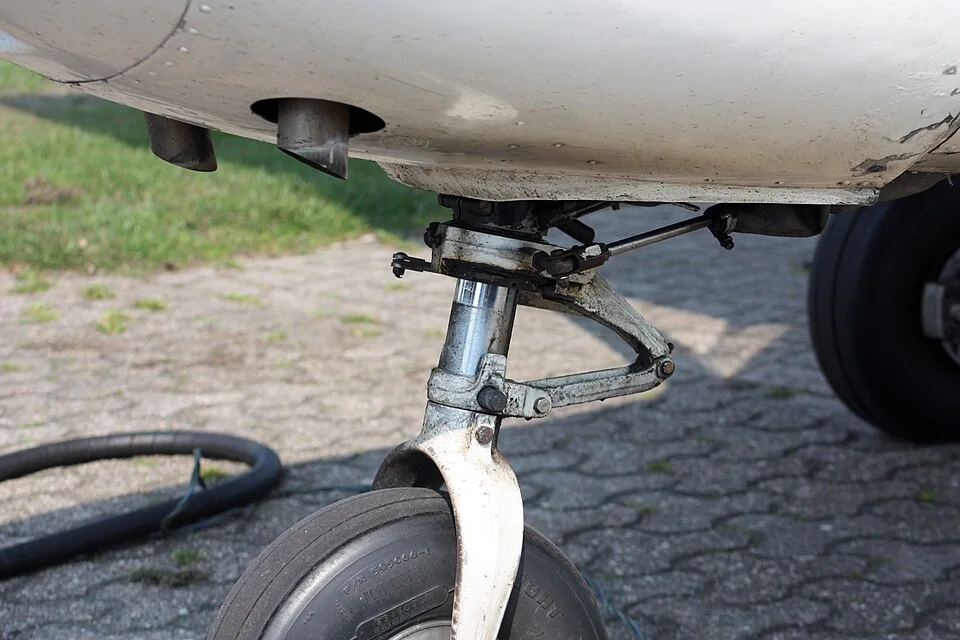
| 71-22-02 | Cracks in Nose Gear Fork | AIRFRAME/PART | CURRENT LEGACY | 1971 | Cessna 150-series with affected earlier nose-gear fork/configuration and time-in-service conditions. | NDT/inspect fork at specified intervals/events; replace or use approved later fork as applicable. | Yes | - | - | [5] |
| 72-03-03 R3 | Wing Flap Jack Screw | AIRFRAME | CURRENT | 1984-10-15 | 150F/G/H/J/K/L S/N 15061533-15072629; A150K/L A1500001-A1500277; FAA text also lists F150/FA150 ranges. | Inspect jack screw and remove/clean/lubricate at prescribed intervals; install snubber modification. | Yes | - | - | [6] |
| 73-23-07 | Defective Spar Attachment Fittings | AIRFRAME | CURRENT LEGACY | 1973-11-19 | Model 150 S/N 15074635-15074799 and A150 S/N A1500415-A1500427. | Replace affected spar-attachment fittings per approved kit/action. | No | - | - | [7] |
| 74-06-02 | Avcon Mufflers | STC/AIRFRAME | CURRENT LEGACY | 1974-03-18 | Cessna 150 modified under STC SA750CE with affected Avcon muffler kit serials. | Inspect/replace defective muffler kit as specified. | No | - | - | [8] |
| 75-15-08 | Beryl Air/Oil Separator | STC/APPLIANCE | CURRENT LEGACY | 1975-09-10 | 150 through 150L/A150L modified under STC SA2219WE. | Inspect every 25 h until replacement/removal; replace Filtrator or remove STC modification. | Yes | - | - | [9] |
| 77-02-09 | Wing Flap System | AIRFRAME | CURRENT LEGACY | 1977-02-03 | Specific 150 and A150 serials listed in AD, including S/N 15078687 series and A1500697-0711 specified combinations. | Inspect actuator date code; placard if affected; replace ball-nut assembly within 50 h. | No | - | - | [10] |
| 79-08-03 | Cigar Lighter Electrical System | AIRFRAME/ELECTRICAL | CURRENT | 1979-06-06 | 150 S/N 15065062-15075564; A150 S/N A15000001-A15000480. | Disconnect/reprotect cigar-lighter circuit to prevent wire-bundle fire. | No | - | - | [11] |
| 79-10-14 R1 | Fuel Tank Venting | AIRFRAME/FUEL | CURRENT LEGACY | 1988-05-30 | Specified U.S. 150/A150 serial groups through 1975 production; exact serials in controlling AD. | Install approved vented fuel-cap/venting configuration. | No | 79-10-14 | - | [12] |
| 80-06-03 | Wing Flap Cable Clamp | AIRFRAME | CURRENT LEGACY | 1980-04-21 | 150M 15078506-15079405; A150M A1500685-A1500734; 152 15279406-15283354; A152 A1500433 and A1520735-A1520867. | Install P/N 0560037-1 cable clamp and hardware. | No | - | - | [13] |
| 80-11-04 | Cracked Tail Nutplates | AIRFRAME | CURRENT FAA / REIMS HAS EASA LINEAGE | 1980-06-02 | Detailed U.S. and Reims Cessna 150/152 series serials in FAA AD. | Inspect tail attachment NAS1068A4 nutplates; replace as required. | Conditional | 78-07-10 | - | [14] |
| 81-15-03 | Brackett Air Filter Assembly | APPLIANCE/STC | CURRENT LEGACY | 1981-07-20 | Aircraft with specified Brackett filter assemblies/STCs; 150 variants are among listed installations. | Inspect retainer screen/gasket and correct installation as required. | Conditional | 78-25-05 | - | [5] |
| 83-17-06 | Aileron Balance Weights | STC/AIRFRAME | CURRENT LEGACY | 1983-09-01 | 150D through 150L modified under applicable Robertson STC at specified repair station before 1983-08-01. | Inspect balance weights; install correct weights/rebalance if necessary. | No | - | - | [5] |
| 86-15-07 | Larger Engine Modification - W&B | STC/AIRFRAME | CURRENT | 1986-07-24 | Early 150, 150A, 150B, 150C listed serials only if modified with engine larger or higher-powered than O-200-A. | Reweigh/calculate CG; ballast and placard as necessary. | No | - | - | [15] |
| 86-24-07 | Engine Controls Installation | STC/AIRFRAME | CURRENT LEGACY | 1986 | Specified modified 150C through A152 configurations per AD. | Inspect/correct engine-control installation and travel. | Conditional | - | - | [5] |
| 87-21-05 | Placard - Spins / Del-Air Conversion | STC/AIRFRAME | CURRENT | 1987-10-13 | 150/A150/152/A152 modified under Del-Air STC SA4795SW. | Replace placards/operating limitations; intentional spins prohibited. | No | - | - | [5] |
| 88-15-06 | Battery Location / Elevator Cable | STC/AIRFRAME | CURRENT | 1988-08-03 | Listed 150/A150/F150/FA150/FRA150 only when battery has been relocated aft by modification. | Inspect for interference/damage; secure battery cable away from elevator-up cable. | Conditional | - | - | [5] |
| 93-24-15 | Instrument Panel Rheostat | APPLIANCE/ELECTRICAL | CURRENT LEGACY | 1993 | Specified rheostat installations on listed 150/F150 variants. | Inspect/modify/replace rheostat installation per AD. | Conditional | - | - | [5] |
| 96-09-06 | Brackett Air Filter Gasket | APPLIANCE/STC | CURRENT | 1996-06-07 | Specified Brackett filter assemblies including BA-4106 when installed on 150/152-family aircraft. | Inspect each 100 h until improved-design replacement, no later than 500 h after effective date. | Yes | 95-03-02 | - | [16] |
| 96-12-23 | Wing Stall Fence | STC/AIRFRAME | CURRENT | 1996-07-31 | 150/A150/152/A152 incorporating Bush Conversions STOL kit STC SA1371SW. | Measure stall fence and install smaller fence if over approved height. | No | - | - | [5] |
| 97-01-13 | Fuel/Oil/Hydraulic Hose | AIRFRAME/PART | CURRENT | 1997-02-03 | Listed 150/152 U.S./Reims variants only if Cessna P/N S51-10 hose was replaced in the specified 1995-97 maintenance window. | Inspect hose reinforcement and replace noncompliant hose. | No | - | - | [5] |
| 2000-06-01 | Fuel Strainer Standpipe | AIRFRAME/FUEL | CURRENT | 2000 | All serials of listed 150F-M, A150K-M, Argentine, Reims and 152-family models. | Inspect/modify fuel-strainer standpipe/top assembly to prevent fuel starvation. | Conditional | - | - | [17] |
| 2004-19-01 | Upper Shoulder Harness Adjusters | AIRFRAME/ACCESSORY | CURRENT | 2004-11-01 | Listed early 150/F150 aircraft only if specified Cessna accessory shoulder-harness kit is incorporated. | Inspect/modify shoulder-harness adjusters. | No | 86-26-04 | - | [18] |
| 2008-22-18 | BRS-150 Parachute System | STC/AIRFRAME | CURRENT | 2008-12-09 | 150 through A152 models only if BRS-150 system S/N 50001-50006 is installed under STC SA64CH. | Replace pickup-collar support and nylon screws. | No | - | - | [5] |
| 2011-10-09 | Seat Rails, Rollers and Pins | AIRFRAME | CURRENT | 2011-06-17 | All serials of listed models 150A-M, A150K-M, F150F-M, FA150K-M, FRA150L/M, 152/A152/F152/FA152. | Repetitive detailed seat-system inspections and replacement of worn/defective components. | Yes | 87-20-03 R2 | - | [5] |
| 2006-0267 | Reims Stabilizer Attachment | AIRFRAME | CURRENT EASA | 2006-09-14 | Reims F150F-M, FA150K/L, FRA150L/M, F152 F15201429-F15201828, FA152 FA1520337-FA1520372 unless nutplate already replaced per superseded French AD. | Inspect/replace horizontal/vertical stabilizer attachment nutplates. | Conditional | DGAC 1984-067-IMP(A) R1 | - | [19] |
- [1] AD 62-22-01: Vacuum Pump Modification
- [2] AD 67-03-01: Exhaust Gas Cabin Heat Exchanger
- [3] AD 67-26-04: Weston-Garwin Carruth Altimeter
- [4] AD 67-31-04: Glove Box Removal
- [5] Cessna 150-152 Club AD universe
- [6] AD 72-03-03 R3: Wing Flap Jack Screw
- [7] AD 73-23-07: Defective Spar Attachment Fittings
- [8] AD 74-06-02: Avcon Mufflers
- [9] AD 75-15-08: Beryl Air/Oil Separator
- [10] AD 77-02-09: Wing Flap System
- [11] AD 79-08-03: Cigar Lighter Electrical System
- [12] AD 79-10-14 R1: Fuel Tank Venting
- [13] AD 80-06-03: Wing Flap Cable Clamp
- [14] AD 80-11-04: Cracked Tail Nutplates
- [15] AD 86-15-07: Larger Engine Modification - W&B
- [16] AD 96-09-06: Brackett Air Filter Gasket
- [17] AD 2000-06-01: Fuel Strainer Standpipe
- [18] AD 2004-19-01: Upper Shoulder Harness Adjusters
- [19] AD 2006-0267: Reims Stabilizer Attachment
Superseded and Historical Directives
Historical entries explain the lineage of requirements and help readers interpret older records. A superseded directive should not be presented as a separate current requirement merely because its number appears in a logbook or source table. Read the supersedes and superseded-by relationships and establish the controlling current document for the applicable product.
Old compliance records can still be relevant evidence, but their meaning depends on the later directive's terms. This reference does not infer that an old action satisfies a later requirement, nor that it is irrelevant. The controlling text and aircraft records must resolve the relationship. Retaining the lineage is more useful than either deleting history or counting every old number as another active obligation.
| AD Number | Title | Layer | historical status | C150/152 Applicability | Superseded By | Reference |
|---|---|---|---|---|---|---|
| 64-17-03 | Exhaust Heat Exchanger predecessor | AIRFRAME | SUPERSEDED | Early Model 150 predecessor requirement. | 67-03-01 | [1] |
Engine, Propeller, Appliance and STC Layers
The airframe model cannot identify every installed engine accessory, propeller or appliance. The engine reference and propeller applications describe factory and approved applicability, but those tables do not prove the actual installation. Component identification and aircraft records are needed before applying a component-specific directive.
STC conditions require the same care. Eligibility for an STC does not establish installation, and a source mentioning an STC-related concern must not be applied to all aircraft in a broadly eligible model list. The installed approval, associated equipment and applicable records must establish whether the condition exists on the aircraft being researched.
A directive can therefore be relevant to Cessna 150 research while applying only to a subset of configured aircraft. The conditional wording is part of the technical meaning. Removing it to make a shorter table or a generic model list would convert a research lead into a misleading fleet-wide claim.

Recurring Inspections and Event-Based Requirements
The recurring/event field identifies the source's description of the requirement type. A recurring entry is not proof that a particular aircraft is currently due. The applicable interval, event, configuration and prior action records must be established from the controlling directive and aircraft history. This page does not calculate maintenance due dates or remaining time.
An event-driven action also needs its triggering condition. A general description such as an inspection or replacement cannot be used without the directive's scope and detailed terms. Mechanics should preserve the relationship between product identity, event, method and recorded completion rather than treating the AD number alone as a complete compliance statement.
For buyers, repetitive records can help show the continuity of maintenance documentation. Missing or unclear evidence is a question to resolve, not automatic proof that a required action was omitted. Conversely, a broad statement that all ADs are complied with cannot be verified merely from the aircraft's model and serial.
U.S., Reims and Registration Jurisdiction
The source retains separate FAA/U.S. and EASA/Reims applicability context. A French-built identity must not be collapsed into a U.S. model merely because the design family is related. The Reims certification reference explains the distinct identity source and configuration-dependent cases.
The aircraft's registration jurisdiction and the relevant authority treatment remain part of regulatory research. A directive's presence in one authority's material does not justify guessing its treatment elsewhere. This page preserves the source context and directs the reader to the controlling authority documents; it does not issue a jurisdiction-specific legal determination.
Argentine identity and cross-reference records similarly establish identifiers, not a complete regulatory-compliance result. The Argentine serial mapping reference is useful for connecting records, but the mapping does not prove installed equipment, applicable operating documents or completed maintenance.
ADs, SAIBs and Manufacturer Service Information
An AD, an authority advisory and manufacturer service information are different document classes. A source can be important to maintenance research without carrying the same legal status as an AD. The known-issues guide keeps legal/OEM status with each concern so that an advisory or inspection lead is not silently promoted into a universal mandatory requirement.
Manufacturer service material may also be involved in an AD's requirements, but that relationship must be established by the controlling text. The name of a bulletin alone is not enough to infer incorporation or applicability. The manuals guide explains how publication class, revision and effectivity affect document selection.
This distinction protects both technical accuracy and useful research. Owners can identify important inspection topics without being told that every advisory is an AD. Mechanics can follow the exact document relationship. Buyers can distinguish a source-qualified concern from a legally applicable action and from evidence of a current defect.
What Records Complete the Research?
The relevant aircraft identity, current engine and propeller identification, installed appliances, alteration records and maintenance history are needed to evaluate the conditions in the source. Current equipment and weight-and-balance records can help establish configuration, but they do not replace the specific compliance evidence required by a directive.
Use the systems guide to understand the named architecture and the model pages to preserve production context. Then resolve the actual installed products and records. A serial-number lookup is useful for narrowing the search, but it cannot prove every component condition or legal status on a surviving aircraft.

Questions About Cessna 150 AD Lists
Does every directive on this page apply to my aircraft?
No. These are directive summaries with explicit applicability conditions. The exact model, serial, installed product, modification and jurisdiction must be considered. The page is not an aircraft-specific compliance checklist.
Does a current status mean the aircraft is overdue?
No. Status describes the directive in the source context. Whether an aircraft is affected and whether an action is due require the controlling requirement and aircraft records. No due-date calculation is made here.
Why keep historical directives?
They help interpret older maintenance records and the lineage of requirements. Their historical status must remain visible, and any relationship to a later directive must be resolved from the controlling text. The Cessna 150 pillar reference connects this research with the wider aircraft evidence.
Why a Configuration-Dependent Entry Belongs in a Family Reference
A directive involving a specified engine and appliance under an STC can be relevant to Cessna 150 research even though most of the applicability decision lies beyond the airframe model. Omitting the entry would hide an important research path. Presenting it without the conditions would be equally misleading, because it would appear to affect every aircraft in the family.
The appropriate treatment is to retain the complete applicability description and label the installed-product layer. A reader can then establish whether the engine, appliance and approval conditions are present. Only after applicability is resolved can the required action and completion records be evaluated under the controlling directive. Neither the aircraft's factory engine entry nor its broad STC eligibility establishes those facts.
This example also explains why an online family list cannot certify a complete AD review for a modified aircraft. The installation may introduce products whose requirements are not determined by the original airframe model. The reference provides an organized starting point and preserves source relationships, while the actual product identities, jurisdiction and current authority material remain necessary for the final aircraft-specific assessment.
Explore the Applicable Model References
Follow the aircraft identity before applying a technical figure. Each model reference preserves its own serial ranges and supported relationships; missing exact relationships are left unresolved rather than inherited from another model.
- Cessna 150 (150) - 1959-1960
- Cessna 150A (150A) - 1961
- Cessna 150B (150B) - 1962
- Cessna 150C (150C) - 1963
- Cessna 150D (150D) - 1964
- Cessna 150E (150E) - 1965
- Cessna 150F (150F) - 1966
- Cessna 150G (150G) - 1967
- Cessna 150H (150H) - 1968
- Cessna 150J (150J) - 1969
- Cessna 150K (150K) - 1970
- Cessna A150K Aerobat (A150K) - 1970
- Cessna 150L (150L) - 1971-1974
- Cessna A150L Aerobat (A150L) - 1971-1974
- Cessna 150M (150M) - 1975-1977
- Cessna A150M Aerobat (A150M) - 1975-1977
- Reims/Cessna F150F (F150F) - 1966
- Reims/Cessna F150G (F150G) - 1967
- Reims/Cessna F150H (F150H) - 1968
- Reims/Cessna F150J (F150J) - 1969
- Reims/Cessna F150K (F150K) - 1970
- Reims/Cessna FA150K Aerobat (FA150K) - 1970
- Reims/Cessna F150L (F150L) - 1971-1974
- Reims/Cessna FA150L Aerobat (FA150L) - 1971
- Reims/Cessna FRA150L Aerobat (FRA150L) - 1972-1974
- Reims/Cessna F150M (F150M) - 1975-1977
- Reims/Cessna FRA150M Aerobat (FRA150M) - 1975-1977
- AMC / Argentine Cessna A-150L (A-150L) - 1972-1973
- AMC / Argentine Cessna A-A150L Aerobat (A-A150L) - 1972-1973