Cessna 150 Engines and Aircraft Applicability
The engine in a Cessna 150 must be researched at two levels: the aircraft configuration in which an engine is eligible, and the engine actually installed on the individual aircraft. A factory serial-range record helps with the first question. It cannot answer the second without identification and aircraft records. This reference separates the Continental O-200-A, the Reims-related O-240-A and O-240-E applications, and the documented conversion context.
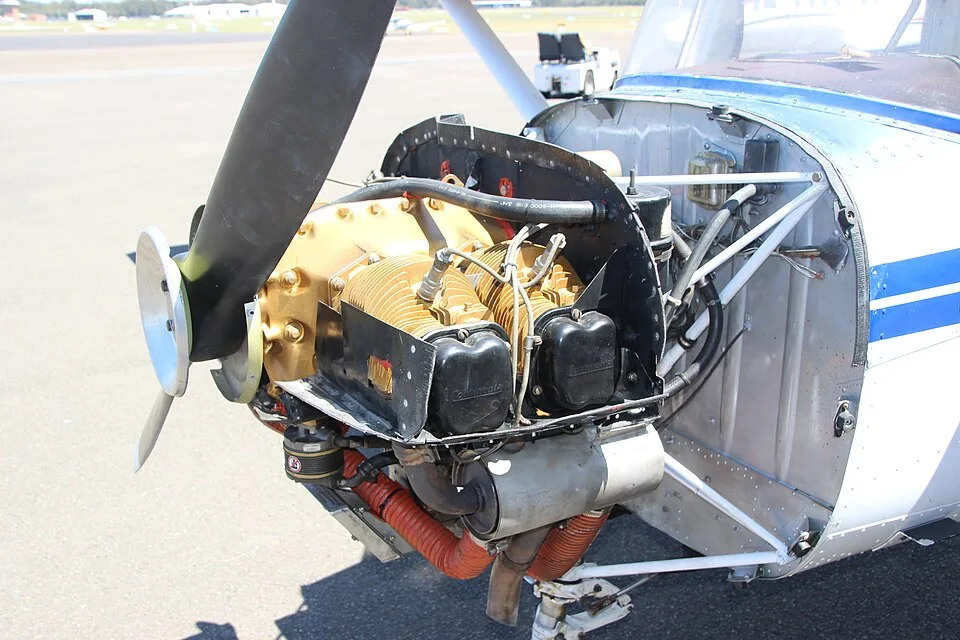

For focused questions across the two families, use the engines topic guide. This Cessna 150 reference retains the detailed family records and their applicability.
For a specific engine, the O-200-A installation reference follows the standard 150 engine through its model and propeller groups. The O-240-A/E comparison explains the narrower Reims Aerobat eligibility and the E installation’s takeoff/continuous distinction.
Use the model reference and serial guide before comparing engine figures. Retain the full model designation, including Aerobat and Reims prefixes. A broad engine-family entry can cover several eligible aircraft configurations while the exact serial matrix provides a narrower relationship. Neither should be treated as an inspection result.
Aircraft-Installed Power and Engine-Rated Power
An engine's own type-certificate or manufacturer rating and the power approved for an aircraft installation are separate fields. The distinction remains important even when the values happen to agree. An engine reference describes the engine under its stated rating conditions; the aircraft approval establishes how that engine is used in the particular installation. Do not substitute an engine-family headline rating for the aircraft's documented power or RPM limit.
The comparison below preserves both sets of values, along with the engine model and aircraft-family wording. The O-200-A and the O-240 variants must not be flattened into a single Cessna 150 engine specification. The Reims certification reference explains why configuration-dependent identities require attention to kit conditions rather than prefix matching alone.
The table also distinguishes manufacturer data from historical type-certificate context. Where a source provides different dry-weight descriptions, those describe their respective source conditions. They are not alternatives from which to choose an aircraft empty weight. Installed weight and balance require the actual aircraft records and equipment, as explained in the weight-and-balance reference.
| Model | Manufacturer | TC | Aircraft installed hp | Aircraft max rpm | Engine TC / manufacturer rated hp | Engine rated rpm | Aircraft Families | Primary Source |
|---|---|---|---|---|---|---|---|---|
| O-200-A | Continental Aerospace Technologies | E-252 | 100 | 2750 | 100 | 2750 | 150/A150; F150/FA150/FRA150; Argentine A-150L/A-A150L | [1] |
| O-240-A | Continental Aerospace Technologies / Rolls-Royce | E11EU | 130 | 2800 | 130 | 2800 | FRA150L; FRA150M; eligible FA150L/FA150M when configured per A13EU kits | [2] |
| O-240-E | Continental Aerospace Technologies / Rolls-Royce | E11EU | 130 | 2800 | 130 | 2800 | FRA150M; eligible FA150M when configured per A13EU kits | [2] |
Factory Engines by Model Year and Serial Range
The serial matrix connects an aircraft model and model-year group to its factory engine, installation power and RPM limit. Its first and last serials belong to the stated aircraft namespace. Keep that namespace intact when comparing records, especially for Reims or Argentine aircraft whose identifiers must not be converted into ordinary U.S. numbers.
An engine-range match establishes a research starting point. A later engine replacement, approved conversion or configuration change may require a different set of supplements, limitations and maintenance references. Owners should reconcile the factory record with the engine identification and the aircraft's logbooks and alteration records. Mechanics need the actual engine and relevant appliances before deciding component-specific applicability.
A table entry offering more than one approved engine is not proof that those engines are interchangeable without conditions. The application basis and aircraft approval remain part of the relationship. An empty field also does not imply that there is no limit or that any engine is acceptable. It indicates that the present source extract does not establish that particular value.
| Origin | Model Year | Aircraft Model | Factory Engine | Installed hp | RPM Limit | First Serial in Group | Last Serial in Group | Applicability Basis | Aircraft Source |
|---|---|---|---|---|---|---|---|---|---|
| Argentina | 1972 | A-150L | O-200-A | 100 | 2750 | A-1501001 | A-1501018 | Factory / type-design | [1] |
| Argentina | 1972 | A-A150L | O-200-A | 100 | 2750 | A-A1500001 | A-A1500006 | Factory / type-design | [1] |
| Argentina | 1973 | A-150L | O-200-A | 100 | 2750 | A-1501019 | A-1501039 | Factory / type-design | [1] |
| Argentina | 1973 | A-A150L | O-200-A | 100 | 2750 | A-A1500007 | A-A1500009 | Factory / type-design | [1] |
| France | 1966 | F150F | O-200-A | 100 | 2750 | F150-0001 | F150-0067 | Factory / type-design | [2] |
| France | 1967 | F150G | O-200-A | 100 | 2750 | F150-0068 | F150-0219 | Factory / type-design | [2] |
| France | 1968 | F150H | O-200-A | 100 | 2750 | F150-0220 | F150-0389 | Factory / type-design | [2] |
| France | 1969 | F150J | O-200-A | 100 | 2750 | F150-0390 | F150-0529 | Factory / type-design | [2] |
| France | 1970 | F150K | O-200-A | 100 | 2750 | F15000530 | F15000658 | Factory / type-design | [2] |
| France | 1970 | FA150K | O-200-A | 100 | 2750 | FA1500001 | FA1500081 | Factory / type-design | [2] |
| France | 1971 | F150L | O-200-A | 100 | 2750 | F15000659 | F15000738 | Factory / type-design | [2] |
| France | 1971 | FA150L | O-200-A | 100 | 2750 | FA1500082 | FA1500120 | Factory / type-design | [2] |
| France | 1972 | F150L | O-200-A | 100 | 2750 | F15000739 | F15000863 | Factory / type-design | [2] |
| France | 1972 | FRA150L | O-240-A | 130 | 2800 | FRA1500121 | FRA1500166 | A13EU FRA150L / eligible FA150L with FKA150-2311 and FKA150-2316 | [3] |
| France | 1973 | F150L | O-200-A | 100 | 2750 | F15000864 | F15001013 | Factory / type-design | [2] |
| France | 1973 | FRA150L | O-240-A | 130 | 2800 | FRA1500167 | FRA1500211 | A13EU FRA150L / eligible FA150L with FKA150-2311 and FKA150-2316 | [3] |
| France | 1974 | F150L | O-200-A | 100 | 2750 | F15001014 | F15001143 | Factory / type-design | [2] |
| France | 1974 | FRA150L | O-240-A | 130 | 2800 | FRA1500212 | FRA1500261 | A13EU FRA150L / eligible FA150L with FKA150-2311 and FKA150-2316 | [3] |
| France | 1975 | F150M | O-200-A | 100 | 2750 | F15001144 | F15001248 | Factory / type-design | [2] |
| France | 1975 | FRA150M | O-240-A or O-240-E | 130 TO / 123 O-240-E continuous | 2800 TO / 2650 O-240-E continuous | FRA1500262 | FRA1500281 | A13EU FRA150M / eligible FA150M with FKA150-2311 and FKA150-2316 | [3] |
| France | 1976 | F150M | O-200-A | 100 | 2750 | F15001249 | F15001338 | Factory / type-design | [2] |
| France | 1976 | FRA150M | O-240-A or O-240-E | 130 TO / 123 O-240-E continuous | 2800 TO / 2650 O-240-E continuous | FRA1500282 | FRA1500311 | A13EU FRA150M / eligible FA150M with FKA150-2311 and FKA150-2316 | [3] |
| France | 1977 | F150M | O-200-A | 100 | 2750 | F15001339 | F15001428 | Factory / type-design | [2] |
| France | 1977 | FRA150M | O-240-A or O-240-E | 130 TO / 123 O-240-E continuous | 2800 TO / 2650 O-240-E continuous | FRA1500312 | FRA1500336 | A13EU FRA150M / eligible FA150M with FKA150-2311 and FKA150-2316 | [3] |
| USA | 1959 | 150 | O-200-A | 100 | 2750 | 17001 | 17683 | Factory / type-design | [4] |
| USA | 1960 | 150 | O-200-A | 100 | 2750 | 17684 | 59018 | Factory / type-design | [4] |
| USA | 1961 | 150A | O-200-A | 100 | 2750 | 15059019 | 15059350 | Factory / type-design | [4] |
| USA | 1962 | 150B | O-200-A | 100 | 2750 | 15059351 | 15059700 | Factory / type-design | [4] |
| USA | 1963 | 150C | O-200-A | 100 | 2750 | 15059701 | 15060087 | Factory / type-design | [4] |
| USA | 1964 | 150D | O-200-A | 100 | 2750 | 15060088 | 15060772 | Factory / type-design | [4] |
| USA | 1965 | 150E | O-200-A | 100 | 2750 | 15060773 | 15061532 | Factory / type-design | [4] |
| USA | 1966 | 150F | O-200-A | 100 | 2750 | 15061533 | 15064532 | Factory / type-design | [4] |
| USA | 1967 | 150G | O-200-A | 100 | 2750 | 15064533 | 15067198 | Factory / type-design | [4] |
| USA | 1968 | 150H | O-200-A | 100 | 2750 | 15067199 | 15069308 | Factory / type-design | [4] |
| USA | 1969 | 150J | O-200-A | 100 | 2750 | 15069309 | 15071128 | Factory / type-design | [4] |
| USA | 1970 | 150K | O-200-A | 100 | 2750 | 15071129 | 15072003 | Factory / type-design | [4] |
| USA | 1970 | A150K | O-200-A | 100 | 2750 | A1500001 | A1500226 | Factory / type-design | [4] |
| USA | 1971 | 150L | O-200-A | 100 | 2750 | 15072004 | 15072628 | Factory / type-design | [4] |
| USA | 1971 | A150L | O-200-A | 100 | 2750 | A1500227 | A1500276 | Factory / type-design | [4] |
| USA | 1972 | 150L | O-200-A | 100 | 2750 | 15072629 | 15073658 | Factory / type-design | [4] |
| USA | 1972 | A150L | O-200-A | 100 | 2750 | A1500277 | A1500342 | Factory / type-design | [4] |
| USA | 1973 | 150L | O-200-A | 100 | 2750 | 15073659 | 15074850 | Factory / type-design | [4] |
| USA | 1973 | A150L | O-200-A | 100 | 2750 | A1500343 | A1500429 | Factory / type-design | [4] |
| USA | 1974 | 150L | O-200-A | 100 | 2750 | 15074851 | 15075781 | Factory / type-design | [4] |
| USA | 1974 | A150L | O-200-A | 100 | 2750 | A1500430 | A1500523 | Factory / type-design | [4] |
| USA | 1975 | 150M | O-200-A | 100 | 2750 | 15075782 | 15077005 | Factory / type-design | [4] |
| USA | 1975 | A150M | O-200-A | 100 | 2750 | A1500524 | A1500609 | Factory / type-design | [4] |
| USA | 1976 | 150M | O-200-A | 100 | 2750 | 15077006 | 15078505 | Factory / type-design | [4] |
| USA | 1976 | A150M | O-200-A | 100 | 2750 | A1500610 | A1500684 | Factory / type-design | [4] |
| USA | 1977 | 150M | O-200-A | 100 | 2750 | 15078506 | 15079405 | Factory / type-design | [4] |
| USA | 1977 | A150M | O-200-A | 100 | 2750 | A1500685 | A1500734 | Factory / type-design | [4] |
| USA | Special | A150M | O-200-A | 100 | 2750 | 15064970 | 15064970 | Factory / type-design | [4] |
| USA | Unresolved | 150 | O-200-A | 100 | 2750 | 617 | 617 | Factory / type-design | [4] |
| USA | Unresolved | 150A | O-200-A | 100 | 2750 | 628 | 628 | Factory / type-design | [4] |
| USA | Unresolved | 150E | O-200-A | 100 | 2750 | 644 | 644 | Factory / type-design | [4] |
| USA | Unresolved | 150H | O-200-A | 100 | 2750 | 649 | 649 | Factory / type-design | [4] |
O-200-A Research in U.S. and Related Aircraft
The O-200-A entry provides the engine's own model identity and the broad aircraft-family context recorded by the sources. It should be read with the exact aircraft matrix rather than used as a blanket assertion about every aircraft whose name contains 150. Factory-family coverage is a different claim from installed-engine identification.
Engine configuration also involves more than a model name. Fuel, oil, ignition and accessory information must be read in the relevant engine and aircraft documentation. A generic engine description cannot prove which accessory or appliance is fitted, nor whether an alteration has changed the installation. The systems guide describes the related architecture without presenting it as an inventory of an individual aircraft.
For buyers, consistency between the aircraft identity, engine identification and records is a useful investigation point. An inconsistency requires evidence, not an automatic conclusion that the installation is either approved or unapproved. The serial reference cannot decide that question from a model name alone. The approval and maintenance trail must establish what was installed and under which conditions.
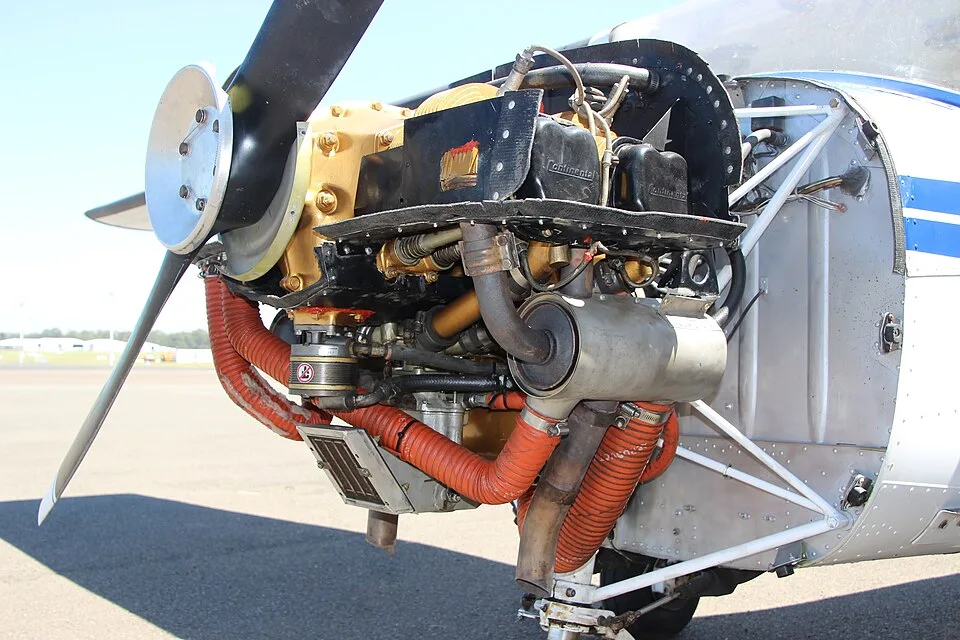

O-240-A and O-240-E in Reims Configurations
The Reims higher-power applications require careful separation of base identity and approved configuration. The recorded O-240-A and O-240-E family applicability is not identical. Read the exact wording and model/serial matrix before deciding which engine variant is relevant. A common engine-family label must not erase the distinction between the suffixes.
FA/FRA eligibility can depend on the kit conditions specified in A13EU. The serial indicates where the rule may apply; it does not establish that the aircraft currently satisfies it. Until configuration records resolve that point, retain the conditional identity and avoid selecting performance, propeller or handbook data as though the conversion were established.
The propeller reference is the next part of this research chain. An engine application and a propeller application must both match the approved aircraft configuration. A power figure alone cannot select a propeller, establish a diameter limit or justify applying a static-RPM range from another installation. Pilots likewise need the handbook and supplements for the actual configuration.
Approved Conversion Context and STC Eligibility
The conversion records identify approval or conversion families and their stated aircraft scope. These entries are context for research, not an installation list and not a complete STC catalog. A model appearing in an approval's scope does not demonstrate that an individual aircraft received the change. The exact approval revision, configuration conditions and aircraft records remain necessary.
Some conversion descriptions contain associated configurations or related approvals. Preserve those conditions. A conversion mentioned for a floatplane context must not be generalized to every landplane with a similar model designation. Similarly, an advertised power class is not automatically a certified installed output for every eligible aircraft.
| Approval / Conversion | Engine | Aircraft Models | Rated / Advertised Power | Legal Scope | Source |
|---|---|---|---|---|---|
| SA1052SW | Lycoming O-320-E2D | 150G/H/J/K/L floatplane configuration tied to SA1034SW | 150 hp class | FAA STC; exact configuration and continued-airworthiness data required | [1] |
| SA4795SW | Lycoming O-320 or O-360 | 150/A150/152/A152 listed in FAA STC records | Higher power | FAA STC reference; exact approval revision and current holder require verification | [2] |
| SA572CE / EASA validation 10015952 | Lycoming O-320 | Cessna 150 family as stated by validation listing | 150 or 160 hp | EASA validation exists for named models; current approval data controls | [3] |
RPM, Propeller Matching and Performance Claims
An aircraft RPM limit, an engine rating RPM and a propeller static-RPM range answer different questions. They can be related in an approved installation but must retain their separate labels. A static-RPM figure belongs to the stated propeller application and conditions. It should not be used to replace an engine limit or infer the aircraft's cruise performance.
The performance guide retains power settings and source conditions with each performance record. A change in available engine power does not authorize scaling every published climb, takeoff or range value by a simple ratio. Configuration and the controlling handbook matter. Where the source data does not provide a performance result for a particular conversion, this reference does not invent one.
An owner considering an aircraft with a conversion should therefore investigate the approval, installed components, supplements and current weight and balance together. The engine is part of a configured aircraft, not an isolated horsepower number. This is also why a serial-only lookup cannot establish the operational performance of a modified example.
Engine, Appliance and Maintenance Evidence
Engine-related AD research must follow the actual product identity and any stated accessory, appliance or STC conditions. A Cessna 150 airframe match cannot establish all engine or component applicability. The AD reference separates airframe, engine, propeller and installed-equipment layers and preserves the source's status context.
Maintenance history is another independent evidence layer. A factory engine entry does not establish hours, overhaul history, compliance or serviceability. Manufacturer maintenance guidance and any interval must be checked in its exact applicability and jurisdictional context. This page is not an engine-life determination or a maintenance-release record.
The known-issues guide can help organize inspection questions involving exhaust, cabin heat, controls and installation condition. It does not prove a defect. A buyer should distinguish a configuration-specific concern from evidence that the concern is present on the aircraft, and distinguish both from a mandatory action whose applicability has been established.
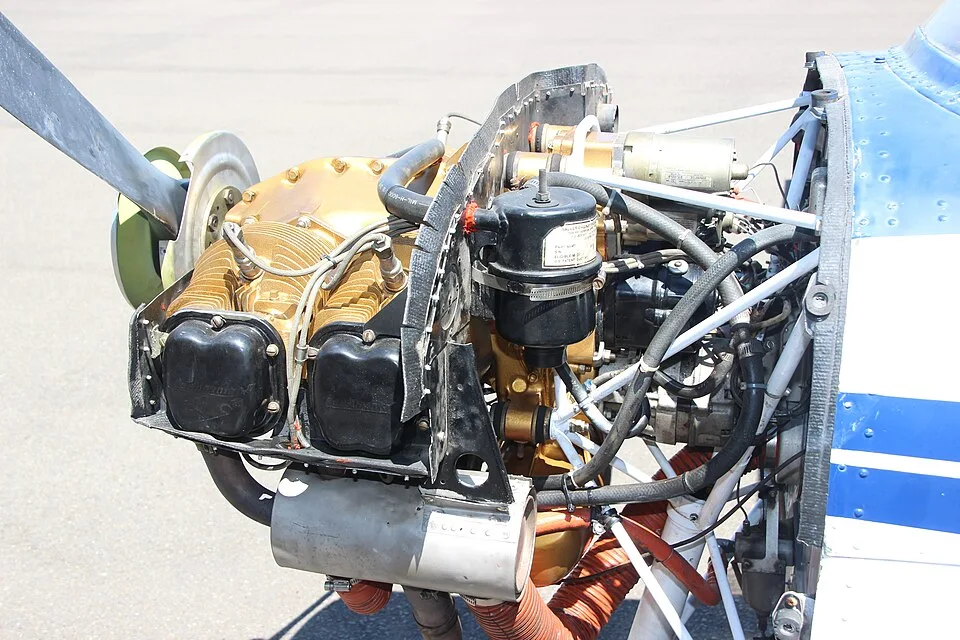

Questions About Cessna 150 Engine Identification
Does the serial number prove the engine is original?
No. It can connect the aircraft to a documented factory engine group. Originality and current installation require aircraft-specific evidence. Keep the aircraft serial, engine identification, installation records and alteration history separate until they can be reconciled.
Can an eligible engine be used with any listed propeller?
No such relationship follows from these tables. The propeller's exact aircraft, engine, configuration and source conditions must be considered. Use the model-specific application and the controlling approvals rather than combining entries from unrelated rows.
Why are some Reims values not supplied for U.S. models?
The data preserves the aircraft and certification relationship instead of copying a figure across superficially similar names. An unestablished relationship remains a gap to resolve through the proper aircraft documentation. Return to the Cessna 150 family reference to compare the related subjects without losing that boundary.
Tracing a Reims Engine Question Without Skipping Conditions
Suppose the research begins with a Reims aircraft described as a higher-power Aerobat. The description is a lead, not the final evidence. First establish the official identity and complete serial. Next determine whether the source relationship is a base FA identity or a configuration-dependent FRA identity. Only then can the relevant engine row be interpreted in the correct aircraft context.
The engine suffix remains significant within that context. An O-240 family description cannot resolve the O-240-A versus O-240-E relationship where the source distinguishes their aircraft scope. The actual engine identification and the records establishing the approved installation must be checked. A row listing alternative eligibility is not proof that either engine can be substituted without further conditions.
Continue the same evidence chain into the propeller and handbook references. Matching the engine alone does not establish the complete aircraft configuration, and it does not authorize using a stock U.S. performance figure. This is a practical example of why the serial matrix, engine master and aircraft documents are separate relationships. Keeping them separate produces a more useful answer for an owner or mechanic than returning one apparently definitive horsepower value from an airframe serial.
Explore the Applicable Model References
Follow the aircraft identity before applying a technical figure. Each model reference preserves its own serial ranges and supported relationships; missing exact relationships are left unresolved rather than inherited from another model.
- Cessna 150 (150) - 1959-1960
- Cessna 150A (150A) - 1961
- Cessna 150B (150B) - 1962
- Cessna 150C (150C) - 1963
- Cessna 150D (150D) - 1964
- Cessna 150E (150E) - 1965
- Cessna 150F (150F) - 1966
- Cessna 150G (150G) - 1967
- Cessna 150H (150H) - 1968
- Cessna 150J (150J) - 1969
- Cessna 150K (150K) - 1970
- Cessna A150K Aerobat (A150K) - 1970
- Cessna 150L (150L) - 1971-1974
- Cessna A150L Aerobat (A150L) - 1971-1974
- Cessna 150M (150M) - 1975-1977
- Cessna A150M Aerobat (A150M) - 1975-1977
- Reims/Cessna F150F (F150F) - 1966
- Reims/Cessna F150G (F150G) - 1967
- Reims/Cessna F150H (F150H) - 1968
- Reims/Cessna F150J (F150J) - 1969
- Reims/Cessna F150K (F150K) - 1970
- Reims/Cessna FA150K Aerobat (FA150K) - 1970
- Reims/Cessna F150L (F150L) - 1971-1974
- Reims/Cessna FA150L Aerobat (FA150L) - 1971
- Reims/Cessna FRA150L Aerobat (FRA150L) - 1972-1974
- Reims/Cessna F150M (F150M) - 1975-1977
- Reims/Cessna FRA150M Aerobat (FRA150M) - 1975-1977
- AMC / Argentine Cessna A-150L (A-150L) - 1972-1973
- AMC / Argentine Cessna A-A150L Aerobat (A-A150L) - 1972-1973