Reims FA152 Aerobat: Certification, Production and Manuals
The Reims FA152 combines French manufacture, A13EU certification and a separate Acrobatic-category identity. Its source model-year span extends through 1986, while a service-manual annual table lacks a 1984 production entry. Those facts must be read together: an incomplete annual series is not a different legal model and should not be filled with an invented serial range.
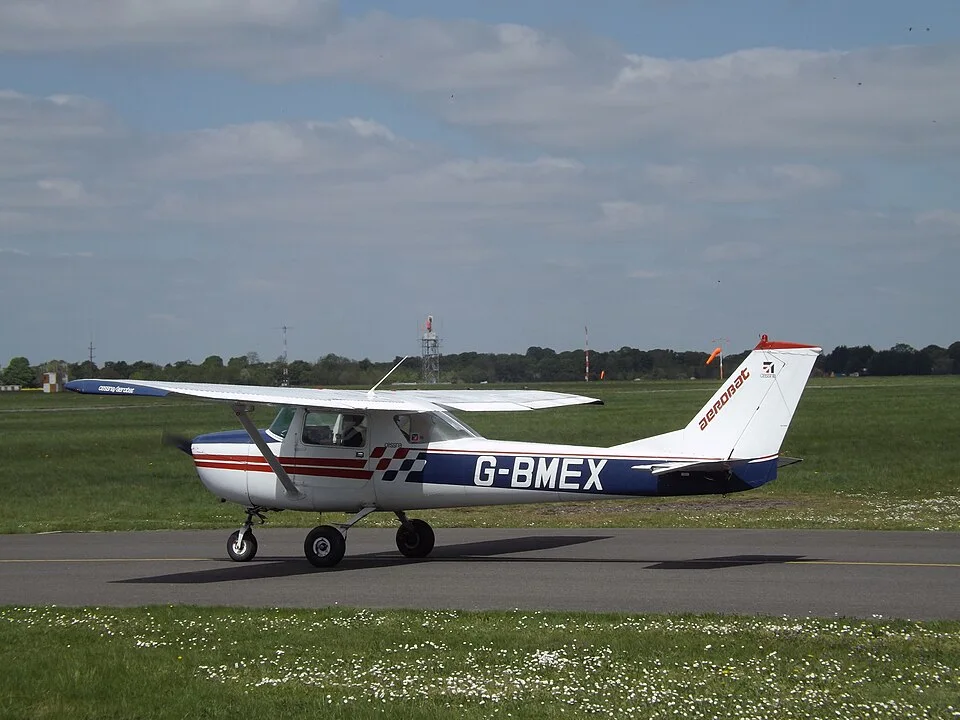

The French Aerobat in the later family
FA152 is the Reims Acrobatic-category member of the O-235-powered family, beside the standard F152 and related to the U.S. A152. Earlier French Aerobats include the distinct higher-power FRA150M. That historical context does not establish a single conversion or direct component-succession rule between FRA150M and FA152.
The FA152 retains one designation across its documented 1978-1986 model-year coverage. An absent annual entry in a service table is a gap in that particular record, not another model or an automatically proven production interruption. The Reims history gives the wider chronology; the annual evidence below preserves the more limited question it can answer.
For a reader comparing Aerobats, engine installation, category and manufacturer must remain visible together. A shared O-235 family does not make a U.S. handbook controlling for every French aircraft, and the Aerobat label alone does not establish installed equipment. The cabin article explains why a representative Aerobat photograph cannot resolve all variant details. This profile then narrows the positive publication and component relationships for FA152 itself.
| Model Years | 1978-1986 |
|---|---|
| Certification Category | Acrobatic |
| Certified Serial Eligibility | FA1520337-FA1520425 |
| Type-design engine context | Lycoming O-235-L2C for 1978-1982 models; O-235-N2C for 1983 model and on, or aircraft reworked per SK152-15 / SK152-16 |
Compare the FA152 with the standard Reims F152 and U.S. A152 Aerobat. Shared family relationships do not erase the distinct origin, serial namespace or controlling aircraft documentation. The model guide provides the wider comparison.
Identity Under A13EU
the record identifies Reims manufacture at Reims-Prunay, France, and initial approval on 2 June 1977. The FA152 is an Acrobatic identity under A13EU. The model's approval date is not an individual aircraft's manufacture date, and the current registration jurisdiction does not change its manufacturer model.
The FA prefix should be preserved exactly in serial research. It is not a decorative variant of a U.S. A152 number. Aircraft plate, documents and source-qualified serial effectivity must be reconciled before applying a technical value or selecting a handbook.
| Official Model | Public Name | Model Years | Variant Type | Certification Category | Historical Manufacturer | Country of Manufacture | Primary Type Certificate |
|---|---|---|---|---|---|---|---|
| FA152 | Reims/Cessna FA152 Aerobat | 1978-1986 | Aerobat | Acrobatic | Reims Aviation S.A. (Reims-Cessna) | France | A13EU |
| Model | TC | Category | Initial Model Approval Date | Core Cert Basis | Certification / Identity Note | Reference |
|---|---|---|---|---|---|---|
| FA152 | A13EU | Acrobatic | 1977-06-02 | CAR 3 (1956-05-15) amended 3-4 | Reims Aerobat 152 family | [1] |
Production Span and the Missing Annual Entry
The certified eligibility and ordinary ranges retain the FA152 serial namespace. Manufacturer evidence extends the model-year context through 1986, beyond the U.S. endpoint. The missing 1984 service-year entry should remain absent rather than being inferred from neighboring endpoints.
A production span does not establish equal annual production, uninterrupted entries in every table or calendar delivery dates. The serial reference explains those counting and date boundaries. An annual gap is a source-coverage fact, not permission to rename an aircraft or assign an unsupported date.
| Model Year | Official Model | Serial Start | Serial End | Excluded / Override Serials | Notes | Primary Source |
|---|---|---|---|---|---|---|
| 1978 | FA152 | FA1520337 | FA1520347 | - | - | [1] |
| 1979 | FA152 | FA1520348 | FA1520357 | - | - | [1] |
| 1980 | FA152 | FA1520358 | FA1520372 | - | - | [1] |
| 1981 | FA152 | FA1520373 | FA1520377 | - | - | [1] |
| 1982 | FA152 | FA1520378 | FA1520382 | - | - | [1] |
| 1983 | FA152 | FA1520383 | FA1520387 | - | - | [1] |
| 1985 | FA152 | FA1520388 | FA1520415 | - | - | [1] |
| 1986 | FA152 | FA1520416 | FA1520425 | - | - | [1] |
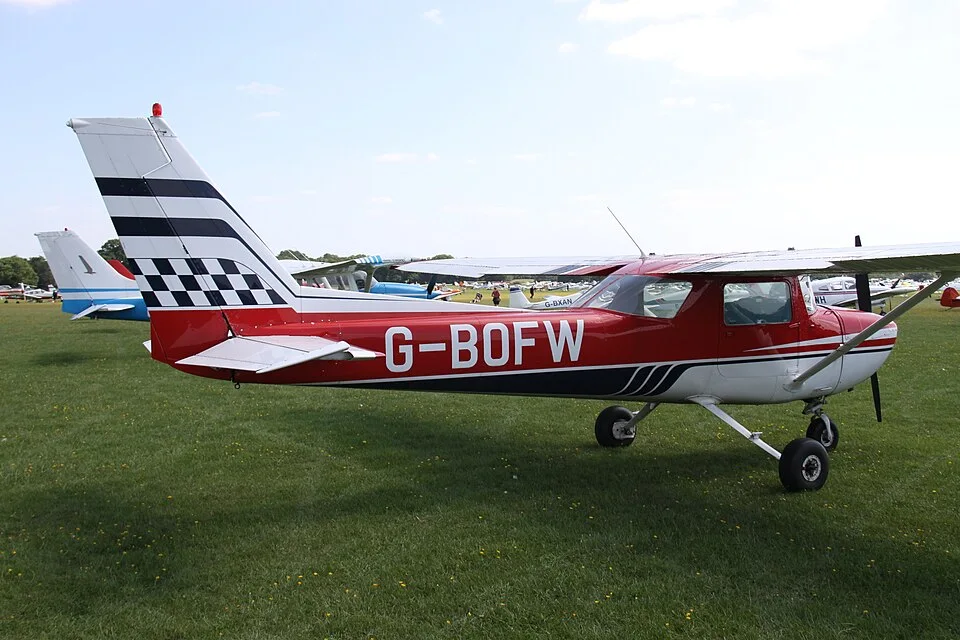

L2C and N2C Engine Context
The identity wording associates L2C with 1978-1982 models and N2C with 1983 onward or approved rework. The engine-range records below preserve the French effectivity rather than borrowing the U.S. Aerobat transition number. The engine guide explains the installed 110/108 hp distinction and separate manufacturer rating context.
A factory relationship does not identify the engine or accessories installed today. An earlier airframe can require approved-rework research, and any replacement engine has its own identification and maintenance history. The aircraft serial cannot establish the affected engine parts or maintenance events relevant to a component AD.
| Origin | Model Year | Aircraft Model | Factory Engine | Installed hp | RPM Limit | First Serial in Group | Last Serial in Group | Applicability Basis | Aircraft Source |
|---|---|---|---|---|---|---|---|---|---|
| France | 1978 | FA152 | O-235-L2C | 110 | 2550 | FA1520337 | FA1520347 | A13EU 1978-1982 model production | [1] |
| France | 1979 | FA152 | O-235-L2C | 110 | 2550 | FA1520348 | FA1520357 | A13EU 1978-1982 model production | [1] |
| France | 1980 | FA152 | O-235-L2C | 110 | 2550 | FA1520358 | FA1520372 | A13EU 1978-1982 model production | [1] |
| France | 1981 | FA152 | O-235-L2C | 110 | 2550 | FA1520373 | FA1520377 | A13EU 1978-1982 model production | [1] |
| France | 1982 | FA152 | O-235-L2C | 110 | 2550 | FA1520378 | FA1520382 | A13EU 1978-1982 model production | [1] |
| France | 1983 | FA152 | O-235-N2C | 108 | 2550 | FA1520383 | FA1520387 | A13EU 1983 model and on / approved rework | [1] |
| France | 1985 | FA152 | O-235-N2C | 108 | 2550 | FA1520388 | FA1520415 | A13EU 1983 model and on / approved rework | [1] |
| France | 1986 | FA152 | O-235-N2C | 108 | 2550 | FA1520416 | FA1520425 | A13EU 1983 model and on / approved rework | [1] |
Propeller and Aircraft Approval
The McCauley application is explicitly recorded for F152/FA152 under Reims authority. Its diameter and static-RPM values remain attached to that installation. Agreement with a U.S. application does not make U.S. Aerobat speed or CG limits automatically applicable to FA152.
The propeller reference separates factory eligibility from installed-component condition and hub-crack research. A prebuy or maintenance review needs the actual propeller identification and records, not merely the aircraft's model designation.
| Aircraft Model | Model Year / Config | Engine | Exact Propeller Application | Max Dia | Min Dia | Static Min | Static Max | Notes | Primary Authority |
|---|---|---|---|---|---|---|---|---|---|
| F152/FA152 | 1978-1986 | O-235-L2C/N2C | 1A103/TCM6958 | 69 | 67.5 | 2280 | 2380 | - | [1] |
Aerobat Publication Families
The document master explicitly pairs A152/FA152 handbook families, including annual Aerobat publication numbers. Those relationships provide useful document leads while retaining model and serial conditions. They do not make a standard-model information manual an adequate substitute for the aircraft's controlling Aerobat documents.
The late handbook context includes Reims 1986 serials within the publication family associated with 1985 U.S. aircraft. The manuals guide explains why publication year, title-page serial and revision are separate fields. The aircraft's supplements and actual configuration remain part of a complete operational-document review.
| Family / Year | Model | Publication | Document Class | Serial / Year Effectivity | Authority Basis | Operational Status | Special Boundary | Reference |
|---|---|---|---|---|---|---|---|---|
| 1985 / Reims 1986 serials | 152/A152/F152/FA152 | D1270-13PH / D1271-13PH | POH/AFM | 1985 U.S.; authority serial effectivity includes Reims 1986 production | FAA 3A19 + CAA TAR | Approved/authority-recognized family | Reims serial effectivity, not production-year guess | [1] |
| Publication | Title | Document Class | Model Applicability | Years | Serial Effectivity | Revision Context | Authority Status | Use Boundary | Reference |
|---|---|---|---|---|---|---|---|---|---|
| D1108-13 | A152 / FA152 (1978) Pilot's Operating Handbook | Pilot's Operating Handbook | A152 / FA152 | 1978 | Model-year / exact serial-specific handbook controls | Publication family | Current historical publication family | FAA-approved aircraft handbook when issued for the specific airplane; generic information manual is not a replacement | [1] |
| D1137-13PH | A152 / FA152 (1979) Pilot's Operating Handbook | Pilot's Operating Handbook | A152 / FA152 | 1979 | Model-year / exact serial-specific handbook controls | Publication family | Current historical publication family | FAA-approved aircraft handbook when issued for the specific airplane; generic information manual is not a replacement | [1] |
| D1171-13PH | A152 / FA152 (1980) Pilot's Operating Handbook | Pilot's Operating Handbook | A152 / FA152 | 1980 | Model-year / exact serial-specific handbook controls | Publication family | Current historical publication family | FAA-approved aircraft handbook when issued for the specific airplane; generic information manual is not a replacement | [1] |
| D1191-13PH | A152 / FA152 (1981) Pilot's Operating Handbook | Pilot's Operating Handbook | A152 / FA152 | 1981 | Model-year / exact serial-specific handbook controls | Publication family | Current historical publication family | FAA-approved aircraft handbook when issued for the specific airplane; generic information manual is not a replacement | [1] |
| D1211-13PH | A152 / FA152 (1982) Pilot's Operating Handbook | Pilot's Operating Handbook | A152 / FA152 | 1982 | Model-year / exact serial-specific handbook controls | Publication family | Current historical publication family | FAA-approved aircraft handbook when issued for the specific airplane; generic information manual is not a replacement | [1] |
| D1230-13PH | A152 / FA152 (1983) Pilot's Operating Handbook | Pilot's Operating Handbook | A152 / FA152 | 1983 | Model-year / exact serial-specific handbook controls | Publication family | Current historical publication family | FAA-approved aircraft handbook when issued for the specific airplane; generic information manual is not a replacement | [1] |
| D1250-13PH | A152 / FA152 (1984) Pilot's Operating Handbook | Pilot's Operating Handbook | A152 / FA152 | 1984 | Model-year / exact serial-specific handbook controls | Publication family | Current historical publication family | FAA-approved aircraft handbook when issued for the specific airplane; generic information manual is not a replacement | [1] |
| D1271-13PH | A152 / FA152 (1985) Pilot's Operating Handbook | Pilot's Operating Handbook | A152 / FA152 | 1985 | Model-year / exact serial-specific handbook controls | Publication family | Current historical publication family | FAA-approved aircraft handbook when issued for the specific airplane; generic information manual is not a replacement | [1] |
| D2064-1-13 | Model 152 Series 1978 Thru 1985 Service Manual | Service Manual | 152, A152, F152, FA152 | 1978-1986 Reims coverage noted in manual | Use the effectivity/cross-reference pages inside the publication; do not infer from model family alone | Revision 1 | Technical publication family | Maintenance/parts reference; latest revision/temporary revision controls | [2] |
| P692-12 | 152 (1978-1985) Parts Catalog | Illustrated Parts Catalog | 152 / A152 / F152 / FA152 | 1978-1985 | Use the effectivity/cross-reference pages inside the publication; do not infer from model family alone | Original issue | Technical publication family | Maintenance/parts reference; latest revision/temporary revision controls | [3] |

Loading, Performance and Remaining Limits
No U.S. certified-speed or weight-and-balance group is inherited by this model reference. The detailed performance series that explicitly names standard Model 152 is not assigned to FA152 either. These are limits of the source relationships presented here, not statements that the aircraft lacks approved technical information.
The A13EU reference and controlling aircraft documentation are the appropriate evidence for those questions. An Aerobat identity does not establish every loading arrangement or remove restrictions attached to an installed alteration. Current equipment and weight-and-balance records are still aircraft-specific.
Maintenance and Configuration Questions
The AD guide retains Reims flap and stabilizer-related conditions alongside installed engine and propeller potentially applicable items. The known-issues guide separates those requirements from advisory, manufacturer and prebuy concerns. Applicability is not proof of compliance or a defect.
For an owner or buyer, the useful next step is a coherent relationship among the plate identity, French serial, engine and propeller records, handbook and alterations. Preserve the annual-table gap and any unresolved configuration as questions to investigate. A family resemblance or publication title cannot supply the missing aircraft evidence.
Compare the Four Model Identities
The Reims certification guide distinguishes French manufacture from later certificate administration. The stabilizer-nutplate AD reference retains the FA152 serial and predecessor-action conditions.