AD 2010-04-05: McCauley 1A103/TCM Propeller Hub Cracks
AD 2010-04-05 addresses McCauley 1A103/TCM series propeller hub cracking. In the record, potential applicability follows the propeller when installed. The source snapshot records initial and repetitive inspections of the hub, bolt holes, plate and gasket, with rework or removal as required. It does not determine whether any particular aircraft is compliant, and its recorded status is not a live regulatory check.


Start with the propeller identity
The 1A103/TCM6958 application guide connects this series to the 152/A152 and F152/FA152 installations. That is a useful place to begin, but an aircraft model lookup cannot prove that its original propeller remains installed. A replacement, different approved installation or incomplete equipment record changes the evidence needed to resolve applicability.
Conversely, an affected propeller does not become irrelevant merely because it appears on an aircraft outside a familiar factory pairing. The directive's product scope is the key. This is why an installed-component AD should not be treated as either universally applicable to all 152 aircraft or automatically absent from every other aircraft. The model guide establishes context; the actual propeller identity and controlling directive establish the next research question.
| AD Number | Title | historical status | Effective Date | C150/152 Applicability | Required Action Summary | Recurring / Event | Supersedes | Superseded By | Reference date | Reference |
|---|---|---|---|---|---|---|---|---|---|---|
| 2010-04-05 | McCauley 1A103/TCM Hub Cracks | CURRENT | 2010-03-10 | All McCauley 1A103/TCM series propellers when installed. | Initial and repetitive visual/dye-penetrant hub, bolt-hole, plate and gasket inspections; rework/remove as required. | Yes | 2003-12-05 | - | 2026-09-08 | [1] |


What the recorded action tells an owner
The source summary identifies visual and dye-penetrant inspection subjects and recurring work. That is enough to explain why a logbook review may involve repeated propeller-specific entries rather than a single historical sign-off. It is not enough to supply inspection intervals, detailed acceptance criteria, repair instructions or the complete conditions for removal. Those belong to the controlling directive and referenced technical material.
The distinction between inspection and resulting action is also important. A statement that an inspection occurred does not describe what was found or what work followed. For a prebuy review, the useful evidence connects propeller identity, the applicable requirements, inspection findings and any required follow-up. No statement on this page substitutes for that chain of records or a qualified assessment of the propeller.
Supersession and historical references
the record states that 2010-04-05 supersedes 2003-12-05. The family source records also retains older hub-crack entries rather than deleting them from the aircraft's possible documentary history. An earlier number in a logbook can therefore be historically meaningful while still requiring reconciliation with the later directive. “Previously complied with” and “all current obligations established” are different conclusions.
The recorded effective date is 10 March 2010 and the status is CURRENT as of 8 September 2026. That date distinguishes the historical status from subsequent changes. It should not be interpreted as a promise that no later amendment, supersession or jurisdictional action exists. The 152 AD guide explains the separation between historical records, historical status and aircraft-level compliance.

Engine pairing does not settle the hub question
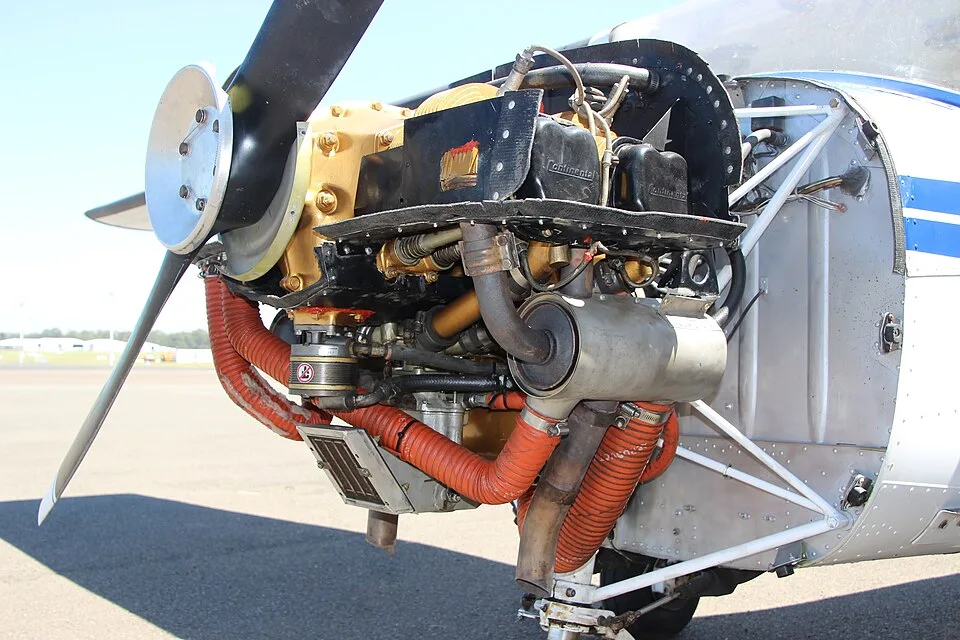
The TCM application is recorded with both O-235-L2C and O-235-N2C engines. A change between those engine configurations is not by itself evidence that the propeller issue disappeared. Research the installed propeller and relevant maintenance history directly. Likewise, similar diameter or a McCauley manufacturer label does not extend this directive to another series such as 1A102/OCM.
Source hierarchy and further investigation
The Federal Register rule provides the directive’s applicability and required actions. Use the controlling directive and aircraft records to determine applicability. See Technical Documents.
For Reims aircraft, keep the installed product, aircraft approval and State-of-Registry framework distinct. The Reims guide explains the wider certification context. A careful investigation uses the correct product identifier and current controlling material, then establishes the aircraft's actual work and records. A website can organize those questions; it cannot inspect the hub or release the aircraft to service.