Cessna 150 vs 152: Engines, Useful Load, Fuel and Ownership
The most useful Cessna 150 versus 152 comparison starts with the exact aircraft, not a single specification for each family. A late standard U.S. 150 normally leads to a 100-hp Continental O-200-A and a 1,600-lb certified landplane limit; the standard U.S. 152 leads to a 1,670-lb limit and Lycoming O-235-L2C/N2C installations recorded at 110/108 hp respectively. Early 150s, Aerobats, Reims aircraft and altered airframes introduce important exceptions to that simple comparison.
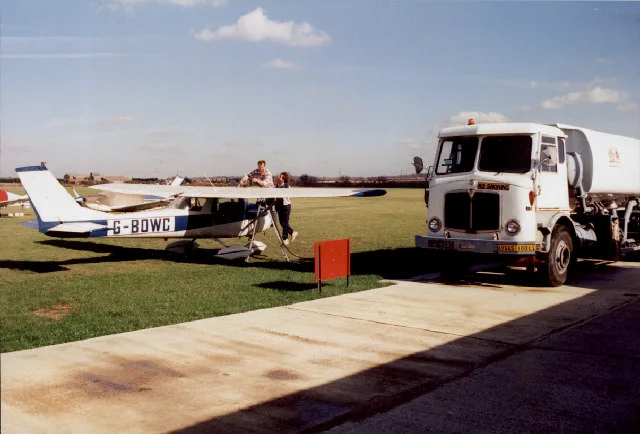

The Cessna 150 reference and Cessna 152 reference provide the detailed family evidence. This page compares the decisions those facts support: which generation to research, how much load the actual aircraft can carry, which performance conditions are comparable, and what documentation a buyer should request.
Engines and the Production Transition
The U.S. standard 150 sequence covers model years 1959-1977, ending with the multi-year 150M. The U.S. 152 family follows in 1978-1985, while French 152-family year coverage extends into 1986. A registration or delivery year may differ from those source-assigned model years. Use the model directory and the full serial before treating a year in an advertisement as the model identity.
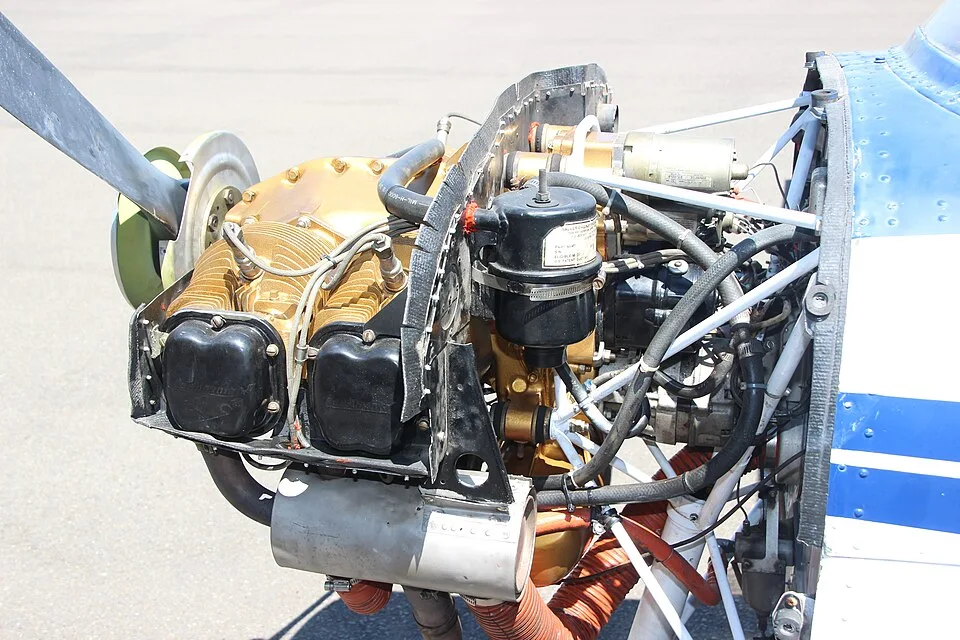
The standard engine comparison is Continental O-200-A versus Lycoming O-235. The 152 source distinguishes O-235-L2C and O-235-N2C by factory serial effectivity and approved rework. It is not sufficient to call every later aircraft N2C or to infer the current engine from its year. The engine tables also include the O-240 branch of the Reims Aerobat family. That branch is a configuration-specific comparison, not the factory engine of a standard U.S. 150.
| Model | Aircraft installed hp | Aircraft max rpm | Model scope | Effectivity context | Primary Source |
|---|---|---|---|---|---|
| O-200-A | 100 | 2750 | A-150L, A-A150L, F150F, F150G, F150H, F150J, F150K, FA150K, F150L, FA150L, F150M, 150, 150A, 150B, 150C, 150D, 150E, 150F, 150G, 150H, 150J, 150K, A150K, 150L, A150L, 150M, A150M | 150/A150; F150/FA150/FRA150; Argentine A-150L/A-A150L | [1] |
| O-240-A | 130 | 2800 | FRA150L, FRA150M | FRA150L; FRA150M; eligible FA150L/FA150M when configured per A13EU kits | [2] |
| O-240-E | 130 | 2800 | FRA150M | FRA150M; eligible FA150M when configured per A13EU kits | [2] |
| O-235-L2C | 110 | 2550 | F152, FA152, 152, A152 | 152/A152/F152/FA152, early production / pre-N2C effectivity | [3] |
| O-235-N2C | 108 | 2550 | F152, FA152, 152, A152 | 152/A152/F152/FA152, 1983-and-on / approved rework effectivity | [3] |
The model-scope column is taken from the explicit factory-engine assignments; the broader effectivity context preserves the engine catalog's wording and does not expand those model assignments. The 150 installation guide and 152 installation guide retain exact aircraft/serial relationships. The early O-235-L2C is recorded at 110 installed hp and the later N2C at 108 installed hp. The initial 110-hp versus 100-hp comparison does not establish a ten-percent improvement in every flight phase. Aircraft weight, propeller application and operating conditions intervene. Nor does an engine-manufacturer rating automatically equal the installed aircraft rating, a distinction that is particularly relevant to O-240 variants.
Gross Weight and Useful Load
The original 150 through 150C group has a 1,500-lb landplane limit. The 150D introduces the 1,600-lb group that continues through the later standard models. The U.S. 152 and A152 certified entries give 1,670 lb. These are useful generation distinctions, but subtracting one family's gross weight from another does not measure the difference in payload available in two sale aircraft.
| Models | Category | Speed Basis | MTOW Land lb | Vne | Vfe | Source |
|---|---|---|---|---|---|---|
| 150/150A/150B/150C | Utility | CAS | 1500 | 136 kt / 157 mph | 74 kt / 85 mph | [1] |
| 150D/150E/150F | Utility | CAS | 1600 | 141 kt / 162 mph | 87 kt / 100 mph | [1] |
| 150G/150H/150J/150K | Utility | CAS | 1600 | 141 kt / 162 mph | 87 kt / 100 mph | [1] |
| A150K | Acrobatic | CAS | 1600 | 168 kt / 193 mph | 87 kt / 100 mph | [1] |
| 150L | Utility | CAS | 1600 | 141 kt / 162 mph | 87 kt / 100 mph | [1] |
| A150L | Acrobatic | CAS | 1600 | 168 kt / 193 mph | 87 kt / 100 mph | [1] |
| 150M | Utility | CAS | 1600 | 141 kt / 162 mph | 87 kt / 100 mph | [1] |
| A150M | Acrobatic | CAS | 1600 | 168 kt / 193 mph | 85 kt | [1] |
| 152 | Utility | IAS | 1670 | 149 kt | 85 kt | [1] |
| A152 | Acrobatic | IAS | 1670 | 172 kt | 85 kt | [1] |
Useful load depends on the actual aircraft's empty weight and current equipment. A heavier radio installation, a recorded engine conversion or other equipment can use some of the apparent gross-weight advantage. The late 150M published Commuter example is 1,104 lb empty, giving an illustrative 496 lb below 1,600 lb. That is an example from a year summary, not a promise that every M carries 496 lb or that every 152 carries more. Compare the signed current weight-and-balance records and the 152 loading groups before deciding which aircraft meets a two-person mission.
Ramp weight also needs care. The later U.S. 152 group includes a 1,675-lb ramp provision at a stated serial boundary; it does not raise the 1,670-lb takeoff limit. Aerobat loading and category requirements remain separate even where the headline weight matches the standard aircraft. U.S. CG and gross-weight rows here do not establish Reims limits.

Fuel Capacity and the Load Tradeoff
Both standard U.S. groups show 26 gallons total fuel, but the recorded usable quantities differ: 22.5 gallons for the standard 150 landplane context and 24.5 for the 152. The long-range entries are also different: 38 total/35 usable gallons for the 150 configuration and 39 total/37.5 usable for the controlled 152 handbook context. The source preserves a secondary 38-gallon wording discrepancy for the latter rather than merging it into one unqualified figure.
| Applicability | Configuration | Total gal | Usable gal | Reserve Basis | Note | Source |
|---|---|---|---|---|---|---|
| 150 landplane | Standard | 26 | 22.5 | Early published pages often no reserve | - | [1] |
| 150 Patroller / long range | Long range | 38 | 35 | Early published pages often no reserve | Secondary configuration reference | [2] |
| 150G-K seaplane | Standard | 26 | 21.5 | - | Different usable fuel | T3R51 |
| 150M later | Standard | 26 | 22.5 | 1976-77 published 45 min @45% power | - | [1] |
| 152 | Standard | 26 | 24.5 | 45-minute reserve basis in later handbook data | - | [1] |
| 152 | Long range | 39 | 37.5 | 45-minute reserve basis | Some secondary pages use 38-gal wording; controlled handbook context stored separately. | [3] |
Extra fuel capacity expands the loading choice; it does not make the extra fuel weight disappear. Start with occupants, baggage and actual useful load, then establish the tank installation and usable fuel that can be carried within weight and CG limits. The 150 fuel guide and 152 fuel guide explain the configurations. A long-tank range headline cannot be used for a standard-tank aircraft, and a no-reserve historical figure should not be compared directly with a later 45-minute-reserve result.
Performance: Compare the Conditions First
The following selected examples keep the model, year, original units and stated conditions. They are comparison evidence rather than a flight-planning calculator. The detailed family pages retain the remaining metrics and source qualifications; a missing altitude, weight or atmosphere in a headline should remain missing instead of being filled with a convenient assumption.
| Model | Year | Metric | Value | Units | Power % | Altitude ft | Fuel Usable gal | Reserve Basis | Obstacle ft | Condition Note | Source |
|---|---|---|---|---|---|---|---|---|---|---|---|
| 150M | 1977 | Cruise speed | 106 | kt | 75 | 7000 | - | - | - | Published headline condition | [1] |
| 150M | 1977 | Sea-level rate of climb | 670 | fpm | - | - | - | - | - | - | [1] |
| 150M | 1977 | Takeoff ground roll | 735 | ft | - | - | - | - | - | - | [1] |
| 150M | 1977 | Takeoff over 50 ft | 1385 | ft | - | - | - | - | 50 | - | [1] |
| 152 | 1978 | Cruise speed | 107 | kt | 75 | 8000 | - | - | - | Published headline condition | [2] |
| 152 | 1978 | Sea-level rate of climb | 715 | fpm | - | - | - | - | - | - | [2] |
| 152 | 1978 | Takeoff ground roll | 725 | ft | - | - | - | - | - | - | [2] |
| 152 | 1978 | Takeoff over 50 ft | 1340 | ft | - | - | - | - | 50 | - | [2] |
Early and later source material mixes mph, knots, miles and nautical miles. Speed-limit tables also distinguish CAS from IAS. Converting units alone does not make unmatched power, altitude, fuel or reserve conditions equivalent. A cruise claim at one altitude and power setting cannot establish which aircraft is faster under another condition, and maximum speed is a different metric from ordinary cruise. The 150 performance reference and 152 performance reference should be read with the matching handbook.
For a training or ownership comparison, runway distance and climb margin at the intended load can matter more than a small difference in a cruise headline. The website's selected summaries cannot settle those operational calculations for a particular field and day. Request the correct aircraft handbook, identify its configuration and use its complete performance information rather than deriving a dispatch decision from this comparison table.
Flaps, Electrical Systems and Generations
The 150 through 150E uses the manual-flap generation; the 150F introduces electric flaps. Even that introduction contains narrower motor/relay changes at specific U.S. and Reims serials. The 150/152 family systems evidence also distinguishes the 150's larger flap-deflection context from the 152's 30-degree system. The exact travel, controls and installed actuator remain aircraft-document questions. A seller's description of "electric flaps" does not identify every part or operating limitation.
The electrical transition from the 150 family to 152/A152 is recorded as 14 V DC to 28 V DC, with exact type-design effectivity. Earlier 150 changes include the 150G alternator entry, so a broad old-versus-new electrical comparison still needs the model generation. See 150 systems and 152 systems for serial-dependent control, flap and electrical distinctions. These affect equipment and maintenance research without proving which later accessories are installed.


Aerobats, Reims Aircraft and Alterations
A150K/L/M and A152 are separate Acrobatic identities, not standard aircraft made acrobatic by a paint scheme. Reims FA and FRA models add their own authority and configuration relationships. In particular, the FA-to-FRA rules require named kits and eligible serials. The Aerobat guide compares categories and limitations, while the Reims guide explains why the U.S. tables cannot automatically describe French aircraft.
Engine conversions can change the comparison more than the original family label. Establish the approval, installed engine and propeller, supplements and revised loading evidence before comparing an altered 150 with a factory-standard 152. A listed conversion's eligibility is not evidence that it is installed, and an installed engine name alone does not prove the complete approval configuration.
Buying and Ownership Implications
The available sources support an engine-and-component research comparison, not current market prices, overhaul quotations or a universal claim that one engine ecosystem is cheaper. For either family, identify the exact engine, propeller and accessories before requesting parts or maintenance quotations. The 152's O-235 oil-pump and McCauley hub issue contexts differ from early 150 exhaust-heater or equipment-specific concerns. Broad family issue lists must retain those conditions.
A practical purchase comparison starts with two actual record sets: legal model/full serial, current empty weight and CG, installed engine/propeller, tank configuration, correct manuals, alterations and applicable maintenance history. The buying guide turns these into a selection process; the prebuy guide organizes inspection evidence. Choose the aircraft whose documented condition and usable capability suit the intended role, rather than assuming the newer family or a larger headline figure answers every ownership question.
Focused research
For the engine-specific question, compare O-200 and O-235 installation evidence. The comparison directory leads to the supported generation, Aerobat and Reims questions while keeping aircraft-specific payload and performance conditions in their technical guides.