Cessna 152 Known Issues and Prebuy Evidence
Cessna 152 known issues include component wear, structural corrosion, early exhaust and flap topics, fuel markings and indication, and concerns tied to installed engines, propellers or alterations. A known issue is a reason to investigate the applicable evidence, not a declaration that every aircraft has a defect. This reference retains affected scope, failure mode, detection clues and legal or manufacturer status together.

For focused questions across the two families, use the known issues topic guide. This Cessna 152 reference retains the detailed family records and their applicability.
For closer investigation, read the seat locking and rail guide beside AD 2011-10-09. The structural corrosion guide follows location-specific evidence and temporary-revision changes.
Use the model guide and serial reference to establish identity, then consider the aircraft's actual equipment and maintenance history. A family-level concern cannot establish installed configuration, current condition or overdue work. The AD guide supplies the separate directive context where a concern is linked to a mandatory requirement.
Seats, Locking Components and Supporting Structure
Seat rails, locking pins, rollers and associated parts have a wear and retention context distinct from structural corrosion in the supporting area. The source keeps the seat-component directive and the supporting-structure inspection topics separate. Sharing a general cabin location does not make them the same inspection or legal requirement.
A prebuy statement that the seats operate normally is not evidence of every prescribed inspection or dimension. Records and inspection must be evaluated under the applicable source. Equally, the existence of a family seat-rail concern is not a finding that the rails on the aircraft are defective.
The useful ownership record distinguishes the action completed, the source used, the component or area evaluated and any recurring requirement. A general maintenance description can leave those questions unresolved. The issue table identifies why the area matters while leaving the actual determination to the appropriate aircraft evidence.
Seats / Structure
| Title | Affected Scope | Failure Mode | Detection / Prebuy Clues | Legal / OEM Status | Conditional Applicability Rule | Reference |
|---|---|---|---|---|---|---|
| Seat rail, locking pin and roller wear | Cessna 150A-M, A150, A-150/A-A150, Reims F/FA/FRA150, 152/A152/F152/FA152; all serials in AD applicability. | Seat rail holes, rollers, housings, pins or springs can wear/damage so the seat may slip or leave the rail. | AD inspection of rail holes, dirt/debris, roller/housing/tang dimensions, lock-pin engagement and springs; review repetitive compliance records. | FAA AD - mandatory | None | [1] |
Seats / Corrosion
| Title | Affected Scope | Failure Mode | Detection / Prebuy Clues | Legal / OEM Status | Conditional Applicability Rule | Reference |
|---|---|---|---|---|---|---|
| Seat rail and supporting structure corrosion | SID-covered 150/152 families. | Seat rails/supporting structure can corrode in addition to the separate locking/wear problem. | Review SID 53-47-01; inspect rail/support structure for corrosion and prior repairs. | OEM SID/CPCP | Environment drives interval | [1] |
- [1] D2064-1TR10
Structural Corrosion, Wings and Landing Gear
Carry-through structure, wing roots, strut attachments and gear fittings are separate locations with their own inspection context. The source's manufacturer inspection and corrosion-prevention relationships should not be replaced by a vague statement that an old airframe is either good or bad. Environment, repairs and maintenance history can affect what needs investigation.
An exterior appearance does not establish the condition of every internal structural area. For buyers, the reference helps identify questions that require records or appropriate inspection. For mechanics, the controlling maintenance or manufacturer instructions supply the methods and limits; this page does not provide a repair procedure.
The systems reference supplies broad gear and control architecture, while the issue records describe possible failure modes. Architecture, inspection effectivity and actual condition remain different layers. A familiar arrangement does not prove interchangeability of inspection details across all models and serials.
Corrosion / Fuselage
| Title | Affected Scope | Failure Mode | Detection / Prebuy Clues | Legal / OEM Status | Conditional Applicability Rule | Reference |
|---|---|---|---|---|---|---|
| Carry-through and interior structural corrosion | SID-covered 150-series (1969-77 family) and 152-series/Reims family; corrosion environment changes intervals. | Aging structure can corrode at carry-through structure and fuselage interior skin panels. | Inspect SID/CPCP status and structural areas; look for corrosion level, prior blend/repair, moisture history. | OEM SID/CPCP - maintenance program | Environment/maintenance program controls interval | [1] |
- [1] D2064-1TR10
Corrosion / Wing
| Title | Affected Scope | Failure Mode | Detection / Prebuy Clues | Legal / OEM Status | Conditional Applicability Rule | Reference |
|---|---|---|---|---|---|---|
| Wing root rib corrosion | SID-covered 150/152 families. | Wing-root rib and adjacent structure are corrosion-prone inspection locations in current SID/CPCP. | Inspect SID history and wing-root area; assess corrosion severity and prior repairs. | OEM SID/CPCP | Environment changes interval | [1] |
- [1] D2064-1TR10
Wing / Structure
| Title | Affected Scope | Failure Mode | Detection / Prebuy Clues | Legal / OEM Status | Conditional Applicability Rule | Reference |
|---|---|---|---|---|---|---|
| Wing, strut and strut-attach aging/corrosion | SID-covered 150/152 families. | Wing structure, splice joints, struts and strut attachments require aging/corrosion inspections. | Review SID completion for 57-11-01/02/03 and 57-40-01; inspect repairs/corrosion history. | OEM SID/CPCP | Usage/environment drive intervals | [1] |
- [1] D2064-1TR10
Landing Gear / Corrosion
| Title | Affected Scope | Failure Mode | Detection / Prebuy Clues | Legal / OEM Status | Conditional Applicability Rule | Reference |
|---|---|---|---|---|---|---|
| Main landing-gear spring/fitting corrosion and wear | SID-covered 150/152 families. | Landing-gear springs and attach fittings require corrosion/structural inspection with aging. | Review SID records; inspect gear spring surfaces, attach fittings and prior corrosion removal/repairs. | OEM SID | Environment drives corrosion interval | [1] |
- [1] D2064-1TR10
Empennage, Rudder and Attachment Hardware
Elevator attachment hardware, vertical-fin fittings, tail nutplates and rudder structure require distinct source interpretation. Some topics are authority advisories, others directive-related or manufacturer inspection concerns. The legal/OEM field remains attached so an advisory is not presented as though it automatically carries the same status as an AD.
Reims stabilizer-attachment lineage also needs its jurisdiction and serial conditions. The F152 and FA152 references retain the French identity; a related U.S. concern is not permission to ignore the Reims source. Current registration and the controlling authority material remain part of the research.
The rudder-stop modification concern depends on the stated kit installation. Eligibility for that modification is not proof it is installed. Establish the actual alteration and source effectivity before assigning its structural concern to an aircraft.
The rudder-stop concern specifically retains SK152-24B/25B or earlier installation wording. That is more precise than simply finding a rudder-stop entry in the aircraft history. The relevant kit revision and structural condition need their own evidence. The elevator-hardware and vertical-fin advisory topics have separate scope, so completing one modification does not establish that every empennage concern has been evaluated. A records review should preserve the exact instruction and assembly rather than treating the whole tail as one maintenance item.
Empennage / Controls
| Title | Affected Scope | Failure Mode | Detection / Prebuy Clues | Legal / OEM Status | Conditional Applicability Rule | Reference |
|---|---|---|---|---|---|---|
| Elevator attach hardware wear, looseness or incorrect hardware | Broad 150/152, A150/A152, Argentine and Reims serial ranges in FAA SAIB CE-17-12. | Elevator hinge/attach bolts and hardware may loosen, wear or be incorrect; corrosion may contribute. | Inspect attach points/hardware for correct parts, security, wear and condition; inspect records for SID 55-10-01. | FAA SAIB - informational/recommended | None | [1] |
Empennage / Structure
| Title | Affected Scope | Failure Mode | Detection / Prebuy Clues | Legal / OEM Status | Conditional Applicability Rule | Reference |
|---|---|---|---|---|---|---|
| Aft vertical-fin attachment fitting cracking | 150/152, A150/A152 and Reims variants produced 1966-1986 per FAA SAIB CE-16-03. | Cracks can develop in aft fin attachment fittings / associated attachment structure. | Review SID/service-history; inspect aft fin attachment fitting/structure per applicable SID. | FAA SAIB - informational/recommended | None | [1] |
| Tail nutplate cracking / vertical-fin attachment | Detailed U.S. and Reims 150/152 serials per FAA AD 80-11-04; Reims also linked to EASA 2006-0267. | Affected tail/vertical-fin attachment nutplates can crack; Reims aircraft have related EASA lineage. | Check AD/EASA compliance, nutplate replacement and fin-attach inspection records. | FAA AD + EASA lineage | None | [2] |
Rudder / Structure
| Title | Affected Scope | Failure Mode | Detection / Prebuy Clues | Legal / OEM Status | Conditional Applicability Rule | Reference |
|---|---|---|---|---|---|---|
| Rudder-stop modification structure corrosion/damage | 150F-M/A150K-M/F/FA/FRA150 and 152/A152/F152/FA152 only when SK152-24B/25B or earlier is installed. | Airplanes with older rudder stop modification kits may have corrosion/damage around modified structure. | Confirm kit/revision installed; inspect structure and rudder horn area per SEB01-1 R2 / SEL-27-02 R1. | FAA SAIB - informational/recommended | Eligible model + older SK152-24/25 configuration installed | [1] |
| Rudder spar and rudder horn cracking/corrosion | Exact SID effectivity in 150/152 maintenance manuals. | Rudder spar/horn areas have recurring SID inspections; rudder horn concern was added in later TR. | Check SID 55-41-01 and 27-20-02 compliance, repairs, horn corrosion and stop-modification history. | OEM SID | Older rudder-stop kits add KI-004 | [2] |

Flap Actuator and Cable-Clamp Concerns
The early flap-actuator travel-stop issue includes specific U.S. and French serial groups. The wing-flap cable-clamp concern has another scope, including certain late 150-family aircraft and early 152 identities. These should be investigated as separate component questions rather than one generic electric-flap defect.
The aircraft serial narrows production applicability, but the installed actuator, maintenance history and controlling instructions remain necessary. A general flap-function observation does not establish that every relevant maintenance action or modification is complete. The AD reference retains the corresponding directive conditions.
Flaps / Actuation
| Title | Affected Scope | Failure Mode | Detection / Prebuy Clues | Legal / OEM Status | Conditional Applicability Rule | Reference |
|---|---|---|---|---|---|---|
| 152/A152/F152/FA152 flap actuator travel-stop issue | 152 15279406-15284080; A152 0735-0919; F152 01429-01798; FA152 0337-0372. | Affected flap actuator assembly requires a mechanical stop nut or approved replacement. | Verify stop-nut/approved actuator installation and AD compliance. | FAA AD - mandatory | None | [1] |
Flaps / Cables
| Title | Affected Scope | Failure Mode | Detection / Prebuy Clues | Legal / OEM Status | Conditional Applicability Rule | Reference |
|---|---|---|---|---|---|---|
| Wing flap cable clamp configuration | 150M 15078506-15079405; A150M A1500685-A1500734; 152 15279406-15283354; A152 A1500433/A1520735-0867. | Specified aircraft require an approved cable clamp/hardware configuration. | Confirm P/N 0560037-1 clamp/hardware installation and records. | FAA AD - mandatory | None | [1] |
Exhaust, Cabin Heat and Engine Induction
The 152 exhaust concern applies to specified early U.S. serials with original-equipment exhaust context. The affected scope must remain with the failure mode. The source does not establish that every later or modified installation has the same requirement, nor that every eligible early aircraft has a crack.
Cabin heat and exhaust are related by system architecture, which explains why exhaust integrity deserves careful evidence. That relationship is not an aircraft-specific diagnosis. The actual exhaust configuration, maintenance records and appropriate inspection determine the condition being assessed.
Carburetor screw security and filter concerns add installed-component conditions. A stock Lycoming family association does not identify every carburetor or filter assembly on a surviving aircraft. Follow the engine reference and the actual component identification before drawing a narrower conclusion.
Exhaust / Cabin Heat
| Title | Affected Scope | Failure Mode | Detection / Prebuy Clues | Legal / OEM Status | Conditional Applicability Rule | Reference |
|---|---|---|---|---|---|---|
| 152 muffler/exhaust clearance and cracking | 152 S/N 15279406-15282919; A152 S/N A1520735-A1520845 with original-equipment exhaust. | Original-equipment/KMR muffler configurations can have clearance/durability issues requiring inspection/modification. | Check AD terminating action, muffler type, clearances and inspection history. | FAA AD - mandatory | None | [1] |
- [1] AD 79-02-06
Engine / Induction
| Title | Affected Scope | Failure Mode | Detection / Prebuy Clues | Legal / OEM Status | Conditional Applicability Rule | Reference |
|---|---|---|---|---|---|---|
| Carburetor throttle-body screw security | 152/A152 and specified other aircraft with affected carburetor configuration. | Affected carburetor throttle-body screws can loosen/fail if specified configuration is installed. | Identify carburetor and inspect service-bulletin compliance. | OEM mandatory-label service bulletin | Affected carburetor configuration installed | [1] |
- [1] SEB07-11
Induction / Filter
| Title | Affected Scope | Failure Mode | Detection / Prebuy Clues | Legal / OEM Status | Conditional Applicability Rule | Reference |
|---|---|---|---|---|---|---|
| Brackett air-filter gasket defect | 150/152-family aircraft only when affected Brackett filter assembly is installed. | Specified Brackett filter assemblies including BA-4106 require recurring inspection until improved gasket/assembly replacement. | Identify exact filter assembly and AD compliance/replacement status. | FAA AD - mandatory conditional | Affected Brackett assembly installed | [1] |
Fuel Delivery, Hoses, Indication and Placards
Strainer, hose, quantity-indication and tank-marking issues describe different failure modes. The fuel guide explains why nominal capacity alone cannot resolve them. A correctly sized tank does not prove accurate indication, sound hoses or the correct marking on a particular aircraft.
Some hose concerns depend on replacement or shipment history. Those conditions are not encoded in an airframe model year. Records must establish whether the affected part or maintenance window is relevant. A broad model match cannot supply the missing history.
The tank-marking topic has its own 152/A152 serial scope. Keep that scope separate from other fuel-system concerns and from standard versus long-range capacity. For a prebuy, the practical goal is agreement among installed tanks, markings, documents and condition evidence.
Fuel
| Title | Affected Scope | Failure Mode | Detection / Prebuy Clues | Legal / OEM Status | Conditional Applicability Rule | Reference |
|---|---|---|---|---|---|---|
| Fuel strainer standpipe / top assembly fuel-starvation risk | All serials of listed 150F-M, A150K-M, Argentine/Reims equivalents and 152 family in AD. | Fuel strainer standpipe/top assembly configuration can permit fuel starvation. | Verify AD 2000-06-01 compliance and strainer/top assembly configuration. | FAA AD - mandatory | None | [1] |
Fuel / Hoses
| Title | Affected Scope | Failure Mode | Detection / Prebuy Clues | Legal / OEM Status | Conditional Applicability Rule | Reference |
|---|---|---|---|---|---|---|
| S51-10 fuel/oil/hydraulic hose reinforcement defect | 150/A150/F/FA/FRA/152 family only when P/N S51-10 hose was replaced in specified 1995-97 window. | Replacement hoses from a defined maintenance/shipment window can have noncompliant reinforcement. | Review hose P/N/date/maintenance history and AD compliance. | FAA AD - mandatory conditional | Affected P/N + replacement/shipment history | [1] |
| S1495-6 fuel hose shipment/installation defect | 150/152 U.S./Reims variants only with affected hose history. | Affected S1495-6 hoses require inspection based on shipment/install history. | Verify hose P/N, date/history and SEB04-4 compliance. | OEM mandatory-label service bulletin | Affected hose P/N/history | [2] |
- [1] AD 97-01-13
- [2] SEB04-4
Fuel Indication
| Title | Affected Scope | Failure Mode | Detection / Prebuy Clues | Legal / OEM Status | Conditional Applicability Rule | Reference |
|---|---|---|---|---|---|---|
| Fuel quantity indication accuracy/reliability | 150/A150/152/A152 and other equipped aircraft; Reims applicability depends on installed system/publication. | Stewart-Warner fuel quantity indication components can require inspection/correction. | Compare gauges/senders with actual fuel state; review SEB99-18 compliance and sender/instrument configuration. | OEM mandatory-label service bulletin | Stewart-Warner/affected indicating configuration installed | [1] |
- [1] SEB99-18 / R1
Fuel / Placards
| Title | Affected Scope | Failure Mode | Detection / Prebuy Clues | Legal / OEM Status | Conditional Applicability Rule | Reference |
|---|---|---|---|---|---|---|
| Fuel-tank capacity marking discrepancy | 152 S/N 15283592-15284627; A152 S/N A1520879-A1520952. | Specified 152/A152 aircraft require corrected fuel capacity markings. | Verify serial applicability and placard/marking correction. | FAA AD - mandatory | None | [1] |

O-235 Oil Pumps, Propeller Hubs and Maintenance Events
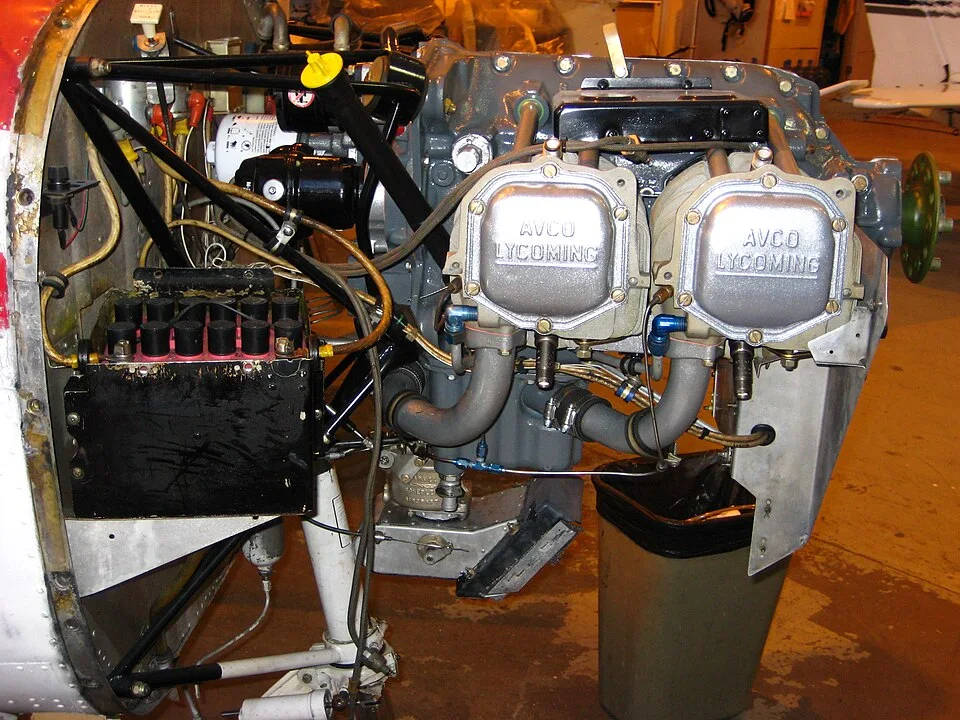
Lycoming oil-pump concerns require the affected engine and pump configuration. A propeller-strike or sudden-stoppage topic requires a qualifying event and the controlling requirement. Neither becomes a confirmed issue solely because the aircraft is a Cessna 152 or carries an O-235 designation.
McCauley 1A103/TCM hub research follows the installed propeller. The propeller application guide describes the factory relationship, but current component identification and maintenance records are needed to establish applicability and compliance. A family issue listing is not proof of a cracked hub.
Engine / Lubrication
| Title | Affected Scope | Failure Mode | Detection / Prebuy Clues | Legal / OEM Status | Conditional Applicability Rule | Reference |
|---|---|---|---|---|---|---|
| Lycoming O-235 oil-pump impeller | Affected Lycoming O-235 configurations; oil-pump configuration controls. | Affected sintered-iron/aluminum oil-pump impellers must be replaced. | Identify oil pump/engine records and AD compliance. | FAA AD - mandatory conditional | O-235 + affected oil-pump configuration | [1] |
Engine / Maintenance Event
| Title | Affected Scope | Failure Mode | Detection / Prebuy Clues | Legal / OEM Status | Conditional Applicability Rule | Reference |
|---|---|---|---|---|---|---|
| Propeller strike / crankshaft gear inspection | Affected Lycoming engines after qualifying propeller-strike/sudden-stop/maintenance event. | After propeller strike, sudden stoppage or specified event on affected Lycoming engines, crankshaft gear/related parts require inspection. | Review prop-strike/sudden-stop history and compliance/teardown records. | FAA AD - mandatory event-driven | Affected Lycoming engine + qualifying event | [1] |
Propeller
| Title | Affected Scope | Failure Mode | Detection / Prebuy Clues | Legal / OEM Status | Conditional Applicability Rule | Reference |
|---|---|---|---|---|---|---|
| McCauley 1A103/TCM hub cracking | All McCauley 1A103/TCM series propellers when installed. | Hub, bolt-hole, plate and gasket areas on McCauley 1A103/TCM series propellers require recurring inspection. | Confirm installed propeller model/serial and current AD inspection history. | FAA AD - mandatory | Installed propeller is McCauley 1A103/TCM series | [1] |
Alteration-Dependent Concerns
Engine-control installation, conversion placards, STOL equipment and parachute-system concerns retain their specific approval or installed-system conditions. A model's appearance on an eligibility list is not evidence that the alteration was completed. Establish the actual installed equipment before assigning the associated concern.
An alteration can also affect operating documents and weight-and-balance records. The original factory data remains useful context, but the approval and aircraft records must establish the current configuration. A claimed performance benefit does not erase a supplement, inspection or limitation attached to the alteration.
Engine Controls / STC
| Title | Affected Scope | Failure Mode | Detection / Prebuy Clues | Legal / OEM Status | Conditional Applicability Rule | Reference |
|---|---|---|---|---|---|---|
| Modified engine-control installation/travel | Modified 150C through A152 configurations per AD 86-24-07. | Specified modified aircraft can have incorrect engine-control installation/travel. | Review modification records; check full control travel, security and rigging. | FAA AD - mandatory conditional | Specified modification/configuration installed | [1] |
Flight Limitations / STC
| Title | Affected Scope | Failure Mode | Detection / Prebuy Clues | Legal / OEM Status | Conditional Applicability Rule | Reference |
|---|---|---|---|---|---|---|
| Del-Air conversion spin prohibition / placard | 150/A150/152/A152 modified under STC SA4795SW. | Aircraft modified under Del-Air SA4795SW require revised placards/operating limitations prohibiting intentional spins. | Verify STC installation, AFMS/placards and current limitations. | FAA AD - mandatory conditional | STC SA4795SW installed | [1] |
STC / Aerodynamics
| Title | Affected Scope | Failure Mode | Detection / Prebuy Clues | Legal / OEM Status | Conditional Applicability Rule | Reference |
|---|---|---|---|---|---|---|
| Oversize STOL stall fence | 150/A150/152/A152 incorporating STC SA1371SW. | Bush Conversions STOL kit may have an over-height stall fence requiring correction. | Confirm STC installation and stall-fence dimensions. | FAA AD - mandatory conditional | STC SA1371SW installed | [1] |
Parachute / STC
| Title | Affected Scope | Failure Mode | Detection / Prebuy Clues | Legal / OEM Status | Conditional Applicability Rule | Reference |
|---|---|---|---|---|---|---|
| BRS-150 parachute-system affected serials | 150 through A152 only if BRS-150 system S/N 50001-50006 is installed under STC SA64CH. | A small population of BRS-150 systems requires corrective action. | Verify BRS STC/system serial, service status and AD compliance. | FAA AD - mandatory conditional | BRS-150 S/N 50001-50006 installed | [1] |
Using Issue Evidence in a Prebuy
A useful prebuy question names the component or area, the source's affected scope and the evidence needed to investigate it. That is more precise than asking whether the aircraft has every common problem. It distinguishes records research from an inspection finding and avoids presenting unresolved history as a known defect.
The manuals guide separates maintenance publications, service information and aircraft operating documents. An AD, SAIB, service bulletin and manufacturer inspection program have different roles and may have different legal treatment. The source status should be preserved rather than guessed from the importance of the concern.
The Cessna 152 reference connects these subjects, and the Technical Documents provides publication details. This page cannot estimate an individual aircraft's repair cost, certify airworthiness or replace a prebuy inspection. It supplies a source-grounded set of questions whose answers require the actual aircraft and records.
Individual Cessna 152 Model References
- Cessna 152 - 1978-1985
- Cessna A152 Aerobat - 1978-1985
- Reims/Cessna F152 - 1978-1986
- Reims/Cessna FA152 Aerobat - 1978-1986
Related Cessna 152 Subjects
- Cessna 152 aircraft reference
- Serial ranges and identity exceptions
- Models and Variants
- Specifications and Certified Limits
- Engines and Applicability
- Propellers and Approved Applications
- Performance by Model Year
- Fuel Capacity and Tanks
- Weight, CG and Loading
- Systems and Production Changes
- Airworthiness Directives
- Manuals and Documents