Cessna 150 Model Reference
The original Model 150 is the place to begin when distinguishing an official model from the wider Cessna 150 family name. Its ordinary production uses early numeric serial formats, but the special eligible serial must remain separate from those intervals. The split model-year ranges show why a serial is not a simple date code and why a short special identifier must not be assigned a convenient ordinary production year.
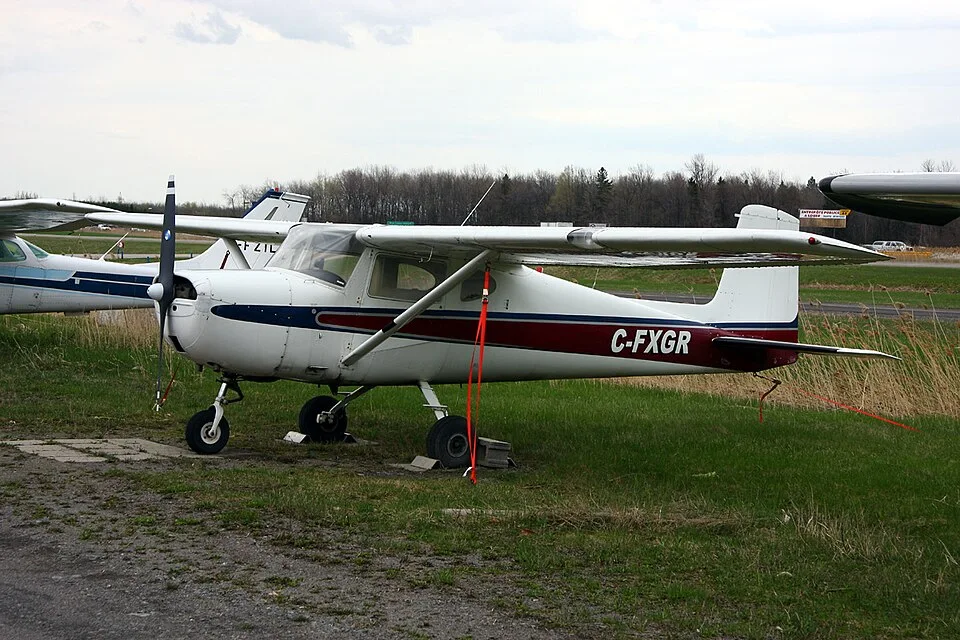

The starting point before the letter models
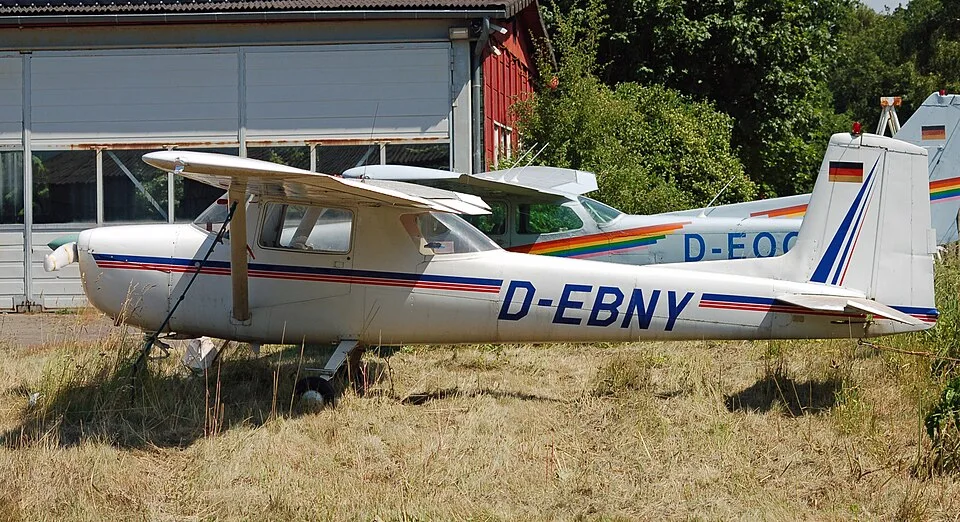
Before 150 became the name of a whole family, it was the designation of this particular aircraft. The original model covers the 1959 and 1960 model years, ahead of the 150A. Its fastback body, straight fin and manual flaps establish the early appearance and control arrangement. The later rear-window and swept-tail aircraft belong to subsequent development stages; they should not be used as the visual definition of every Cessna 150.
The original aircraft also shows how one model could serve several uses. Standard, Trainer, Commuter and Patroller descriptions distinguish equipment or mission emphasis within the period, rather than a sequence of replacement legal models. The Patroller's documented tank and observation-related equipment is particularly different from a bare year label. The training article explains the shared two-seat role, while the equipment and loading records below distinguish what those versions actually establish.
For a reader following development, the next step is the A model's cockpit and landing-gear refinements. For a reader examining an original aircraft, the cabin explanation helps distinguish seat position, access and glazing from the structural and equipment questions in its records. Historical appearance can orient the enquiry; the original model's short and ordinary serial identities still need their separate treatment below.
| Model Years | 1959-1960 |
|---|---|
| Certification Category | Utility |
| Certified Serial Eligibility | 617; 17001-17999; 59001-59018 |
| Type-design engine context | Continental O-200-A |
Generation and Certification
The early-model specifications and Patroller context are different kinds of evidence. A published optional configuration explains why capacity and range descriptions can differ, but it does not prove that a particular aircraft carries the option. Compare the year-specific source and actual tanks before treating an attractive historical range claim as a property of the aircraft being researched.
The first 150 establishes the baseline against which later letters should be compared: a 1,500-lb landplane limit, the early fastback fuselage and manual flaps. The initial Standard, Trainer and Commuter descriptions are equipment versions, not separate certification models. The 1960 Patroller adds a different mission emphasis through long-range tanks, a lower-door window and a message chute. Those features explain the unusually wide spread of historical range and empty-weight descriptions within just two model years. They should not be mistaken for a change to every early airframe or counted as another official model.
| Model | TC | Category | Initial Model Approval Date | Core Cert Basis | Certification / Identity Note | Reference |
|---|---|---|---|---|---|---|
| 150 | 3A19 | Utility | 1958-07-10 | CAR 3 (1956-05-15) amended 3-4 | Base model under original 3A19 issue | [1] |

Serial Numbers and Production
For 150, the ordinary source assignments are 1959: 17001 through 17683; 1960: 17684 through 17999; 1960: 59001 through 59018. The special identifier 617 is assigned to 150, with year recorded as Unresolved: Model identity confirmed; not assigned to a normal model-year range here. The serial guide retains source conflicts and exceptional identities alongside these intervals.
| Model Year | Official Model | Serial Start | Serial End | Excluded / Override Serials | Notes | Primary Source |
|---|---|---|---|---|---|---|
| 1959 | 150 | 17001 | 17683 | - | - | [1] |
| 1960 | 150 | 17684 | 17999 | - | - | [1] |
| 1960 | 150 | 59001 | 59018 | - | - | [1] |
| Serial | Legal Model | Model Year | Effect | Primary Source |
|---|---|---|---|---|
| 617 | 150 | Unresolved | Model identity confirmed; not assigned to a normal model-year range here. | [1] |
Engine, Propeller and Equipment Changes
The fuel-system breakpoint at 17770 is particularly useful on an original 150. The change list identifies larger supply lines from that serial onward; a tank-capacity label alone cannot identify the plumbing. Investigate that boundary with the fuel-system records when a Patroller installation or later alteration is involved. The O-200-A installation remains 100 hp at 2,750 RPM. Its propeller choices are more specific than the shorthand "69-inch fixed pitch": the Sensenich and two McCauley applications have different static-RPM windows despite similar diameter limits. Propeller identification therefore resolves a question that an engine name cannot.
The 150 factory installation groups specify 1959: O-200-A, 100 hp at 2750 RPM; 1960: O-200-A, 100 hp at 2750 RPM; Unresolved: O-200-A, 100 hp at 2750 RPM. Its named propeller applications are 69CK-0-48L / -50L / -52L; 1A100/MCM6950; 1A101/DCM6950. Their diameter, static-RPM and configuration conditions are preserved together below.
| Origin | Model Year | Aircraft Model | Factory Engine | Installed hp | RPM Limit | First Serial in Group | Last Serial in Group | Applicability Basis | Aircraft Source |
|---|---|---|---|---|---|---|---|---|---|
| USA | 1959 | 150 | O-200-A | 100 | 2750 | 17001 | 17683 | Factory / type-design | [1] |
| USA | 1960 | 150 | O-200-A | 100 | 2750 | 17684 | 59018 | Factory / type-design | [1] |
| USA | Unresolved | 150 | O-200-A | 100 | 2750 | 617 | 617 | Factory / type-design | [1] |
| Aircraft Model | Model Year / Config | Engine | Exact Propeller Application | Max Dia | Min Dia | Static Min | Static Max | Notes | Primary Authority |
|---|---|---|---|---|---|---|---|---|---|
| 150 through 150F | All | O-200-A | 69CK-0-48L / -50L / -52L | 69 | 67.5 | 2320 | 2470 | Sensenich application guide notes spinner/bulkhead for 69CK-0-52 installation. | [1] |
| 150 through 150F | All | O-200-A | 1A100/MCM6950 | 69 | 67.5 | 2375 | 2475 | - | [1] |
| 150 through 150F | All | O-200-A | 1A101/DCM6950 | 69 | 67.5 | 2500 | 2600 | - | [1] |
| Year | Model | Serial Trigger | Change | Effectivity | System | Source |
|---|---|---|---|---|---|---|
| 1960 | 150 | 17770 | Larger fuel supply lines | 17770 and on | Fuel | [1] |
| Year | Model | Major Change | Serial Specific? | Source |
|---|---|---|---|---|
| 1959 | 150 | Initial production model; Standard, Trainer and Commuter versions | No | [1] |
| 1960 | 150 | Patroller option with long-range tanks, lower-door window and message chute | No | [2] |
Specifications, Fuel and Loading
For the original 150, the 1,500-lb ceiling is a material distinction from the 1,600-lb 150D generation. Later baggage or gross-weight figures should not be brought backward into an early loading calculation. The 1959 and 1960 published empty weights also differ, so subtracting one representative weight from the certified limit produces only an example, not an aircraft's useful load. The 1960 Patroller range entries depend on the long-tank configuration and their stated reserve basis. A lower fuel load may release weight for occupants, but the CG calculation remains a separate constraint.
The original model also shows why there are two different counts in a serial history. Its ordinary source assignments include an early numeric interval and a separate 1960 interval using another numeric format, while the special 617 identity has its own status. A model-approval date, an ordinary model-year count and a count of named special identities answer different questions. They should not be combined into an apparently exact manufacture date for a surviving aircraft. When comparing an early example with a 150A, check the full printed number before interpreting the later A-model brake or cockpit changes. The early 80-lb baggage entry is another important contrast with the D generation's 120-lb entry: extra cabin or tank options do not independently authorize the later allowance. The original 150's manual-flap operating context also belongs with the early Vfe rather than a later electric-flap value. Together, these details make the first-model reference useful for an owner who needs to identify the right operating generation, not merely establish that the aircraft is a member of the broad 150 family. A Patroller description deserves a separate check of the long-tank and equipment evidence, because its historical mission features do not change the model's legal name.
| Models | Category | Speed Basis | Vne | Vno | Va | Vfe | MTOW Land lb | MTOW Sea lb | Baggage lb | Source |
|---|---|---|---|---|---|---|---|---|---|---|
| 150/150A/150B/150C | Utility | CAS | 136 kt / 157 mph | 104 kt / 120 mph | 92 kt / 106 mph | 74 kt / 85 mph | 1500 | - | 80 | [1] |
| Models / Serial Applicability | Config | Category | Ramp lb | TO lb | Landing lb | Fwd CG light | Light wt | Fwd CG heavy | Heavy wt | Aft CG | Baggage | Datum / Reference | Leveling | Source |
|---|---|---|---|---|---|---|---|---|---|---|---|---|---|---|
| 150, 150A, 150B, 150C | Land | Utility | - | 1500 | 1500 | 32.2 | 1250 | 33.4 | 1500 | 36 | 80 lb @ +65 | Certified datum system | Top edge fuselage splice plate | [1] |
| Year | Model(s) | Max Speed | Cruise | ROC SL | Ceiling | Published Gross / MTOW | Published Empty Weight | Baggage | Notes | Source |
|---|---|---|---|---|---|---|---|---|---|---|
| 1959 | 150 | 124 mph | 121 mph @70% / 9000 ft | 740 fpm | 15,300 ft | 1500 lb | 962 lb | 80 lb | Published secondary model-year summary. | [1] |
| 1960 | 150 | 124 mph | 121 mph @70% / 9000 ft | 740 fpm | 15,300 ft | 1500 lb | 946 Std; 953 Patroller | 80 lb | Detailed secondary page. | [2] |

Performance and Comparison Conditions
One published 150 example is 1960 cruise speed: 121 mph (power % 70; altitude ft 9000). The table keeps each metric's year, units, power, altitude, fuel and reserve columns together. Use the performance guide to distinguish headline comparisons from handbook operating calculations; no unreported condition is supplied for 150.
| Year | Model | Value | Units | Power % | Altitude ft | Fuel Usable gal | Reserve Basis | Obstacle ft | Condition Note | Source |
|---|---|---|---|---|---|---|---|---|---|---|
| 1960 | 150 | 124 | mph | - | - | - | - | - | Published headline value | [1] |
| 1960 | 150 | 121 | mph | 70 | 9000 | - | - | - | Published headline condition | [1] |
| 1960 | 150 | 740 | fpm | - | - | - | - | - | - | [1] |
| 1960 | 150 | 15300 | ft | - | - | - | - | - | - | [1] |
| 1960 | 150 | 680 | ft | - | - | - | - | - | - | [1] |
| 1960 | 150 | 1205 | ft | - | - | - | - | 50 | - | [1] |
| 1960 | 150 | 360 | ft | - | - | - | - | - | - | [1] |
| 1960 | 150 | 1055 | ft | - | - | - | - | 50 | - | [1] |
| 1960 | 150 | 520 | mi | 70 | 9000 | 22.5 | No reserve | - | Condition-preserved published range | [1] |
| 1960 | 150 | 810 | mi | 70 | 9000 | 35 | No reserve | - | Condition-preserved published range | [1] |
| 1960 | 150 | 630 | mi | - | 10000 | 22.5 | No reserve | - | Condition-preserved published range | [1] |
| 1960 | 150 | 980 | mi | - | 10000 | 35 | No reserve | - | Condition-preserved published range | [1] |
Manuals, Maintenance and Research
An original 150 with the specified right-hand exhaust-gas cabin-heat exchanger deserves a records check against the recorded scope of AD 67-03-01, which starts at serial 17001; the special serial 617 is not brought into that interval by assumption. Another unusually narrow research lead is AD 62-22-01: its Model 150 context requires the O-200-A, specified Airborne Mechanisms vacuum pump and named STC. Neither is a general declaration about every early aircraft. Use the family AD guide to retain those equipment conditions, then use the P187-13 handbook family to resolve the operating document. The positive 150 publication leads are 1959-60: P187-13 (Owner's Manual).
| Family / Year | Model | Publication | Document Class | Serial / Year Effectivity | Authority Basis | Operational Status | Special Boundary | Reference |
|---|---|---|---|---|---|---|---|---|
| 1959-60 | 150 | P187-13 | Owner's Manual | Model 150 1959-60 | CAA TAR 98/08 + Cessna publication identity | Authority-recognized publication family | No adjacent-year borrowing | [1] |
Related Models and Technical Research
The original 150 and 150A comparison separates early serial identity from cabin, gear and brake development.