Cessna 150 vs 150A: Early Models, Gear Changes and Serial Identity
The original Cessna 150 and the 150A share the O-200-A engine and early Utility-category loading group, but the 150A introduces a different serial format and documented cabin, control and landing-gear changes. Here, “150” means the original 1959-1960 model, rather than every aircraft in the wider 150 family. The 150A is the 1961 model-year identity; it is not an A150 Aerobat.

| Official Model | Model Years | Certification Category | Engine as Type-Certificated | Certified Serial Eligibility | Important Identity Note | Reference |
|---|---|---|---|---|---|---|
| 150 | 1959-1960 | Utility | Continental O-200-A | 617; 17001-17999; 59001-59018 | Early base model. Special eligible S/N 617 is explicitly listed in TCDS 3A19. | [1] |
| 150A | 1961 | Utility | Continental O-200-A | 628; 15059019-15059350 | Special eligible S/N 628 is explicitly listed in TCDS 3A19. | [1] |
The A comes after the number
The original 150 has ordinary five-digit serial groups plus the special eligible identifier 617. The 150A uses the longer 150-prefixed sequence and separately lists 628. Neither short special serial should be expanded into a normal production number by guesswork. The serial lookup preserves those assignments and distinguishes a source model year from an aircraft manufacture date.
This distinction matters when an advertisement abbreviates the model. “150A” and “A150” reverse the position of the letter, but that reversal changes the entity being discussed. Record the complete model from the aircraft identity evidence before selecting manuals, researching parts or comparing asking descriptions. The Aerobat branch belongs in its own comparison, not in this early-model transition.


Landing gear and cockpit changes
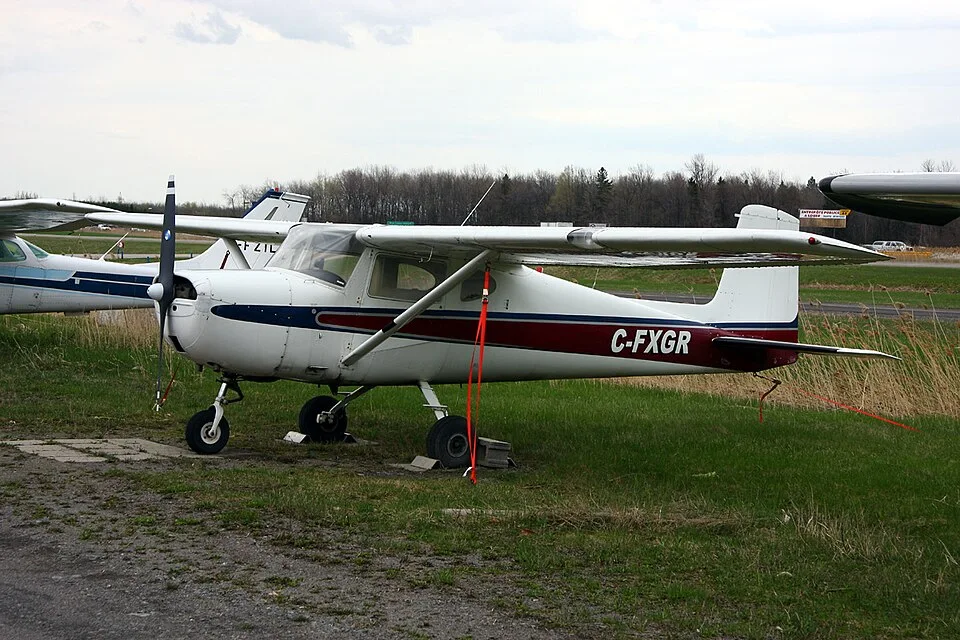
The historical change record describes an enlarged rear window, main gear moved aft, and a panel/control-column redesign for the 150A. This remains an early fastback-era aircraft; it does not introduce the later 150D Omni-Vision rear-window generation. A photograph of glazing or a replacement panel cannot settle the legal model identity.
| Model | Serial Trigger | Change | Effectivity | Source |
|---|---|---|---|---|
| 150A | 15059119 | Cleveland wheels and brakes replace Goodyear | 15059119 and on | [1] |
A narrower wheel-and-brake change is recorded from serial 15059119. That boundary falls within the A-model context, so “1961 aircraft” alone does not select the original wheel and brake arrangement. The brake reference helps connect the historical change to the installed assembly. Replacement equipment and its approval history can matter more to a present parts enquiry than the original model-year description.


What stayed within the early group?
Both models retain the early 1,500-lb landplane maximum in the recorded certified-limit group and the 100-hp O-200-A installation. Those shared figures do not establish equal useful load: equipment and the aircraft's current empty weight still determine the remaining allowance. Compare the actual weight-and-balance records rather than subtracting a generic advertised empty weight.
The available historical performance summaries also carry their own power and altitude conditions. This comparison therefore makes no speed or runway-distance ranking. For a buyer, the useful distinction is the early aircraft's exact identity, gear/brake history and cockpit configuration. Put those findings beside structural condition and record continuity before deciding which individual example warrants a closer prebuy.