Cessna 150C Model Reference
The 150C is part of the early fastback group in the chronology and shares a certified-limit grouping with the preceding early models. That shared grouping does not make its model-year handbook or published performance interchangeable with every earlier aircraft. The identity, year and performance conditions remain attached to the specific source records below.
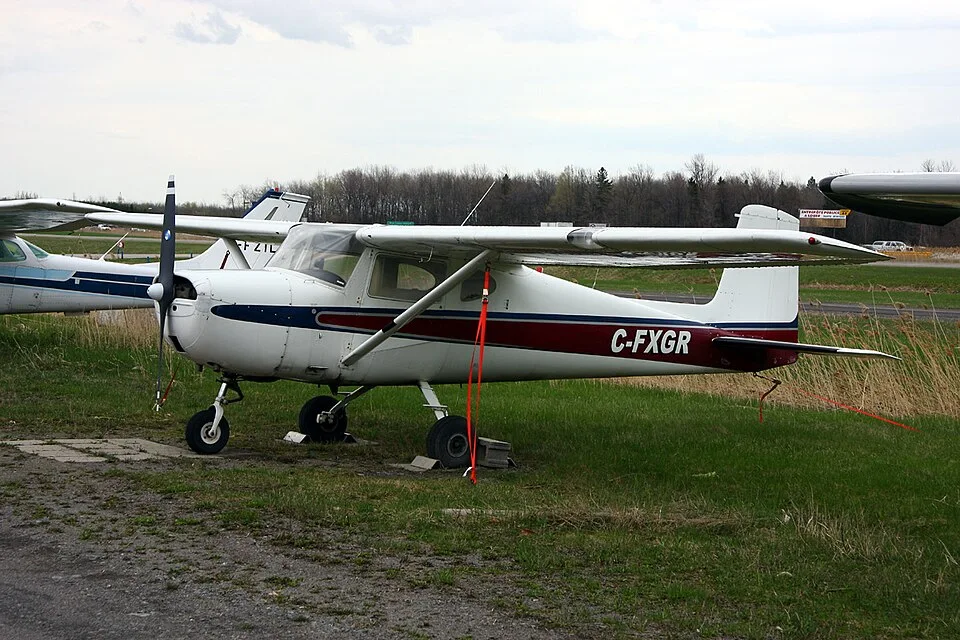

The last step before the rear-window redesign
A 150C belongs at the end of the original fastback sequence. It follows the 150B in 1963 and immediately precedes the 150D rear-window generation. Its significance is this position at the edge of a larger change, rather than a newly invented C-only redesign. The common engine family spans that boundary, while the following model changes the airframe and loading context.
This makes the C-to-D comparison more informative than treating the two aircraft as adjacent letters with interchangeable specifications. The C provides the earlier cabin, baggage and certified-weight reference against which the D can be understood. Within the C itself, tank options and historical empty-weight examples still describe different load combinations. The useful-load explanation connects those quantities without implying that a later model's extra allowance belongs to this aircraft.
| Model Years | 1963 |
|---|---|
| Certification Category | Utility |
| Certified Serial Eligibility | 15059701-15060087 |
| Type-design engine context | Continental O-200-A |
Generation and Certification
This page deliberately does not invent a major redesign simply because a new model letter appears. The historical source describes incremental evolution and directs technical questions to exact manuals and specifications. For an owner, that makes the correct handbook and serial identity more useful than an exaggerated claim that every letter change introduced a completely different aircraft.
The 1963 150C is the last model in the early 150/150A/150B/150C certified-limit group. Its significance is the boundary it establishes before the 150D, not an unsupported claim of a major C-model redesign. The C has the 1,500-lb landplane limit; the D moves to 1,600 lb and the Omni-Vision generation. A comparison centered only on the shared 100-hp engine misses this important loading distinction. The C's 33 ft 6 in span and 21 ft 6 in length belong to its published year summary, while later dimensions require their own configuration context.
| Model | TC | Category | Initial Model Approval Date | Core Cert Basis | Certification / Identity Note | Reference |
|---|---|---|---|---|---|---|
| 150C | 3A19 | Utility | 1962-06-15 | CAR 3 (1956-05-15) amended 3-4 | - | [1] |


Serial Numbers and Production
For 150C, the ordinary source assignments are 1963: 15059701 through 15060087. The serial guide retains source conflicts and exceptional identities alongside these intervals.
| Model Year | Official Model | Serial Start | Serial End | Excluded / Override Serials | Notes | Primary Source |
|---|---|---|---|---|---|---|
| 1963 | 150C | 15059701 | 15060087 | - | - | [1] |
Engine, Propeller and Equipment Changes
No exact C-model serial-break change is supplied in this reference. That is a useful limit on the evidence: it does not justify inventing a new gear attachment, electrical system or flap mechanism for the letter change. The family systems transition places the C on the manual-flap side of the later 150F change. Its early-group propeller applications retain the same need to identify the actual Sensenich or McCauley installation and the appropriate static-RPM window. The absence of a new change row should not be read as proof that a surviving 150C has never been modified.
The 150C factory installation groups specify 1963: O-200-A, 100 hp at 2750 RPM. Its named propeller applications are 69CK-0-48L / -50L / -52L; 1A100/MCM6950; 1A101/DCM6950. Their diameter, static-RPM and configuration conditions are preserved together below.
| Origin | Model Year | Aircraft Model | Factory Engine | Installed hp | RPM Limit | First Serial in Group | Last Serial in Group | Applicability Basis | Aircraft Source |
|---|---|---|---|---|---|---|---|---|---|
| USA | 1963 | 150C | O-200-A | 100 | 2750 | 15059701 | 15060087 | Factory / type-design | [1] |
| Aircraft Model | Model Year / Config | Engine | Exact Propeller Application | Max Dia | Min Dia | Static Min | Static Max | Notes | Primary Authority |
|---|---|---|---|---|---|---|---|---|---|
| 150 through 150F | All | O-200-A | 69CK-0-48L / -50L / -52L | 69 | 67.5 | 2320 | 2470 | Sensenich application guide notes spinner/bulkhead for 69CK-0-52 installation. | [1] |
| 150 through 150F | All | O-200-A | 1A100/MCM6950 | 69 | 67.5 | 2375 | 2475 | - | [1] |
| 150 through 150F | All | O-200-A | 1A101/DCM6950 | 69 | 67.5 | 2500 | 2600 | - | [1] |
Specifications, Fuel and Loading
The C-model performance evidence includes separate cruise-range and optimum-range entries with standard and long-tank conditions. Those answer different questions from the single maximum-speed headline. In particular, an optimum-range altitude and a no-reserve figure cannot be used as though they described routine cruise endurance. The 950-lb Standard and 955-lb Patroller published empty weights are historical examples, not a current loading report. When comparing a C with a D, keep the early weight limit, fuel carried and actual empty weight together rather than assuming that the shared engine makes their practical cabin loads equal.
The C-to-D comparison is a good test of whether two specification sheets are actually comparable. The C retains 80 lb baggage and a 1,500-lb landplane limit; the D group records 120 lb and 1,600 lb. The C's published fuel option can produce a longer historical range without changing those limits. A reader comparing the C's long-tank range with the D's standard-tank range would therefore be comparing fuel configurations as much as models. Preserve the tank and reserve columns, and use the exact C handbook to establish the operational information. No separate C-specific structural breakpoint is invented to make the page's history look as dramatic as the following D generation.
| Models | Category | Speed Basis | Vne | Vno | Va | Vfe | MTOW Land lb | MTOW Sea lb | Baggage lb | Source |
|---|---|---|---|---|---|---|---|---|---|---|
| 150/150A/150B/150C | Utility | CAS | 136 kt / 157 mph | 104 kt / 120 mph | 92 kt / 106 mph | 74 kt / 85 mph | 1500 | - | 80 | [1] |
| Models / Serial Applicability | Config | Category | Ramp lb | TO lb | Landing lb | Fwd CG light | Light wt | Fwd CG heavy | Heavy wt | Aft CG | Baggage | Datum / Reference | Leveling | Source |
|---|---|---|---|---|---|---|---|---|---|---|---|---|---|---|
| 150, 150A, 150B, 150C | Land | Utility | - | 1500 | 1500 | 32.2 | 1250 | 33.4 | 1500 | 36 | 80 lb @ +65 | Certified datum system | Top edge fuselage splice plate | [1] |
| Year | Model(s) | Max Speed | Cruise | ROC SL | Ceiling | Published Gross / MTOW | Published Empty Weight | Baggage | Notes | Source |
|---|---|---|---|---|---|---|---|---|---|---|
| 1963 | 150C | 127 mph | 125 mph @75% / 7500 ft | 760 fpm | 15,600 ft | 1500 lb | 950 Std; 955 Patroller | 80 lb | Detailed secondary page. | [1] |


Performance and Comparison Conditions
One published 150C example is 1963 cruise speed: 125 mph (power % 75; altitude ft 7500). The table keeps each metric's year, units, power, altitude, fuel and reserve columns together. Use the performance guide to distinguish headline comparisons from handbook operating calculations; no unreported condition is supplied for 150C.
| Year | Model | Value | Units | Power % | Altitude ft | Fuel Usable gal | Reserve Basis | Obstacle ft | Condition Note | Source |
|---|---|---|---|---|---|---|---|---|---|---|
| 1963 | 150C | 127 | mph | - | - | - | - | - | Published headline value | [1] |
| 1963 | 150C | 125 | mph | 75 | 7500 | - | - | - | Published headline condition | [1] |
| 1963 | 150C | 760 | fpm | - | - | - | - | - | - | [1] |
| 1963 | 150C | 15600 | ft | - | - | - | - | - | - | [1] |
| 1963 | 150C | 680 | ft | - | - | - | - | - | - | [1] |
| 1963 | 150C | 1205 | ft | - | - | - | - | 50 | - | [1] |
| 1963 | 150C | 360 | ft | - | - | - | - | - | - | [1] |
| 1963 | 150C | 1055 | ft | - | - | - | - | 50 | - | [1] |
| 1963 | 150C | 500 | mi | 75 | 7500 | 22.5 | No reserve | - | Condition-preserved published range | [1] |
| 1963 | 150C | 775 | mi | 75 | 7500 | 35 | No reserve | - | Condition-preserved published range | [1] |
| 1963 | 150C | 610 | mi | - | 10000 | 22.5 | No reserve | - | Condition-preserved published range | [1] |
| 1963 | 150C | 945 | mi | - | 10000 | 35 | No reserve | - | Condition-preserved published range | [1] |
Manuals, Maintenance and Research
D156-13 identifies the 1963 handbook family. It anchors a C-model document search more firmly than the general family name on a seller's manual collection. For ownership research, the pre-D airframe calls for the applicable early cabin-heating and seat-system evidence, with component conditions checked in the AD and known-issue guides. The 1966-and-later fin-attachment advisory context should not be assigned to this 1963 model merely because it appears on a Cessna 150 website. The ordinary interval ends at 15060087; the next serial begins the D-model reference and its different certification group. The positive 150C publication leads are 1963: D156-13 (Owner's Manual).
| Family / Year | Model | Publication | Document Class | Serial / Year Effectivity | Authority Basis | Operational Status | Special Boundary | Reference |
|---|---|---|---|---|---|---|---|---|
| 1963 | 150C | D156-13 | Owner's Manual | 150C 1963 | CAA TAR 98/08 | Authority-recognized publication family | No adjacent-year borrowing | [1] |
Related Models and Technical Research
Compare the 150C and 150D to understand the rear-window transition and the separate changes in maximum weight and baggage allowance.