Cessna 150 and 152 Useful Load: Weight, Fuel and Payload Comparisons
Useful load is the difference between the aircraft's applicable maximum weight and its actual empty weight on the relevant documented basis. It is not one fixed number for every Cessna 150 or every Cessna 152. Equipment, modifications, weighing history, fuel accounting, approved configuration and category can change the answer. A comparison becomes useful only when those terms are kept consistent and the resulting loading also meets the applicable centre-of-gravity limits.
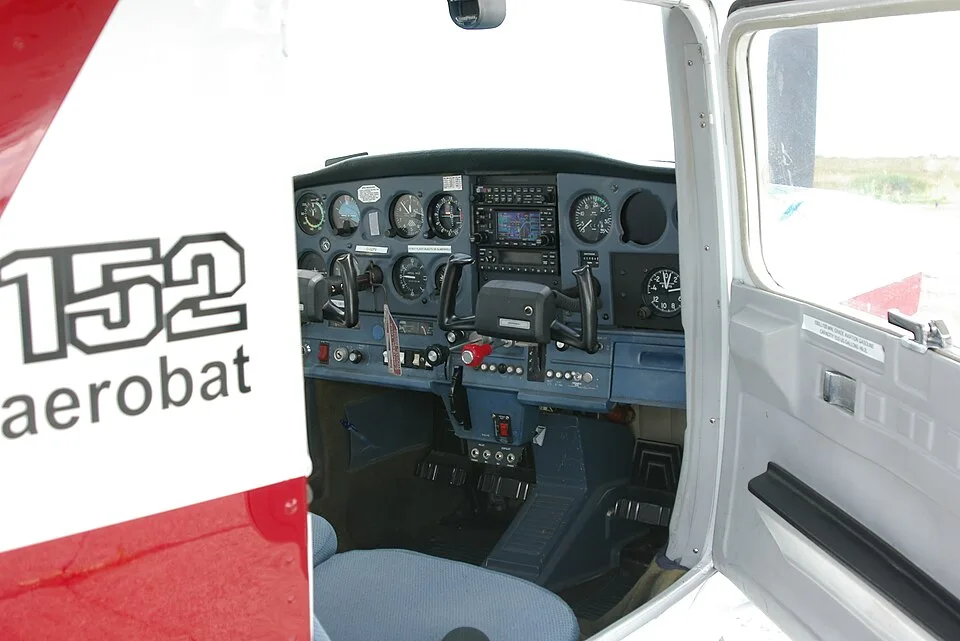

Gross weight is only one side of the calculation
The certified loading groups distinguish early and later 150 models, standard and Aerobat aircraft, and approved land or sea configurations. The 152 material also separates ramp, takeoff and landing limits where recorded. These are approved limits, not evidence of the empty weight of a particular aircraft. The table preserves those group boundaries rather than selecting the largest number as a family specification.
A brochure empty weight is a published example for a model/year/equipment context. The aircraft's current empty weight and moment come from its own records. Avionics changes, engine or propeller work and other equipment changes can make an old published example a poor representation of the aircraft now being considered. The 150 weight-and-balance guide and 152 weight-and-balance guide provide the source-specific framework.
| Models / Serial Applicability | Config | Category | Ramp lb | TO lb | Landing lb | Baggage | Datum / Reference | Source |
|---|---|---|---|---|---|---|---|---|
| 150, 150A, 150B, 150C | Land | Utility | - | 1500 | 1500 | 80 lb @ +65 | Certified datum system | [1] |
| 150D, 150E, 150F | Land | Utility | - | 1600 | 1600 | 150D/E: 120 lb @ +65; 150F: 120 lb ref W&B data | Certified datum / later handbook firewall Sta 0.0 | [1] |
| 150G, H, J, K | Land | Utility | - | 1600 | 1600 | 120 lb, reference W&B data | Certified datum | [1] |
| 150G, H, J, K with approved seaplane configuration | Sea | Utility | - | 1650 | 1650 | 120 lb, reference W&B data | Certified datum | [1] |
| A150K | Land | Acrobatic | - | 1600 | 1600 | 120 lb, reference W&B data | Certified datum | [1] |
| 150L | Land | Utility | - | 1600 | 1600 | 120 lb, reference W&B data | Firewall/front face Sta 0.0 handbook convention | [1] |
| A150L | Land | Acrobatic | - | 1600 | 1600 | 120 lb, reference W&B data | Firewall/front face Sta 0.0 handbook convention | [1] |
| 150M | Land | Utility | - | 1600 | 1600 | Area 1 120; Area 2 40; combined 120 | Firewall front face Sta 0.0 | [1] |
| A150M | Land | Acrobatic | - | 1600 | 1600 | Area 1 120; Area 2 40; combined 120 | Firewall front face Sta 0.0 | [1] |
| 15279406-15282031 | Land | Utility | - | 1670 | 1670 | Area 1 120; Area 2 40; combined 120 | Firewall front face Sta 0.0 | [1] |
| 15282032 and on | Land | Utility | 1675 | 1670 | 1670 | Area 1 120; Area 2 40; combined 120 | Firewall front face Sta 0.0 | [1] |
| A1500433; A1520735-A1520808 | Land | Acrobatic | - | 1670 | 1670 | Area 1 120; Area 2 40; combined 120 | Firewall front face Sta 0.0 | [1] |
| 681; A1520809 and on | Land | Acrobatic | 1675 | 1670 | 1670 | Area 1 120; Area 2 40; combined 120 | Firewall front face Sta 0.0 | [1] |
A conceptual arithmetic example
For an arithmetic illustration only, suppose an aircraft has an applicable takeoff limit of 1,600 lb and a documented empty weight of 1,100 lb on a consistent basis. The difference is 500 lb. Those deliberately hypothetical aircraft values do not describe a particular model's typical empty weight. If 150 lb of fuel is then included in the planned load, 350 lb of that difference remains for the other load items, subject to the correct accounting and all applicable limits.
The subtraction does not establish a legal loading by itself. Occupant positions, baggage location, fuel and other items also determine the moment and CG. The arithmetic is useful for understanding why two nominally similar aircraft can offer different payload, but it cannot replace the aircraft's loading calculation. The conceptual relationship is maximum permitted weight minus actual empty weight, followed by the actual planned load and its distribution.
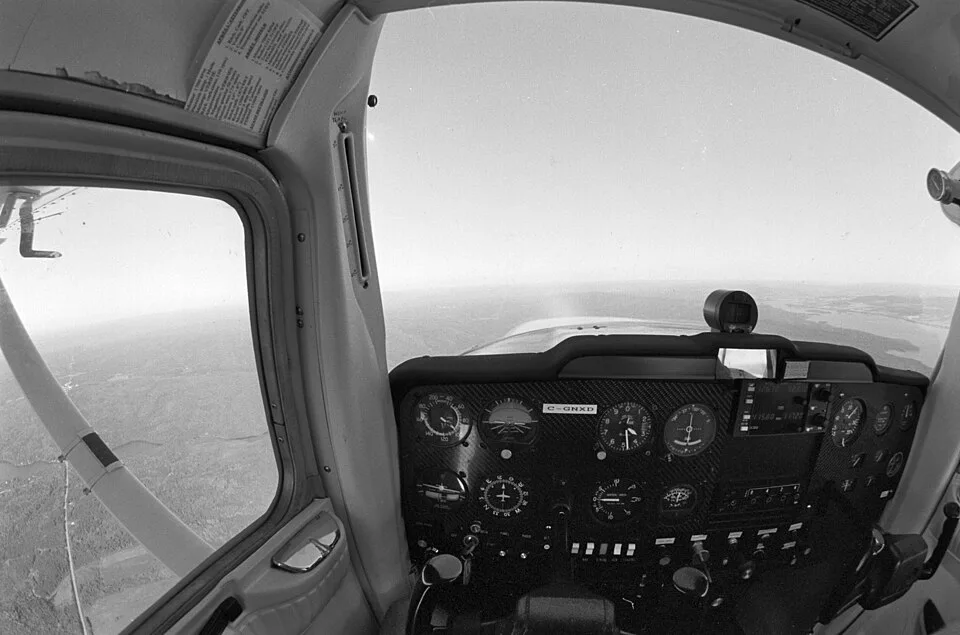

Fuel capacity is not free payload
Standard and optional tank configurations change the amount of fuel that can be carried. Filling a larger tank consumes more of the available load allowance; installing larger tanks does not increase the aircraft's certified gross weight by implication. An owner comparing mission capability needs to consider both endurance-related evidence and the load actually carried, not simply the largest advertised tank capacity.
Total, usable and unusable fuel are different quantities. Unusable fuel may be treated within an empty-weight convention, so blindly subtracting a fuel figure from a useful-load number can double-count or omit weight. the records retain those distinctions. Follow the aircraft's documented weight-and-balance basis, equipment list and handbook rather than imposing one generic calculation on every production generation.
| Applicability | Configuration | Total gal | Usable gal | Unusable gal | Reserve Basis | Note | Source |
|---|---|---|---|---|---|---|---|
| 150 landplane | Standard | 26 | 22.5 | 3.5 | Early published pages often no reserve | - | [1] |
| 150 Patroller / long range | Long range | 38 | 35 | 3 | Early published pages often no reserve | Secondary configuration reference | [2] |
| 150G-K seaplane | Standard | 26 | 21.5 | 4.5 | - | Different usable fuel | T3R51 |
| 150M later | Standard | 26 | 22.5 | 3.5 | 1976-77 published 45 min @45% power | - | [1] |
| 152 | Standard | 26 | 24.5 | 1.5 | 45-minute reserve basis in later handbook data | - | [1] |
| 152 | Long range | 39 | 37.5 | 1.5 | 45-minute reserve basis | Some secondary pages use 38-gal wording; controlled handbook context stored separately. | [3] |
Comparing a 150 with a 152
The 150 versus 152 comparison explains the engine and gross-weight differences, but a higher gross limit alone does not guarantee a larger practical occupant allowance. The actual empty weights can differ too. For two candidate aircraft, compare their documented limits, current empty weights, planned fuel and baggage on the same mission basis before concluding which better serves the occupants.
Engine ratings are not a shortcut to that comparison. The O-200-A and O-235-L2C have different engine characteristics and installation contexts, while the later N2C carries its own rating and effectivity. Engine dry-weight figures are not installed aircraft weight differences; the aircraft's actual records must capture the relevant configuration.


Aerobat and Reims limits need their own evidence
A standard aircraft's loading envelope cannot be assigned to an Aerobat simply because both share an engine or basic airframe family. Category and manoeuvre requirements matter, and the Aerobat guide keeps the branches distinct. A permissible loading in one context is not proof that the same loading supports every intended operation.
The U.S. loading groups shown here do not establish missing certified CG or weight limits for Reims aircraft. The Reims guide explains why the appropriate approved flight manual and aircraft records remain necessary. The absence of a Reims numerical row is an evidence limit, not permission to copy the nearest-looking U.S. model.
What to request during a purchase investigation
For each candidate, seek the current weight-and-balance report, equipment list and the records supporting subsequent changes. Establish the permitted configuration and operating category, then compare the intended load with the applicable limits. If documents disagree, identify the discrepancy instead of choosing the more favourable useful-load figure. The buying guide and prebuy guide place these checks alongside identity, systems and condition research.
This approach also avoids unsupported cost or mission claims. A quoted useful load cannot prove fuel burn, range, runway performance or training suitability. Those questions need their own conditioned evidence and actual operating requirements. Useful-load research is strongest when it explains what the documented aircraft can carry under an identified loading basis, while leaving aircraft-specific conclusions to the appropriate records and calculations.
Useful load, payload and balance answer different questions
Useful load is the difference between the applicable maximum weight and the individual aircraft's empty weight on a consistent basis. Payload describes the occupants and carried load remaining after accounting for fuel and other items as defined for the calculation. The glossary explains the loading terms, including empty weight and center of gravity, without assigning one generic payload to every Cessna 150 or 152.
A heavy passenger, additional fuel and baggage at a different station do not have interchangeable effects on balance. Start from the current equipment and weight-and-balance records, then evaluate both total weight and moment. The same maximum weight can coexist with different useful loads in two aircraft, and remaining pounds do not establish permission to exceed a baggage-area limit.