Cessna 150K Model Reference
The standard 150K should be distinguished from the A150K Aerobat rather than treated as the same model with a different public name. The standard model retains its own certification category and ordinary serial sequence. The source also identifies a spinner change within the model, providing a more precise research boundary than the year label alone.
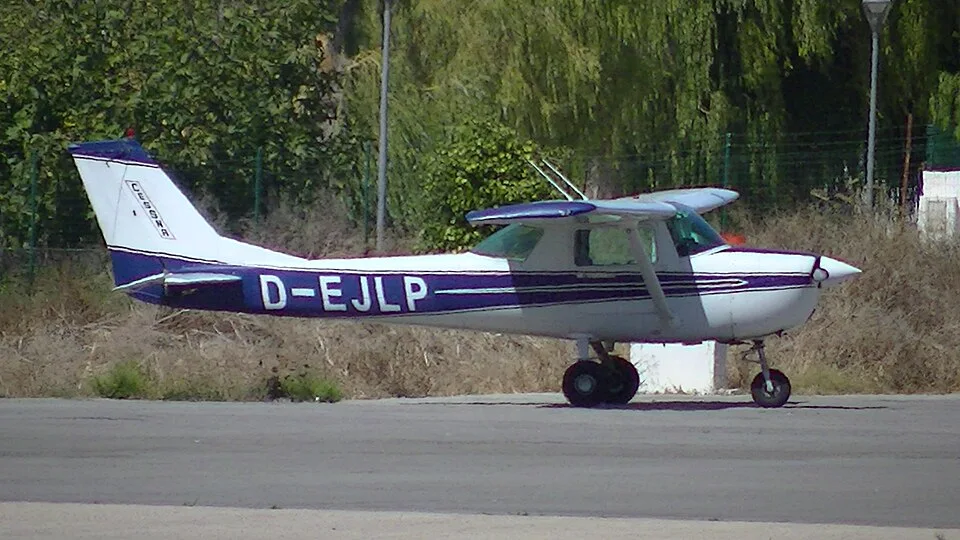

The standard aircraft beside the first Aerobat
Two distinct U.S. K-model stories begin in the 1970 model-year group. This 150K continues the standard line after the 150J, while the A150K opens the Aerobat branch. The next standard model is 150L. The K's historical setting is therefore a branching family, not the conversion of the standard model into an Aerobat.
The K-versus-A150K comparison makes the distinction visible despite their shared period and engine family. Category, serial identity and approved operating information remain separate. Looking forward to the L adds another question: its tubular-main-gear generation is later development, not a feature to infer on every K. The spinner change inside the standard K interval is narrower again and belongs to its own component enquiry.
| Model Years | 1970 |
|---|---|
| Certification Category | Utility |
| Certified Serial Eligibility | 15071129-15072003 |
| Type-design engine context | Continental O-200-A |
Generation and Certification
A shared model-year context does not authorize borrowing Aerobat limitations or assuming identical installed equipment. Follow the standard-model serial, applicable propeller entry and actual component identification. The spinner-related trigger explains why a parts question may need more detail than the official model designation.
The 1970 150K is the standard model alongside the new A150K Aerobat. That parallel introduction is the key historical comparison: the standard aircraft does not acquire an Acrobatic category because the same year includes an Aerobat version. Standard K limits remain 141 kt Vne and 104 kt Vno on the recorded CAS basis, whereas the A150K group lists higher acrobatic-category values. Both aircraft can be described as 100-hp 150s, so engine power alone is a poor guide to their operating-document and limitation differences.
| Model | TC | Category | Initial Model Approval Date | Core Cert Basis | Certification / Identity Note | Reference |
|---|---|---|---|---|---|---|
| 150K | 3A19 | Utility | 1969-06-05 | CAR 3 (1956-05-15) amended 3-4 | - | [1] |

Serial Numbers and Production
For 150K, the ordinary source assignments are 1970: 15071129 through 15072003. The serial guide retains source conflicts and exceptional identities alongside these intervals.
| Model Year | Official Model | Serial Start | Serial End | Excluded / Override Serials | Notes | Primary Source |
|---|---|---|---|---|---|---|
| 1970 | 150K | 15071129 | 15072003 | - | - | [1] |
Engine, Propeller and Equipment Changes
The standard K's spinner change begins at serial 15071711, inside its 15071129-15072003 ordinary interval. A propeller/spinner parts enquiry should therefore preserve the serial breakpoint as well as the actual installed assembly. This is distinct from the later L-series landing-gear generation and from the Aerobat's separate certification identity. The K propeller evidence also retains configuration conditions rather than a universal pitch specification. It is possible for two standard K aircraft to share the same model-year description while requiring different investigation because of original effectivity or later recorded alterations.
The 150K factory installation groups specify 1970: O-200-A, 100 hp at 2750 RPM. Its named propeller applications are 69CK family / 1A100/MCM6950 / 1A101/DCM6950; 1A90/CF. Their diameter, static-RPM and configuration conditions are preserved together below.
| Origin | Model Year | Aircraft Model | Factory Engine | Installed hp | RPM Limit | First Serial in Group | Last Serial in Group | Applicability Basis | Aircraft Source |
|---|---|---|---|---|---|---|---|---|---|
| USA | 1970 | 150K | O-200-A | 100 | 2750 | 15071129 | 15072003 | Factory / type-design | [1] |
| Aircraft Model | Model Year / Config | Engine | Exact Propeller Application | Max Dia | Min Dia | Static Min | Static Max | Notes | Primary Authority |
|---|---|---|---|---|---|---|---|---|---|
| 150G through 150K | Landplane | O-200-A | 69CK family / 1A100/MCM6950 / 1A101/DCM6950 | 69 | 67-67.5 | 2320/2375/2500 | 2470/2475/2600 | Use propeller-specific static range. | [1] |
| 150G through 150K | Seaplane | O-200-A | 1A90/CF | 75 | 73.5 | 2500 | 2600 | Seaplane only. | [1] |
| Year | Model | Serial Trigger | Change | Effectivity | System | Source |
|---|---|---|---|---|---|---|
| 1970 | 150K | 15071711 | Spinner changed | 15071711 and on | Propeller/spinner | [1] |
Specifications, Fuel and Loading
The K remains at a 1,600-lb standard landplane limit, with a 26-gallon total and 22.5-gallon usable fuel entry in the certified group. The Patroller option appears separately in historical year context. Compare the published 975-lb Standard and 1,060-lb Commuter examples as equipment descriptions rather than two different gross-weight approvals. For operating comparisons with the A150K, the standard-model cruise table is not Aerobat performance evidence. Retaining category, tank configuration and source conditions avoids making the superficially similar aircraft appear interchangeable in a loading or performance question.
The standard K and A150K also demonstrate why an engine comparison is insufficient for an Aerobat purchase. Their nominal O-200-A power is similar, but the category, serial sequence, propeller relationship and operating limitations are separately established. The standard K's spinner breakpoint is a component distinction inside its own range, not a rule for the A150K or French K sequences. If a records collection uses only the phrase "1970 150", resolve which identity it actually concerns before interpreting the combined D727-13 / D740-13 manual lead. The source should decide the relationship, not the apparent similarity of the aircraft or handbook cover.
| Models | Category | Speed Basis | Vne | Vno | Va | Vfe | MTOW Land lb | MTOW Sea lb | Baggage lb | Source |
|---|---|---|---|---|---|---|---|---|---|---|
| 150G/150H/150J/150K | Utility | CAS | 141 kt / 162 mph | 104 kt / 120 mph | 95 kt / 109 mph | 87 kt / 100 mph | 1600 | 1650 | 120 | [1] |
| Models / Serial Applicability | Config | Category | Ramp lb | TO lb | Landing lb | Fwd CG light | Light wt | Fwd CG heavy | Heavy wt | Aft CG | Baggage | Datum / Reference | Leveling | Source |
|---|---|---|---|---|---|---|---|---|---|---|---|---|---|---|
| 150G, H, J, K | Land | Utility | - | 1600 | 1600 | 31.5 | 1280 | 32.9 | 1600 | 37.5 | 120 lb, reference W&B data | Certified datum | Top of tailcone | [1] |
| 150G, H, J, K with approved seaplane configuration | Sea | Utility | - | 1650 | 1650 | 33 | 1400 | 33.8 | 1650 | 36.5 | 120 lb, reference W&B data | Certified datum | Top of tailcone | [1] |
| Year | Model(s) | Max Speed | Cruise | ROC SL | Ceiling | Published Gross / MTOW | Published Empty Weight | Baggage | Notes | Source |
|---|---|---|---|---|---|---|---|---|---|---|
| 1970 | 150K/A150K | 122 mph; 125 Commuter | 117 mph @75% /7000 ft | 670 fpm | 12,650 ft | 1600 lb | 975 Std; 1060 Commuter | 120 lb | A150 certification limits stored separately. | [1] |

Performance and Comparison Conditions
One published 150K example is 1970 cruise speed: 117 mph (power % 75; altitude ft 7000). The table keeps each metric's year, units, power, altitude, fuel and reserve columns together. Use the performance guide to distinguish headline comparisons from handbook operating calculations; no unreported condition is supplied for 150K.
| Year | Model | Value | Units | Power % | Altitude ft | Fuel Usable gal | Reserve Basis | Obstacle ft | Condition Note | Source |
|---|---|---|---|---|---|---|---|---|---|---|
| 1970 | 150K | 122 | mph | - | - | - | - | - | Published headline value | [1] |
| 1970 | 150K | 117 | mph | 75 | 7000 | - | - | - | Published headline condition | [1] |
| 1970 | 150K | 670 | fpm | - | - | - | - | - | - | [1] |
| 1970 | 150K | 12650 | ft | - | - | - | - | - | - | [1] |
| 1970 | 150K | 735 | ft | - | - | - | - | - | - | [1] |
| 1970 | 150K | 1385 | ft | - | - | - | - | 50 | - | [1] |
| 1970 | 150K | 445 | ft | - | - | - | - | - | - | [1] |
| 1970 | 150K | 1075 | ft | - | - | - | - | 50 | - | [1] |
Manuals, Maintenance and Research
The K publication lead lists D727-13 / D740-13 as a combined standard/Aerobat family. It deliberately does not authorize using either copy for every K-marked aircraft. Resolve the title, aircraft coverage and amendments, then use the serial record and spinner boundary to orient the parts research. The next standard generation is the multi-year 150L; its tubular-gear history belongs in that comparison rather than being attributed to the K. The Reims F150K and FA150K add another authority and serial namespace, so a bare "K model" description is insufficient for document selection. The positive 150K publication leads are 1970: D727-13 / D740-13 (Owner's Manual).
| Family / Year | Model | Publication | Document Class | Serial / Year Effectivity | Authority Basis | Operational Status | Special Boundary | Reference |
|---|---|---|---|---|---|---|---|---|
| 1970 | 150K/A150K/F150K/FA150K | D727-13 / D740-13 | Owner's Manual | Standard vs Aerobat family | CAA TAR 98/08 + FAA 3A19 | Authority-recognized family | A150K acrobatic speeds differ | [1] |
Related Models and Technical Research
Use the 150K-versus-150L comparison to separate the landing-gear generation from smaller serial-dependent component changes. The 150K and A150K comparison explains why a shared engine and model year do not establish the same certified identity.