Cessna 150F Model Reference
The 150F is identified with a substantial swept-tail and electric-flap redesign in the historical and model-year records. The source also records an engine-mount and doubler change at a particular serial. Those two levels of detail are complementary: the redesign explains the generation, while the serial trigger narrows a specific structural research question.
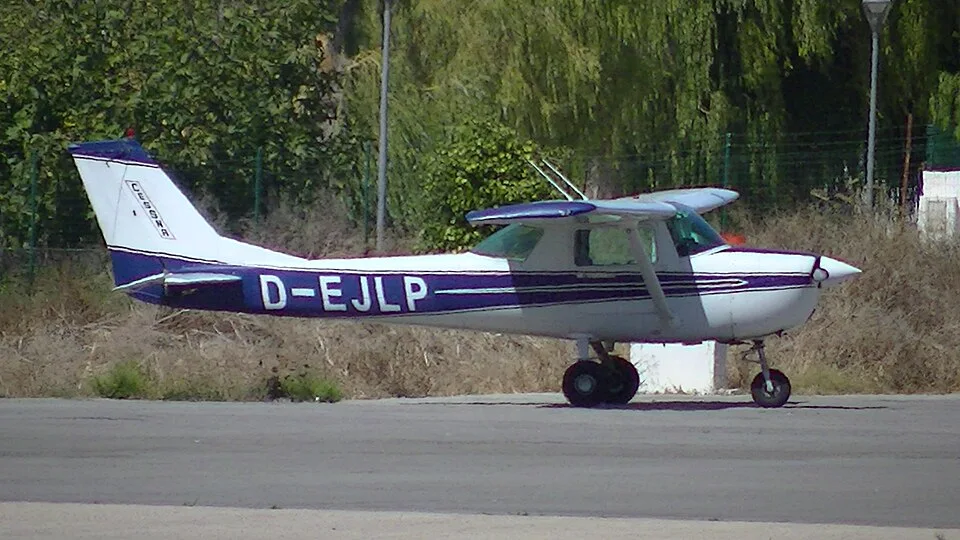

A redesign visible outside and inside the cabin
The 150F brings several recognizable changes together in the 1966 model-year generation: a swept vertical tail, electric flaps, revised doors and a larger baggage arrangement. It follows the straight-tail 150E and precedes the 150G. The rear window and higher certified-weight generation were already present before the F, so its significance lies in this further redesign rather than in introducing every familiar late-150 feature at once.
Electric flaps connect a different cockpit input with powered equipment in the wing. That changes the kinds of components involved even though the flaps still serve the wing's aerodynamic configuration. The design article explains the relationship; the flap reference follows the motor and relay distinctions. This is a practical connection between a model-history milestone and the technical records needed to investigate an installation.
The F's individual engine-mount and doubler breakpoint belongs to another part of the airplane. It should not be merged with the flap introduction simply because both appear on this model page. Likewise, the following G's alternator and cabin refinements are a subsequent step. Reading these changes separately gives the F a clearer identity than a blanket description of all swept-tail aircraft as the same design.
| Model Years | 1966 |
|---|---|
| Certification Category | Utility |
| Certified Serial Eligibility | 15061533-15064532 |
| Type-design engine context | Continental O-200-A |
Generation and Certification
The similarly named Reims F150F is a separate identity under a different certification source. A shared letter and related design history do not justify merging their serials or automatically transferring technical limits. Use the aircraft origin and exact model before selecting the handbook or interpreting a component application.
The 150F brings the documented swept vertical stabilizer, wider and deeper doors, electric flaps and enlarged baggage arrangement. It therefore changes both external identification and several cockpit/maintenance questions while retaining the D-F 1,600-lb certified limit and 100-hp O-200-A. The year summary lists a 23 ft length and 32 ft 8.5 in span, compared with the E's 21 ft 7 in and 33 ft 6 in entries. Those are published configuration descriptions; they should not be used to infer a dimensional change from a photograph alone.
| Model | TC | Category | Initial Model Approval Date | Core Cert Basis | Certification / Identity Note | Reference |
|---|---|---|---|---|---|---|
| 150F | 3A19 | Utility | 1965-05-27 | CAR 3 (1956-05-15) amended 3-4 | - | [1] |
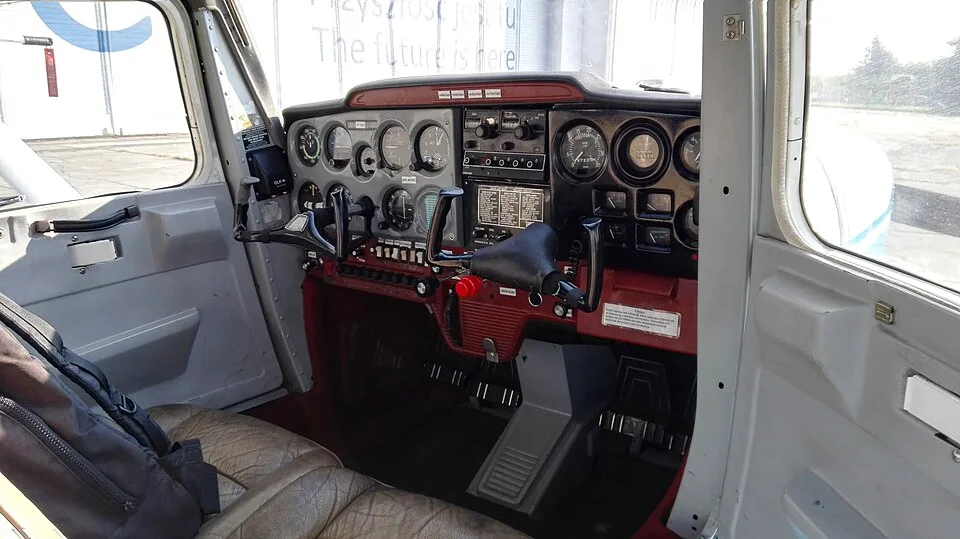

Serial Numbers and Production
For 150F, the ordinary source assignments are 1966: 15061533 through 15064532. The serial guide retains source conflicts and exceptional identities alongside these intervals.
| Model Year | Official Model | Serial Start | Serial End | Excluded / Override Serials | Notes | Primary Source |
|---|---|---|---|---|---|---|
| 1966 | 150F | 15061533 | 15064532 | - | - | [1] |
Engine, Propeller and Equipment Changes
The electric-flap installation is not one unchanging F-model assembly. The systems source identifies a right-wing relay for serials 15062291-15063135, followed by an improved motor with the relay deleted from 15063136 onward. The separate engine-mount/doubler change starts at 15061640. These boundaries show why the broad 1966 redesign and exact component effectivity need separate treatment. A mechanic tracing an electrical fault or ordering structural parts needs the relevant serial and installed assembly, not just confirmation that the aircraft has the swept tail associated with the F generation.
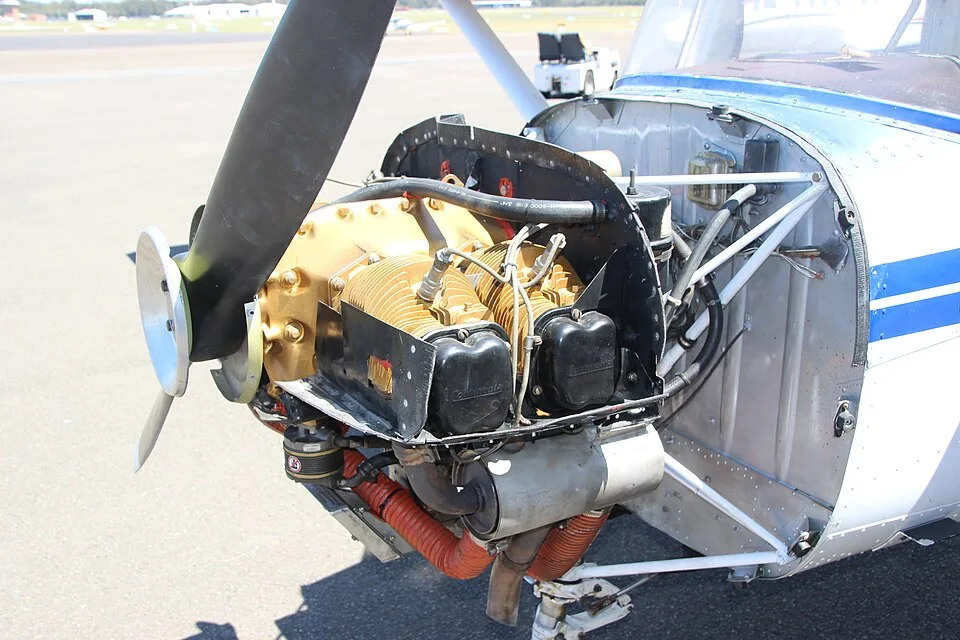
The 150F factory installation groups specify 1966: O-200-A, 100 hp at 2750 RPM. Its named propeller applications are 69CK-0-48L / -50L / -52L; 1A100/MCM6950; 1A101/DCM6950. Their diameter, static-RPM and configuration conditions are preserved together below.
| Origin | Model Year | Aircraft Model | Factory Engine | Installed hp | RPM Limit | First Serial in Group | Last Serial in Group | Applicability Basis | Aircraft Source |
|---|---|---|---|---|---|---|---|---|---|
| USA | 1966 | 150F | O-200-A | 100 | 2750 | 15061533 | 15064532 | Factory / type-design | [1] |
| Aircraft Model | Model Year / Config | Engine | Exact Propeller Application | Max Dia | Min Dia | Static Min | Static Max | Notes | Primary Authority |
|---|---|---|---|---|---|---|---|---|---|
| 150 through 150F | All | O-200-A | 69CK-0-48L / -50L / -52L | 69 | 67.5 | 2320 | 2470 | Sensenich application guide notes spinner/bulkhead for 69CK-0-52 installation. | [1] |
| 150 through 150F | All | O-200-A | 1A100/MCM6950 | 69 | 67.5 | 2375 | 2475 | - | [1] |
| 150 through 150F | All | O-200-A | 1A101/DCM6950 | 69 | 67.5 | 2500 | 2600 | - | [1] |
| Year | Model | Serial Trigger | Change | Effectivity | System | Source |
|---|---|---|---|---|---|---|
| 1966 | 150F | 15061640 | New engine mount and doublers | 15061640 and on | Engine mount/structure | [1] |
| Year | Model | Major Change | Serial Specific? | Source |
|---|---|---|---|---|
| 1966 | 150F | Swept vertical stabilizer, wider/deeper doors, electric flaps, enlarged baggage | Partly | [1] |
Specifications, Fuel and Loading
The 1966 summary separates a 970-lb Standard example from a 1,060-lb Commuter example. A larger cabin or baggage arrangement does not increase the certified gross weight beyond 1,600 lb, and the difference in equipment weight can consume some of the practical cabin-load margin. The F performance entries retain standard/long-tank range conditions as well as cruise and runway figures. Keep those conditions visible when comparing a manual-flap E with an electric-flap F; a design-generation change alone does not quantify the takeoff or landing result for a particular load and day.
The F's three propeller applications offer a useful example of why static RPM belongs to an installation. The Sensenich entry gives a 2,320-2,470-RPM static window; the McCauley 1A100/MCM6950 gives 2,375-2,475; the 1A101/DCM6950 gives 2,500-2,600. Their shared 69-inch maximum and 67.5-inch minimum diameters do not make those RPM windows interchangeable. A static-RPM observation should therefore be reconciled with the actual propeller and controlling application, not judged against whichever early-model row is closest. The flap changes add another independent inspection question: an F before the named right-wing relay interval is not automatically described by either the interval's relay configuration or the later relay-deleted arrangement. The source must establish the exact installation. This is particularly relevant when an aircraft has had a motor or wing replaced. Comparing the F with the following G should also preserve the distinction between the F's electric-flap introduction and the G's alternator/cabin-heating refinement. Neither change proves present equipment after later alterations. The F model page is thus most useful as a map of distinct design, component and operating boundaries, rather than a single list of features assumed to have arrived together on every 1966 aircraft.
| Models | Category | Speed Basis | Vne | Vno | Va | Vfe | MTOW Land lb | MTOW Sea lb | Baggage lb | Source |
|---|---|---|---|---|---|---|---|---|---|---|
| 150D/150E/150F | Utility | CAS | 141 kt / 162 mph | 104 kt / 120 mph | 95 kt / 109 mph | 87 kt / 100 mph | 1600 | - | 120 | [1] |
| Models / Serial Applicability | Config | Category | Ramp lb | TO lb | Landing lb | Fwd CG light | Light wt | Fwd CG heavy | Heavy wt | Aft CG | Baggage | Datum / Reference | Leveling | Source |
|---|---|---|---|---|---|---|---|---|---|---|---|---|---|---|
| 150D, 150E, 150F | Land | Utility | - | 1600 | 1600 | 31.5 | 1280 | 32.9 | 1600 | 37.5 | 150D/E: 120 lb @ +65; 150F: 120 lb ref W&B data | Certified datum / later handbook firewall Sta 0.0 | Top of tailcone | [1] |
| Year | Model(s) | Max Speed | Cruise | ROC SL | Ceiling | Published Gross / MTOW | Published Empty Weight | Baggage | Notes | Source |
|---|---|---|---|---|---|---|---|---|---|---|
| 1966 | 150F | 123 mph | 120 mph @75% / 7500 ft | 670 fpm | 12,650 ft | 1600 lb | 970 Std; 1060 Commuter | 120 lb | Detailed secondary page. | [1] |

Performance and Comparison Conditions
One published 150F example is 1966 cruise speed: 120 mph (power % 75; altitude ft 7500). The table keeps each metric's year, units, power, altitude, fuel and reserve columns together. Use the performance guide to distinguish headline comparisons from handbook operating calculations; no unreported condition is supplied for 150F.
| Year | Model | Value | Units | Power % | Altitude ft | Fuel Usable gal | Reserve Basis | Obstacle ft | Condition Note | Source |
|---|---|---|---|---|---|---|---|---|---|---|
| 1966 | 150F | 123 | mph | - | - | - | - | - | Published headline value | [1] |
| 1966 | 150F | 120 | mph | 75 | 7500 | - | - | - | Published headline condition | [1] |
| 1966 | 150F | 670 | fpm | - | - | - | - | - | - | [1] |
| 1966 | 150F | 12650 | ft | - | - | - | - | - | - | [1] |
| 1966 | 150F | 735 | ft | - | - | - | - | - | - | [1] |
| 1966 | 150F | 1385 | ft | - | - | - | - | 50 | - | [1] |
| 1966 | 150F | 445 | ft | - | - | - | - | - | - | [1] |
| 1966 | 150F | 1075 | ft | - | - | - | - | 50 | - | [1] |
| 1966 | 150F | 480 | mi | 75 | 7500 | 22.5 | No reserve | - | Condition-preserved published range | [1] |
| 1966 | 150F | 745 | mi | 75 | 7500 | 35 | No reserve | - | Condition-preserved published range | [1] |
| 1966 | 150F | 560 | mi | - | 10000 | 22.5 | No reserve | - | Condition-preserved published range | [1] |
| 1966 | 150F | 870 | mi | - | 10000 | 35 | No reserve | - | Condition-preserved published range | [1] |
Manuals, Maintenance and Research
The F-model year is the opening boundary of the 1966-1986 fin-attachment advisory context recorded in the known-issues guide. That provides a specific tail-structure research lead, not a declaration of damage or a substitution of an advisory for an AD. The Reims F150F also begins in 1966 but has its own prefix, certification identity and electric-flap serial boundaries. D326-13 is a recognized publication-family mapping for the related models; the applicable authority and aircraft coverage still distinguish a U.S. 150F from a French-built F150F. The positive 150F publication leads are 1966: D326-13 (Owner's Manual).
| Family / Year | Model | Publication | Document Class | Serial / Year Effectivity | Authority Basis | Operational Status | Special Boundary | Reference |
|---|---|---|---|---|---|---|---|---|
| 1966 | 150F / F150F | D326-13 | Owner's Manual | 1966 equivalent Cessna/Reims mapping | CAA TAR 98/08 | Authority-recognized family | Reims legal context separate | [1] |
Related Models and Technical Research
Review the 150E-to-150F system changes and the stall-warning transition before assuming every early electric-flap aircraft has identical equipment. The 150F-versus-150G comparison distinguishes the electric-flap redesign from the following alternator and cabin refinements.